Roof garden or green roof
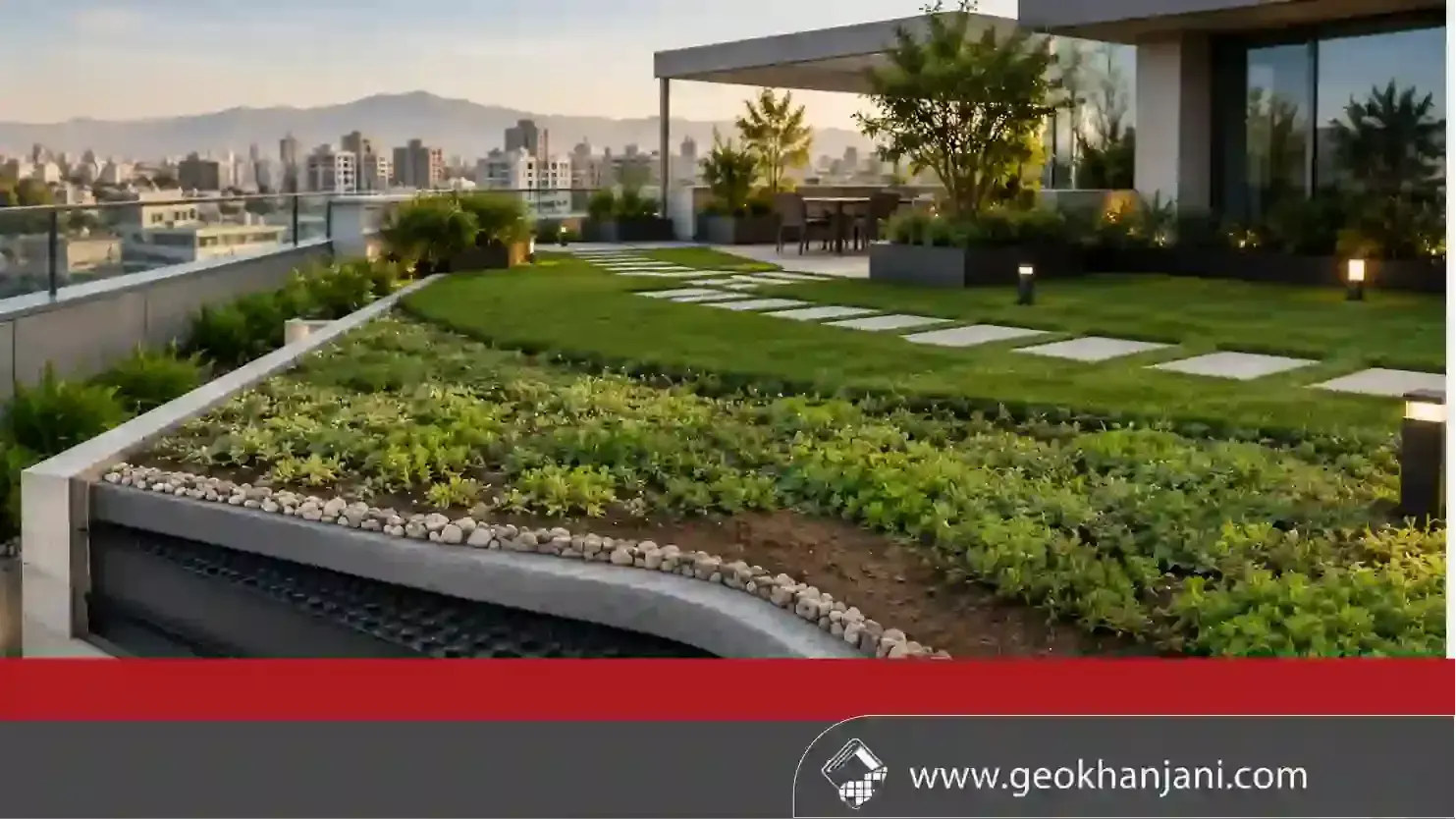 Roof Garden
What Is a Roof Garden or Green Roof?
A roof garden, also known as a green roof, is a specially designed roofing system that incorporates vegetation, planting areas, growing media, drainage layers, waterproofing systems, and other structural components on top of a building.
Unlike a conventional roof, a green roof is built to support plants and provide an additional functional space while also helping protect the building from environmental conditions.
A properly designed roof garden isn't simply a layer of soil and plants placed on a roof. It's a complete engineered system made up of several layers that work together to protect the building structure, control water, provide drainage, support vegetation, and prevent moisture from reaching the underlying roof.
One of the most important components of this system is the waterproofing layer. In many modern roof garden projects, geomembrane is used as a waterproofing and water-containment layer to prevent irrigation water and rainwater from penetrating into the roof structure.
The correct design and installation of the geomembrane is therefore essential for the long-term performance of a green roof.
Why Are Roof Gardens Becoming More Popular?
Urban areas often have limited green space. As cities become more densely developed, rooftops offer an opportunity to introduce vegetation without needing additional land.
A roof garden can turn an unused roof surface into a functional green space.
Depending on the design, a green roof can be used for decorative landscaping, urban gardening, recreational spaces, plant cultivation, green terraces, rooftop agriculture, environmental improvement, private outdoor areas, or commercial and residential landscaping.
Beyond the aesthetic benefits, green roofs can also contribute to better thermal performance and improved stormwater management.
Main Types of Green Roofs
Green roofs can generally be grouped into different categories depending on their depth, vegetation, structural requirements, and intended use.
Extensive Green Roof
An extensive green roof typically uses a relatively shallow growing medium and lightweight vegetation.
These systems are usually designed to need less maintenance and are often suitable for roofs where structural loading has to be carefully controlled.
Plants used in extensive systems are generally chosen for their ability to tolerate limited water, shallow soil depths, wind exposure, and changing temperatures.
Intensive Green Roof
An intensive green roof has a deeper growing medium and can support a wider variety of plants.
Depending on the structural capacity of the building, intensive systems may include grass, shrubs, flowers, small trees, decorative plants, or vegetable gardens.
Because intensive green roofs are heavier and need more water and maintenance, they call for more detailed structural and irrigation planning.
Semi-Intensive Green Roof
A semi-intensive system falls somewhere between extensive and intensive green roofs.
It offers greater planting flexibility than an extensive system while generally requiring less soil depth and maintenance than a fully intensive roof garden.
How Is a Roof Garden Constructed?
A green roof is normally built using several functional layers, each with a specific purpose that contributes to the overall performance of the system.
A typical roof garden may include, from bottom to top: the structural roof, a waterproofing layer, a geomembrane or protective waterproofing system, a protection layer, a drainage layer, a filter geotextile, the growing medium, and finally the vegetation layer.
The exact configuration depends on the building structure, climate, type of vegetation, irrigation requirements, and overall project design.
The Role of Geomembrane in Roof Gardens
One of the most important considerations when building a roof garden is waterproofing.
Plants need irrigation, and rainwater can sit within the growing medium and drainage system for extended periods. If waterproofing is inadequate, moisture can work its way into the roof structure and cause serious problems.
For this reason, geomembrane can be used as a waterproofing layer in green roof construction.
A properly selected and installed geomembrane creates a continuous, low-permeability barrier that helps keep water from reaching the structural roof.
This matters especially for large roof gardens where irrigation and drainage systems are permanently installed.
Why Is Geomembrane Important in a Green Roof?
The primary function of the geomembrane is to prevent water from penetrating into the roof structure. Continuous waterproofing reduces the risk of moisture-related damage and helps protect the building beneath the green roof.
Long-term exposure to moisture can damage construction materials and lead to deterioration of structural or finishing components. A properly installed geomembrane provides an added barrier against water infiltration.
A roof garden may also require regular irrigation, particularly during dry periods. The geomembrane helps keep water contained within the designed system and prevents uncontrolled infiltration into the roof structure.
High-quality geomembranes can offer long-term resistance to moisture and environmental conditions when correctly selected and installed. The expected service life depends on factors such as material type, thickness, UV exposure, mechanical loading, temperature, installation quality, and maintenance.
Geomembranes are also flexible materials that can be installed across large roof surfaces and around many roof details when properly designed, which makes them useful for complex green roof geometries.
Which Geomembrane Is Suitable for a Green Roof?
The right geomembrane depends on the project requirements.
HDPE geomembrane is widely recognized for its mechanical strength, durability, chemical resistance, and low permeability. It can be a good fit for larger roof garden projects where a robust waterproofing barrier is required.
LLDPE geomembrane generally offers greater flexibility than HDPE. That characteristic can be useful where the roof has complex geometry, movement, or areas that need extra flexibility.
The choice between different geomembrane materials should be based on the roof structure, roof dimensions, expected water exposure, temperature conditions, mechanical stresses, installation method, required service life, vegetation system, drainage configuration, and project specifications.
The thickness of the geomembrane should also be chosen according to the specific project conditions rather than using the same thickness for every roof garden.
Geotextile Protection in Green Roof Construction
The geomembrane should be protected from mechanical damage.
After the geomembrane is installed, later layers such as drainage materials, geocells, growing media, or other construction components can place mechanical stress on the waterproofing layer.
A protective geotextile layer can be installed to reduce the risk of puncture, abrasion, and mechanical damage. The geotextile acts as a separation and cushioning layer between the geomembrane and the other components of the green roof.
This is especially important when the drainage layer contains materials that could create concentrated pressure points.
Drainage System in a Roof Garden
A reliable drainage system is essential for a successful green roof.
Although plants need water, too much water sitting in the system can damage vegetation and add unwanted load to the roof.
The drainage layer is designed to collect excess water and direct it toward designated drainage points.
A typical green roof drainage system may include drainage boards, drainage aggregates, geocomposite drainage systems, drainage channels, roof drains, and overflow outlets.
The drainage system should be designed together with the waterproofing layer and the roof's existing drainage infrastructure.
The Role of Geodrain in Green Roofs
In some green roof projects, a geodrain or geocomposite drainage layer can be used to improve water movement and reduce water buildup.
A geodrain system can help collect excess water and direct it toward roof drainage outlets, while also providing separation between the different layers of the green roof.
When combined with a geomembrane waterproofing layer and a protective geotextile, the system can form an integrated waterproofing and drainage solution.
Green Roof Construction Process
The construction process should be handled carefully, since every layer affects how the final system performs.
Step one is a structural assessment. Before construction, the building structure should be evaluated to confirm it can safely carry the additional loads that come with a green roof — growing medium, vegetation, water, drainage materials, people, snow or rainfall, and maintenance equipment.
Step two is roof surface preparation. The roof surface should be cleaned and prepared, and any sharp objects, debris, or irregularities that could damage the waterproofing layer should be removed or corrected.
Step three is waterproofing and geomembrane installation. The geomembrane is installed over the prepared roof surface according to the project design, with sheets joined using suitable welding techniques to create continuous waterproofing.
Step four is seam inspection. Geomembrane seams should be carefully inspected and tested according to the project's quality-control requirements, since poorly welded seams can become potential leakage points.
Step five is installing the protective layer. A protective geotextile can be placed over or beneath the geomembrane depending on the system design and protection needs.
Step six is drainage layer installation, where the drainage system is put in place to collect and move excess water.
Step seven is the filter geotextile, which may be placed above the drainage layer to keep fine particles from entering and clogging the drainage system.
Step eight is the growing medium, distributed across the roof according to the vegetation design.
Step nine is vegetation installation — plants, grass, shrubs, or other selected vegetation go in last. Vegetation should be chosen according to climate, roof exposure, irrigation availability, and maintenance requirements.
Benefits of a Green Roof
A properly designed green roof can offer several environmental, architectural, and functional benefits.
Vegetation and growing media can provide additional insulation and reduce direct exposure of the roof surface to solar radiation, which can help reduce temperature fluctuations across the roof system.
Green roofs can also retain and temporarily store part of the rainfall that reaches the roof, with the drainage system controlling how excess water is eventually released.
They add green space in urban environments where available land is often limited, and they can turn conventional rooftops into attractive landscapes and recreational spaces.
When properly designed, the green roof layers can also shield the waterproofing system from direct sun exposure and certain environmental stresses — though regular inspection and maintenance are still necessary.
Vegetated surfaces can also help reduce heat buildup compared with conventional exposed roofing surfaces.
Common Problems in Poorly Designed Green Roofs
A green roof requires careful engineering, and poor design or installation can lead to serious problems.
Water leakage is the most important risk, usually coming from inadequate waterproofing or damage to the waterproofing layer.
Poor drainage is another issue — if excess water can't drain properly, it can accumulate within the growing medium.
Root penetration is also a concern. Depending on the vegetation and waterproofing system, root protection may be needed to reduce the risk of root-related damage.
Geomembrane damage can happen if construction activity above the geomembrane isn't adequately protected, leading to punctures or abrasion.
Excessive structural load is another risk, since water-saturated growing media can become significantly heavier — structural capacity needs to be evaluated before construction begins.
Drainage blockage can also occur if fine particles from the growing medium enter the drainage system without an appropriate filter layer in place, reducing its efficiency.
How to Improve Green Roof Performance
To get a durable, efficient roof garden, a few principles are worth following: evaluate the building's structural capacity, select the right green roof system, properly prepare the roof surface, use a suitable geomembrane waterproofing layer, protect the geomembrane with an appropriate geotextile, design an efficient drainage system, provide suitable roof drains and overflow protection, select a suitable filter geotextile, choose the growing medium to match the vegetation, pick plants suited to the local climate, ensure professional geomembrane welding and seam inspection, and set up a regular maintenance and inspection program.
Roof Garden and Geomembrane: An Integrated Waterproofing System
The success of a roof garden depends heavily on how its different layers interact.
The geomembrane provides waterproofing. The geotextile provides protection and filtration. The drainage layer or geodrain manages excess water. The growing medium creates the environment plants need to grow. And the vegetation layer forms the green surface, delivering the environmental and aesthetic benefits of the system.
So a green roof is best thought of as an integrated engineered system, not simply a garden placed on top of a roof.
A roof garden, or green roof, is an engineered roofing system that combines vegetation with waterproofing, drainage, protection, growing media, and other functional layers. One of its most important components is the waterproofing layer — a properly selected geomembrane helps prevent water from penetrating into the building structure and provides reliable water containment beneath the green roof system.
Combined with protective geotextile, an efficient drainage layer, suitable growing media, and properly selected vegetation, geomembrane can form an important part of a durable, effective green roof construction system. The design should always take into account the building's structural capacity, climate, irrigation requirements, drainage conditions, vegetation type, and expected service life.
A professionally designed green roof can turn an unused rooftop into a functional green space while delivering benefits like better stormwater management, improved thermal performance, additional vegetation, aesthetic enhancement, and protection of the underlying roof system.
For this reason, combining geomembrane waterproofing, geotextile protection, drainage systems, and suitable vegetation is an effective approach for building modern, durable roof garden systems.