High-Performance Injection Geogrid for Soil Reinforcement and Ground Stabilization
Injection Geogrid is a geosynthetic reinforcement product made through precision injection molding. Its rigid grid structure locks tightly into soil and aggregate, helping distribute loads more evenly, boosting bearing capacity, and keeping the ground from shifting or sinking under pressure.
Built for tough civil engineering and infrastructure work, it holds its shape well, has strong junctions, and lasts a long time. That makes it a solid choice for reinforcing soft soils, improving how pavements perform, and stretching out the lifespan of roads, railways, and foundations.
Key features
Made with advanced injection molding technology, it offers high tensile strength paired with a rigid frame, junctions that hold firm under stress, and even load distribution across the surface. It resists deformation under heavy loads, stands up well to chemicals and harsh environments, and won't degrade quickly under UV exposure. On top of that, it's built to last with very little upkeep, it's light enough to install easily, and it keeps ground reinforcement costs down.
Applications
You'll find Injection Geogrid used across highway and road construction, railway subgrade reinforcement, airport pavements, embankment stabilization, retaining walls, foundation improvement, working platforms, industrial yards, landfill construction, slope stabilization, and port or marine infrastructure, as well as heavy-duty pavement systems.
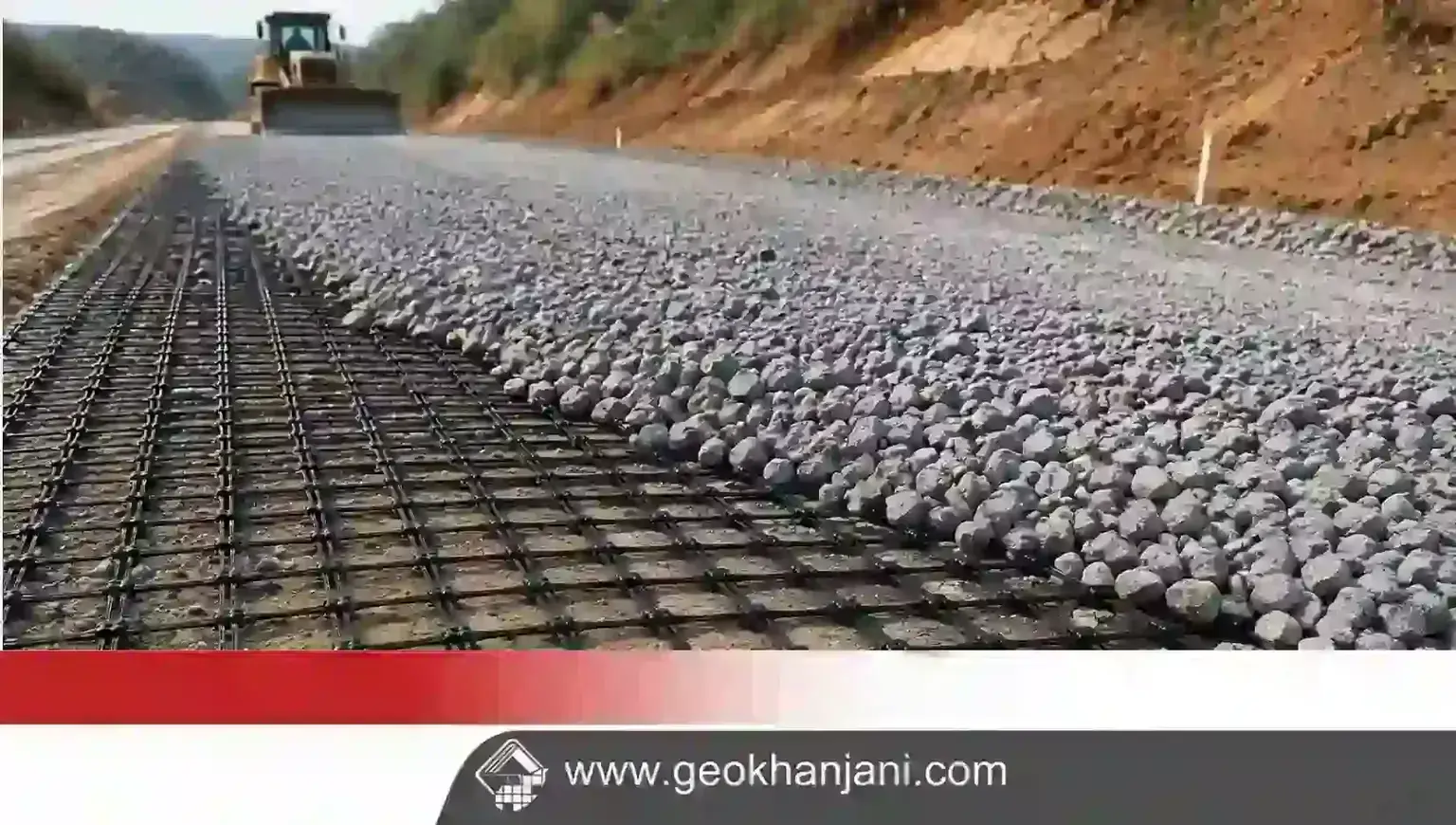 Applications
Benefits
By improving soil confinement and locking aggregate in place, Injection Geogrid cuts down on settlement and adds real structural stability. Its rigid build helps pavements perform better, means less maintenance down the road, and extends how long infrastructure projects actually last, which lowers costs over their lifetime.
GEOKHANJANI makes its Injection Geogrid under strict quality control using premium raw materials, so it performs reliably even in demanding engineering conditions. The goal across our product line is consistent strength, durability, and quality for geotechnical and infrastructure projects of all kinds.
Connection method
The ribs running in both directions are permanently joined during the injection molding process itself, rather than being welded or mechanically assembled afterward. That means each intersection forms as one solid piece, giving junctions that can transfer loads efficiently in multiple directions at once.
This kind of integrated connection adds rigidity and stops joints from pulling apart under repeated loading, whether it's constant traffic or a heavy static load. The result is steady performance even in harsh conditions, which is why it holds up well in long-term infrastructure use.
How Injection Geogrid works
The grid reinforces ground by interlocking with the soil and aggregate around it. When traffic or structural loads come through, it confines the aggregate inside its openings, keeps it from shifting sideways, and spreads the stress out over a wider area.
In practice, this helps raise the bearing capacity of weak soils, reduce uneven settlement, cut down on rutting and surface deformation, keep pavements more stable, and generally extend how long roads and foundations hold up.
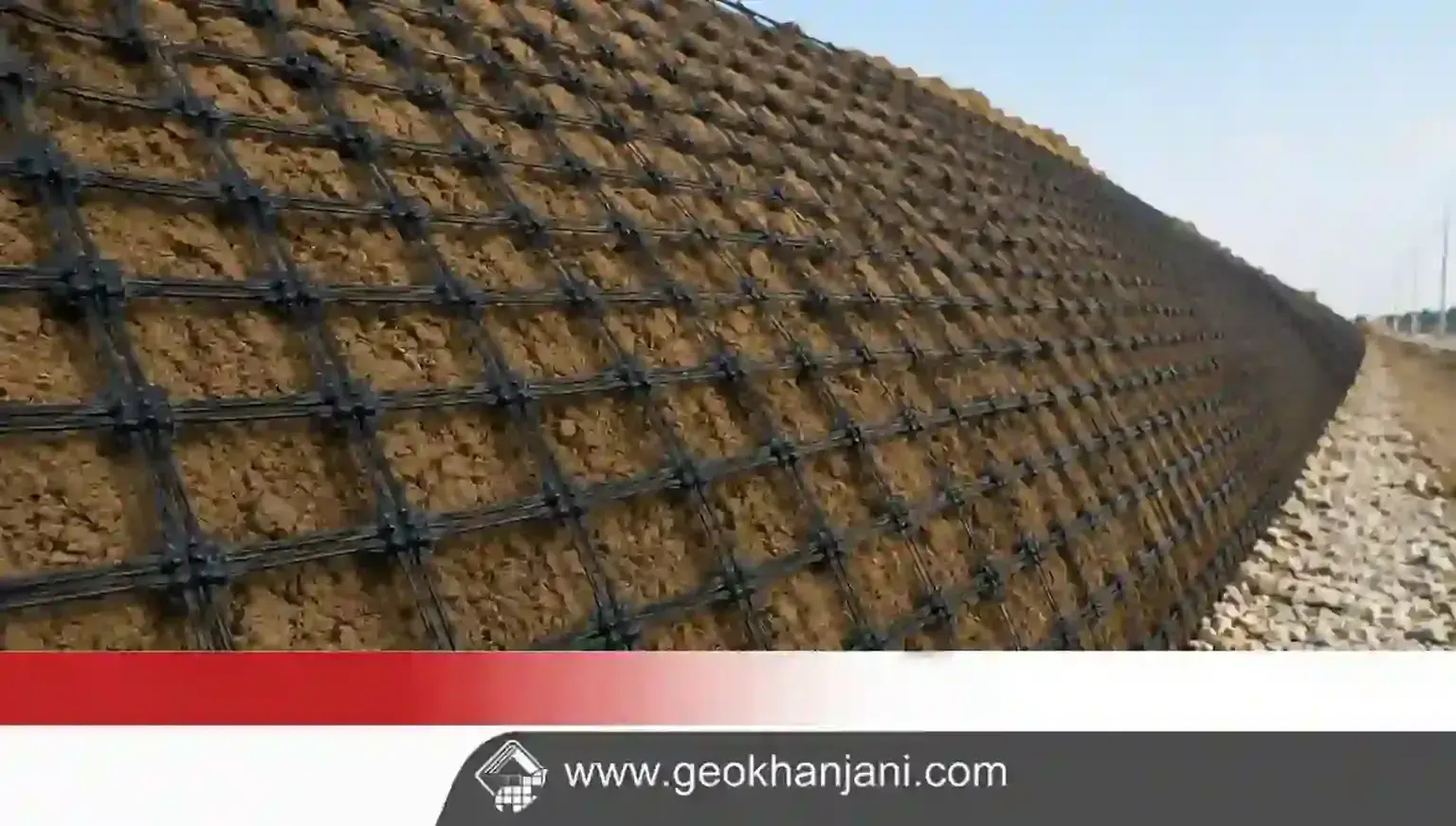 Injection Geogrid works
Where it's used
Road and highway construction: reinforces base and subbase layers, cutting down on rutting and cracking while extending pavement life under heavy traffic.
Railway infrastructure: stabilizes ballast and subgrade, reducing track deformation and how often maintenance is needed.
Foundation reinforcement: boosts the load-bearing capacity of weak soils under warehouses, industrial buildings, bridges, and other heavy structures.
Embankments and retaining walls: strengthens these systems by improving soil confinement and slope stability.
Working platforms: gives heavy equipment a stable surface to operate on, even over soft or unstable ground.
Airport pavements: reinforces pavement foundations so they can handle repeated aircraft loads with less long-term upkeep.
Industrial and logistics facilities: commonly placed beneath container yards, ports, logistics hubs, and industrial pavements that see constant heavy loading.
Landfill and mining projects: improves stability for access roads, work areas, and embankments in these settings.
Why injection-molded junctions matter
Compared to other connection methods, injection-molded junctions form as one solid piece with real structural integrity. They transfer loads efficiently between ribs, hold up well under repeated traffic, and are far less likely to fail at the joint. They also keep their shape better over time and stand up to tough environmental conditions, giving reliable, low-maintenance performance for demanding geotechnical projects.