Waterstop for Concrete Joints
Water infiltration through concrete joints is one of the most common waterproofing challenges in underground and water-retaining structures. A waterstop is designed to control this problem by creating a sealing barrier within the joint and preventing water from traveling through the concrete interface.
Waterstops are used in projects where concrete sections are cast separately, or where joints are intentionally provided to accommodate structural movement. The correct profile and material depend on the joint design, expected movement, water pressure, and surrounding conditions.
For this reason, selecting a waterstop should be considered part of the overall concrete joint waterproofing system, rather than simply choosing a waterproofing accessory.
Why Are Waterstops Used in Concrete?
Concrete itself can provide excellent resistance to water when it's properly designed, placed, and cured. Joints, though, can become weak points where moisture and water pressure create leakage paths.
A properly installed waterstop interrupts that path inside the joint. Depending on its design, it can either act as a permanent physical barrier or react to moisture and expand to seal the surrounding area.
That's why waterstops matter especially in structures where even small amounts of leakage can cause operational, structural, or maintenance problems.
Where Are Waterstops Commonly Used?
Waterstops are widely used in concrete structures exposed to groundwater, stored water, or continuous moisture.
Typical applications include underground foundations, basement structures, swimming pools, water reservoirs, concrete tanks, wastewater treatment plants, tunnels, dams, retaining structures, water channels, hydraulic structures, elevator pits, and industrial concrete structures.
The required waterstop should always be chosen according to the specific joint and environmental conditions, not simply according to the application name.
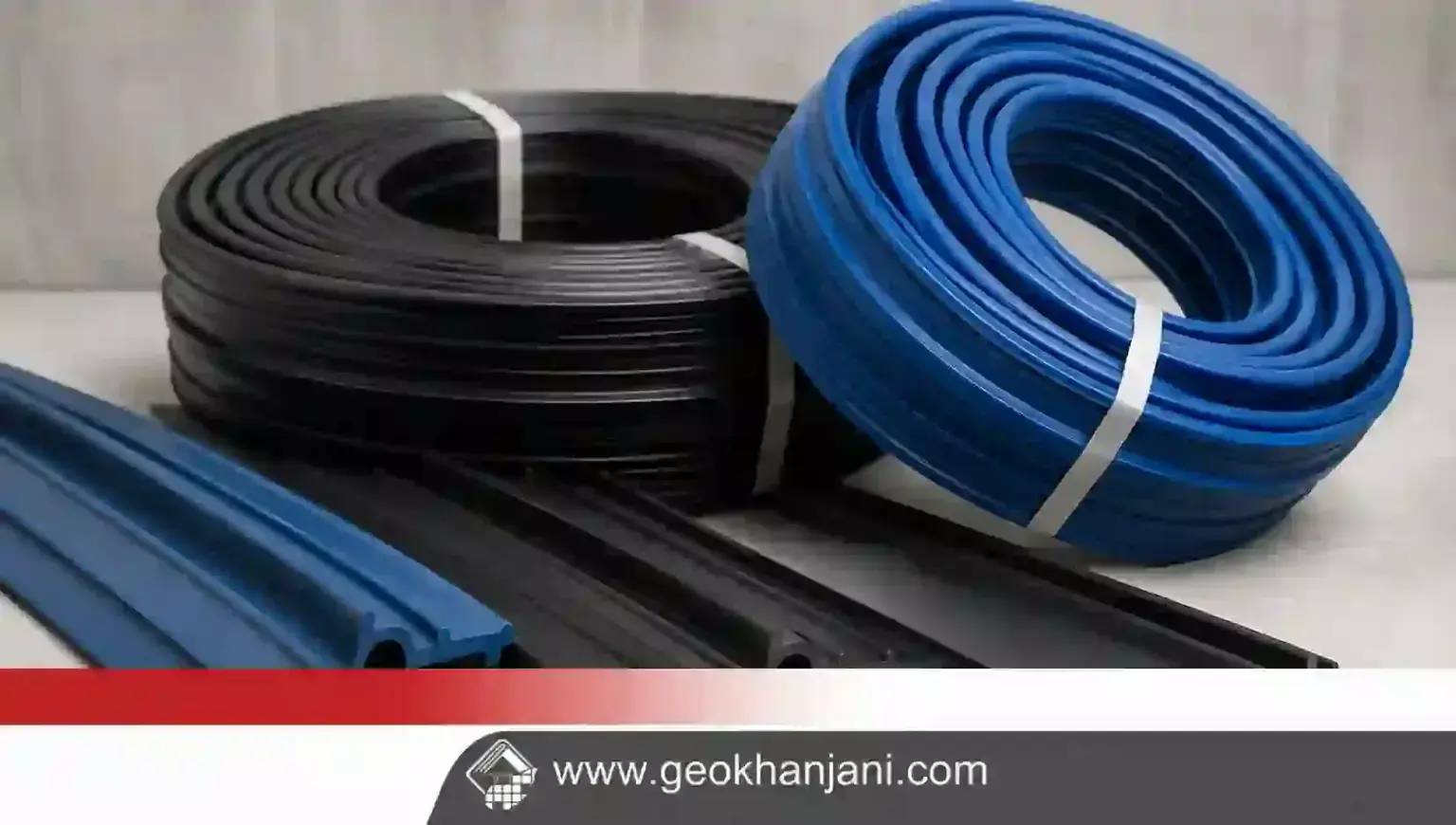 waterstop
Main Waterstop Types
Different joint conditions call for different waterstop designs. The most commonly used products include PVC, hydrophilic, bentonite, rubber, and thermoplastic elastomer waterstops.
PVC Waterstop
PVC waterstop is a flexible profile manufactured from polyvinyl chloride. It's available in several configurations, including ribbed profiles and center-bulb designs.
The profile is embedded into the concrete and forms a continuous physical barrier across the joint. Different PVC profiles can be selected depending on whether the joint is primarily a construction joint or is expected to experience movement.
PVC waterstops are widely used in water-retaining structures and civil engineering projects because of their flexibility, durability, and availability in different profiles.
Hydrophilic Waterstop
A hydrophilic waterstop works differently from a conventional PVC profile. Its sealing action relies on the material's ability to react with water and increase in volume.
When moisture reaches the strip, the hydrophilic compound expands and increases contact with the surrounding concrete. This helps close small voids and potential leakage paths around the joint.
Hydrophilic waterstops are commonly used for construction joints where movement is limited.
Bentonite Waterstop
Bentonite waterstop uses the swelling properties of bentonite to provide an additional sealing mechanism. Sodium bentonite absorbs water and expands, helping fill irregularities around a concrete joint.
This type is commonly used in underground concrete construction and water-resistant structures where a swelling seal can add an extra level of protection.
Rubber Waterstop
Rubber waterstops are made from flexible elastomeric compounds and suit applications where joint movement needs to be accommodated.
Their flexibility lets the profile deform with the joint while maintaining contact with the surrounding concrete.
Rubber waterstops show up in hydraulic structures, tunnels, dams, reservoirs, and other projects where joint movement is an important design consideration.
TPE Waterstop
TPE waterstop is manufactured from thermoplastic elastomer materials. It combines elastic behavior with thermoplastic processing characteristics and can be produced in specialized profiles.
TPE waterstops can be a good fit for demanding waterproofing applications where flexibility, profile design, and material performance all matter.
Construction Joint Waterstop vs. Expansion Joint Waterstop
One of the most important factors when choosing a waterstop is understanding the difference between joint types.
A construction joint is created when concrete placement is interrupted and a subsequent pour connects to the previous section. In many cases, a hydrophilic or suitable PVC waterstop can work depending on the design.
An expansion or movement joint is designed to accommodate dimensional changes or structural movement. These joints need a waterstop profile capable of handling the expected movement without losing its sealing function.
Using a product designed for a static construction joint in a highly moving joint can reduce waterproofing performance.
How Waterstop Installation Affects Performance
Even a high-quality waterstop can fail if it's incorrectly positioned or damaged during construction.
The waterstop has to be placed exactly according to the approved joint detail — its location within the concrete section matters for maintaining sufficient embedment and continuity.
The profile should be securely fixed so it can't move during reinforcement installation, formwork operations, or concrete placement.
Corners, intersections, and connections between waterstop sections need particular attention, since any discontinuity can create a potential path for water.
Concrete should be placed carefully around the waterstop, with proper compaction essential — honeycombing, voids, or poorly consolidated concrete can compromise the joint seal.
And the exposed portion of a waterstop should be protected from unnecessary mechanical damage, contamination, and premature exposure to conditions that could affect its performance.
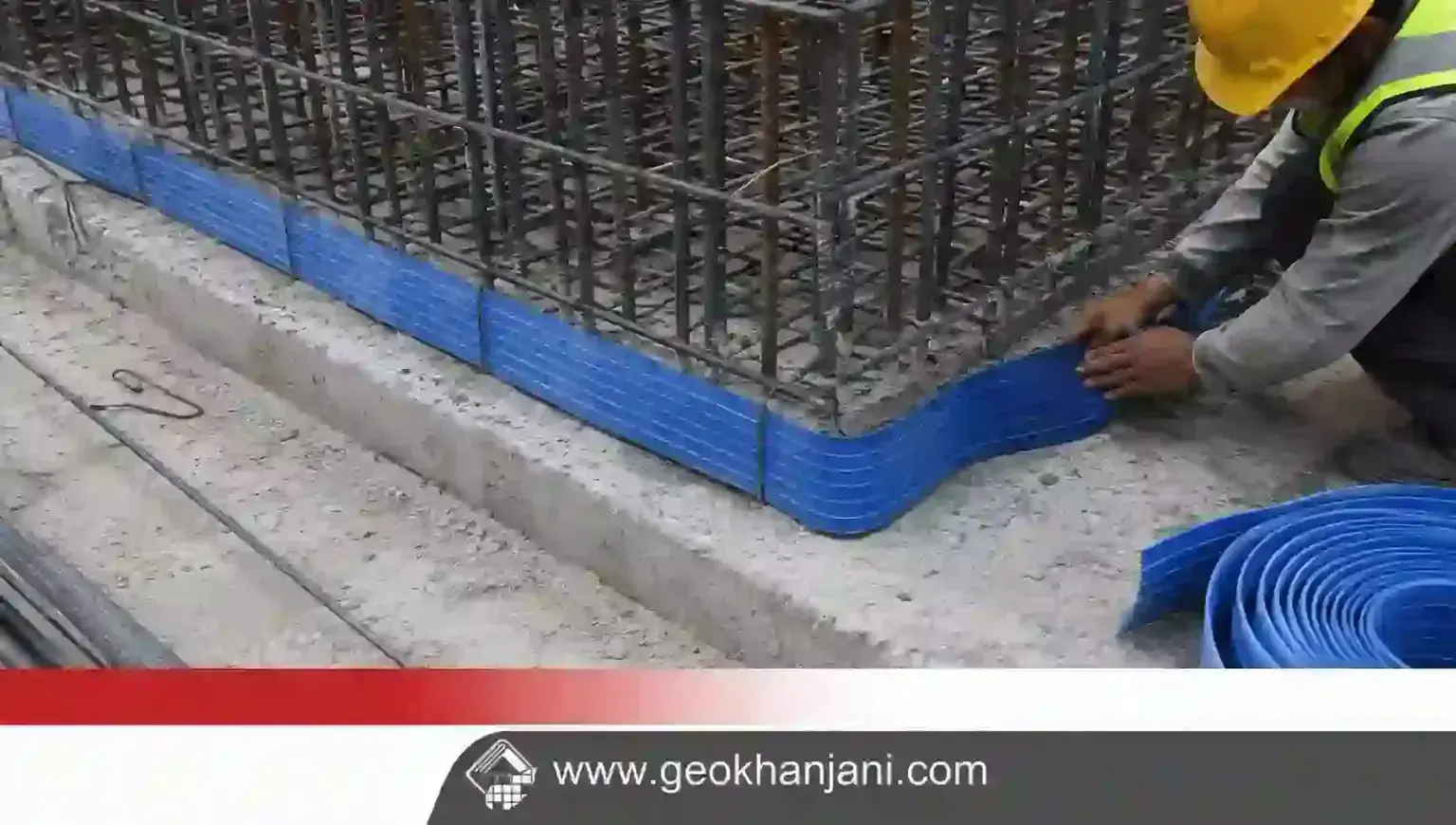 Waterstop Installation
Choosing the Right Waterstop
There's no single waterstop that's ideal for every project. Selection should start with the joint, not the product.
The important parameters to work through are the joint type — whether it's a construction, contraction, expansion, or movement joint — the expected movement in amount and direction, the water pressure (higher hydrostatic pressure may call for a more robust joint sealing design), the exposure conditions (groundwater, wastewater, chemicals, temperature, and other environmental factors), the concrete configuration (available embedment depth and reinforcement arrangement can influence profile selection), and the installation method, since the product needs to be compatible with the available construction method and site conditions.
Waterstop Price
The price of a waterstop varies according to material, profile, dimensions, manufacturing quality, brand, technical specifications, and purchase quantity.
For PVC waterstop, profile geometry and dimensions can significantly affect the price. Hydrophilic products may vary based on their formulation, expansion characteristics, dimensions, and performance requirements.
For large construction projects, the total cost should also account for installation accessories, fixing materials, joints, connections, labor, and other required components.
So comparing products only by price per meter may not give an accurate picture of the overall waterproofing cost.
Buying Waterstop
When buying a waterstop, the first step is identifying the technical requirements of the concrete joint.
Before placing an order, it's worth confirming the required waterstop type, profile and dimensions, joint configuration, expected movement, water pressure, environmental exposure, required chemical resistance, installation procedure, quantity required, and the technical datasheet and product specifications.
For commercial and industrial projects, supplying the project drawings or joint details can also help pin down the most appropriate waterstop profile.
Hydrophilic Waterstop or PVC Waterstop?
The choice between hydrophilic and PVC waterstop depends mainly on the joint design.
Hydrophilic waterstop is a compact solution that relies on controlled swelling when exposed to water, and is commonly used for construction joints with limited movement.
PVC waterstop provides a continuous physical barrier and comes in profiles designed for different joint configurations, including applications where movement accommodation is required.
The right choice should be based on engineering requirements, not on assuming one material is universally superior.
Common Waterstop Installation Mistakes
A number of installation problems can reduce the effectiveness of a concrete waterstop system: incorrect positioning inside the joint, insufficient fixing, damaged profiles, poor connections between sections, inadequate concrete compaction, voids around the waterstop, using the wrong profile for the joint's movement, premature activation of hydrophilic products, and ignoring the manufacturer's installation instructions.
Good installation practice matters just as much as selecting a suitable product in the first place.