Geosynthetics
What Are Geosynthetics?
Geosynthetics are a family of polymer-based materials used in civil engineering, geotechnical, environmental, hydraulic, mining, and transportation projects to improve the performance of soil and other construction materials. Manufactured from durable polymers such as polypropylene (PP), polyester (PET), polyethylene (PE), and polyvinyl chloride (PVC), geosynthetics provide cost-effective and long-lasting engineering solutions.
These materials are designed to perform one or more essential functions, including reinforcement, separation, filtration, drainage, containment, protection, and erosion control. By enhancing soil stability and reducing maintenance requirements, geosynthetics have become indispensable components in modern infrastructure and environmental projects.
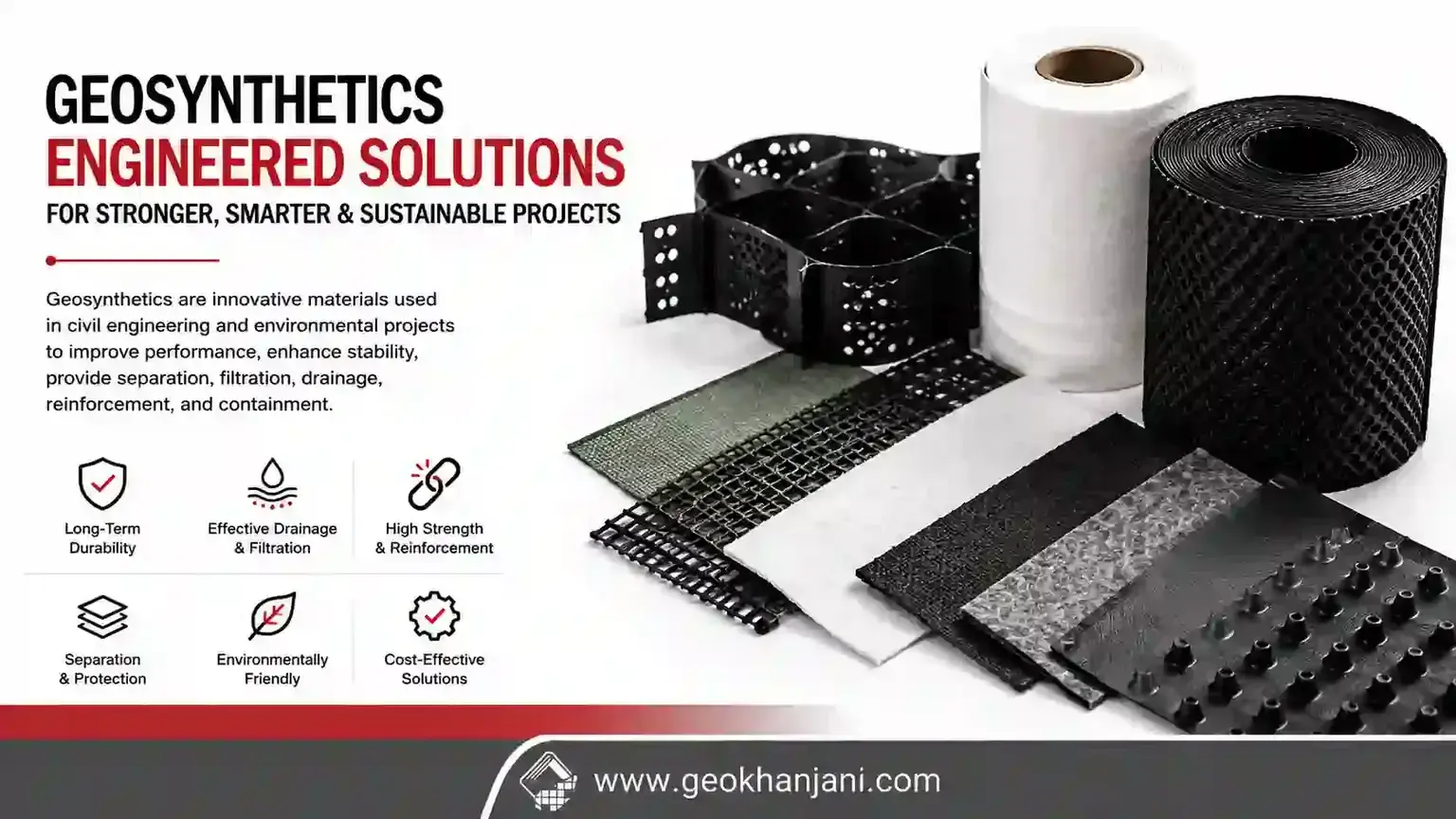 Geosynthetics
Main Types of Geosynthetics
1. Geotextile
Geotextiles are permeable synthetic fabrics used for filtration, separation, drainage, protection, and soil reinforcement. They are available in woven and nonwoven forms and are widely used in roads, railways, drainage systems, and erosion control projects.
2. Geomembrane
Geomembranes are impermeable polymer sheets designed to provide containment and waterproofing. They are commonly used in landfills, reservoirs, mining operations, wastewater treatment plants, canals, and industrial containment systems.
Common types include:
- HDPE Geomembrane
- LLDPE Geomembrane
- PVC Geomembrane
- EPDM Geomembrane
- RPP Geomembrane
- V-Grip Geomembrane
3. Geogrid
Geogrids are high-strength polymer grids used to reinforce soil and distribute loads. They improve the bearing capacity of weak soils and are widely applied in roads, retaining walls, embankments, railways, and slope stabilization.
4. Geocell
Geocells are three-dimensional cellular confinement systems that stabilize soil by confining aggregates within interconnected cells. They are commonly used for load support, slope protection, erosion control, and ground stabilization.
5. Geonet
Geonets are synthetic drainage cores designed to collect and transmit liquids or gases. They are frequently combined with geotextiles to create drainage composites for landfills, retaining walls, tunnels, and foundation drainage systems.
6. Geocomposite
Geocomposites combine two or more geosynthetic materials to perform multiple engineering functions simultaneously, such as drainage, filtration, reinforcement, or waterproofing.
Examples include:
- Geonet + Geotextile
- Geomembrane + Geotextile
- Drainage Composites
- Geocomposite Drains
7. Geosynthetic Clay Liner (GCL)
A Geosynthetic Clay Liner consists of a layer of natural bentonite clay encapsulated between geotextiles or bonded to a geomembrane. It provides an effective hydraulic barrier for environmental containment applications.
Advantages of Geosynthetics
- Improve soil stability and bearing capacity
- Extend the service life of infrastructure
- Reduce construction and maintenance costs
- Minimize settlement and erosion
- Provide excellent waterproofing and containment
- Enhance drainage and filtration performance
- Resist chemicals, UV exposure, and biological degradation
- Lightweight and easy to install
- Environmentally sustainable engineering solution
Applications
Geosynthetics are widely used in:
- Road and highway construction
- Railway engineering
- Airports
- Landfills
- Mining operations
- Water reservoirs
- Canals
- Wastewater treatment plants
- Retaining walls
- Slope stabilization
- Coastal protection
- Environmental remediation
- Agriculture and irrigation
- Industrial containment
- Tunnels and underground structures
Why Choose Geosynthetics?
Geosynthetics provide innovative and cost-effective solutions for modern construction and environmental engineering. Their versatility, durability, and ability to improve the performance of soil and infrastructure make them an essential choice for projects requiring long-term reliability, reduced maintenance, and sustainable construction practices.