V-Grip Geomembrane
V-Grip Geomembrane features an integrated anchoring profile for superior bonding with concrete, providing long-lasting waterproofing for tunnels, reservoirs, wastewater plants, and industrial structures.
V-Grip Geomembrane features an integrated anchoring profile for superior bonding with concrete, providing long-lasting waterproofing for tunnels, reservoirs, wastewater plants, and industrial structures.
TRP Geomembrane provides superior strength, flexibility, UV resistance, and long-lasting waterproof performance for industrial, mining, agricultural, and environmental containment projec
RPP Geomembrane is a reinforced polypropylene liner offering superior strength, flexibility, UV resistance, and long-lasting waterproof performance for industrial, agricultural, mining, and environmental containment applications.
EPDM Geomembrane offers superior flexibility, UV resistance, and long-lasting waterproof performance for ponds, reservoirs, landscaping, wastewater, and industrial containment applications.
Textured Geomembrane offers superior slope stability, high friction, excellent chemical resistance, and long-lasting waterproofing for landfill, mining, reservoirs, and environmental containment projects.
PVC Geomembrane is a flexible and durable waterproofing liner designed for superior containment and leak prevention. It offers excellent chemical resistance, UV stability, and long-term performance for industrial, environmental, and water management applications.
LLDPE geomembrane is one of the types of geomembranes. For more information about the different types and applications of geomembranes, you can refer to the relevant link. LLDPE is a polymer known as polyethylene linear low density.
VLDPE Geomembrane (Very Low-Density Polyethylene Geomembrane) is a highly flexible geosynthetic liner manufactured from premium-grade very low-density polyethylene resin. Thanks to its exceptional elasticity and softness, VLDPE geomembrane easily conforms to irregular surfaces, making it an excellent choice for projects requiring superior flexibility and reliable waterproofing.
HDPE geomembranes are commonly available in black and blue and are produced in thicknesses ranging from 0.75 mm to 2.0 mm, with other custom specifications available depending on project requirements. Thanks to their outstanding mechanical properties and superior resistance to chemicals, moisture, ultraviolet (UV) radiation, oxidation, and environmental stress cracking, HDPE geomembranes have become one of the most widely used lining materials for environmental, hydraulic, mining, agricultural, and industrial containment applications.
Geomembrane is recognized as one of the best waterproofing solutions for preventing water leakage and protecting structures. If you are looking for a reliable and high-quality waterproofing material for your projects, geomembrane is definitely a highly recommended option.
Geomembranes serve as an effective barrier against seepage and erosion, significantly increasing the service life of structures. These materials offer a lifespan that is several times longer compared to alternatives such as concrete or cement. Therefore, geomembranes are widely recommended in various industries, including pond construction, structural waterproofing, and similar applications.
Technically, geomembrane sheets are made from geosynthetic materials. These materials include various polymers such as High-Density Polyethylene (HDPE), Low-Density Polyethylene (LDPE), Polypropylene (PP), and Polyvinyl Chloride (PVC). Geomembranes are used as impermeable barriers for moisture control, gas insulation, and chemical containment.
In civil engineering applications, geomembranes are commonly used as liners for ponds, canals, landfill sites, and other protective systems. In addition, they are widely applied in the mining industry to control leachate flow and prevent soil and groundwater contamination. Geomembranes are also used in agriculture and many other industrial sectors.
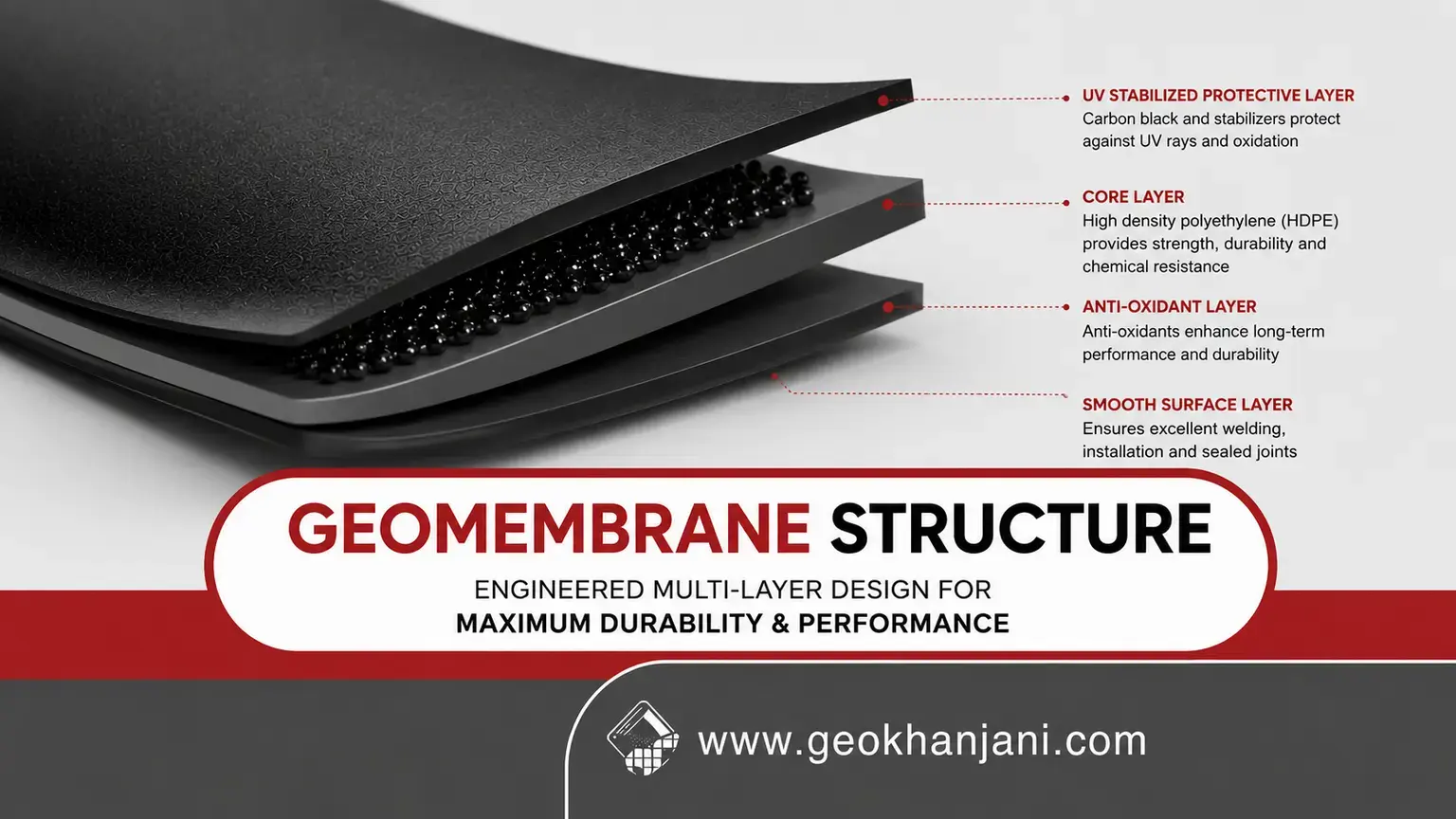 Geomembrane Structure
A geomembrane is a type of geosynthetic material designed to provide an impermeable barrier against liquids, gases, and contaminants. It is manufactured from various polymer materials, including High-Density Polyethylene (HDPE), Low-Density Polyethylene (LDPE), Polypropylene (PP), and Polyvinyl Chloride (PVC).
Geomembranes are widely used in civil engineering, environmental protection, mining, agriculture, and industrial applications to prevent leakage and protect soil and groundwater from contamination. Thanks to their excellent chemical resistance, low permeability, and long service life, geomembranes have become one of the most reliable waterproofing solutions for modern infrastructure projects.
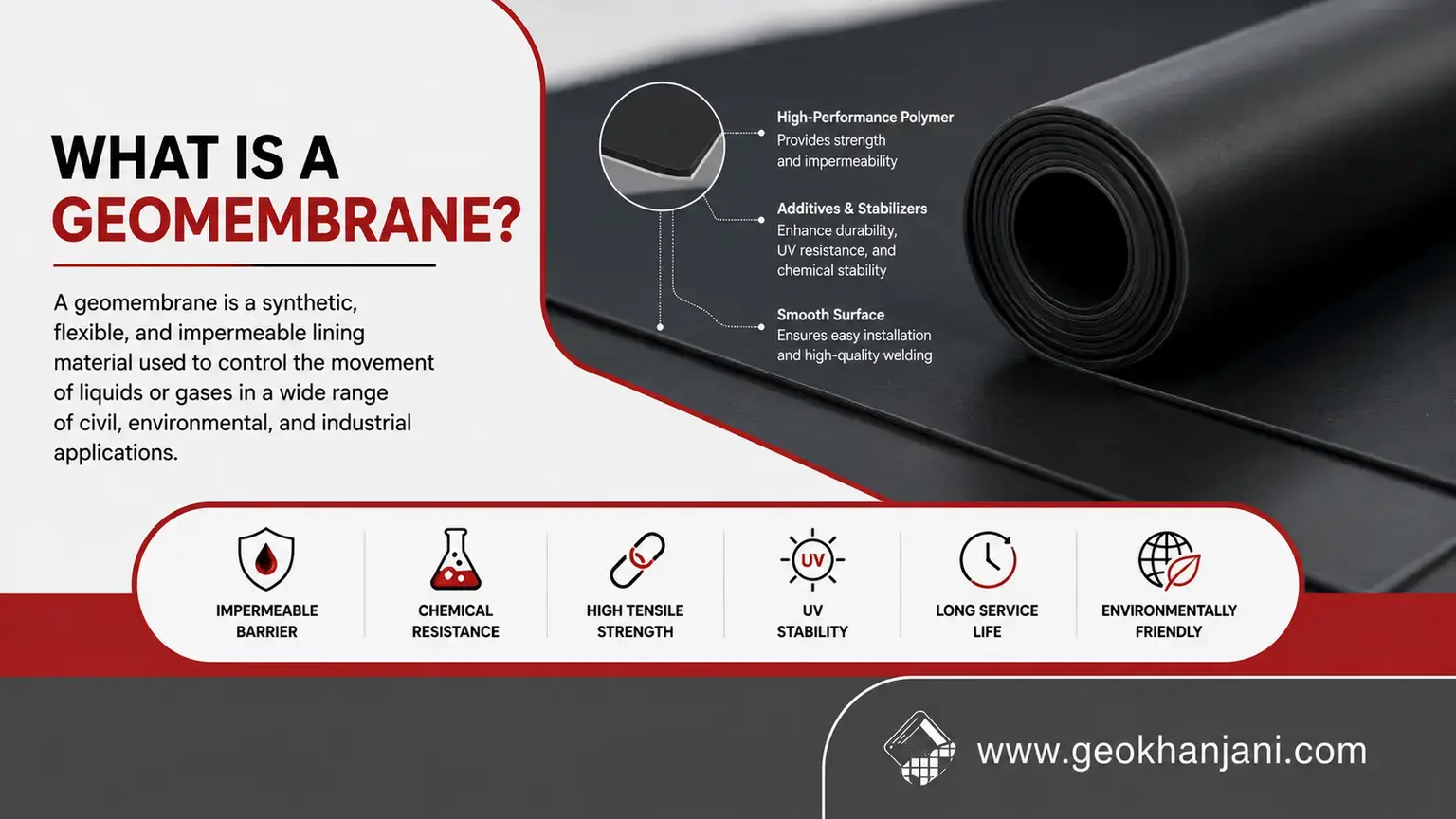 What Is a Geomembrane
Geomembranes are widely used across civil engineering, environmental, mining, agricultural, and industrial projects due to their excellent impermeability and long-term durability. In civil engineering, they serve as impermeable liners for reservoirs, canals, ponds, tunnels, landfills, and other containment systems.
In the mining industry, geomembranes are used to control leachate, prevent groundwater contamination, and provide reliable containment for tailings and process solutions. They also play a vital role in environmental protection projects by preventing the migration of hazardous liquids and protecting soil and groundwater.
In agriculture, geomembranes are commonly used for irrigation ponds, water reservoirs, fish farms, and canal lining systems. Their superior waterproofing performance helps reduce water loss and improves water management efficiency.
Industrial applications include wastewater treatment plants, chemical containment facilities, secondary containment systems, and various waterproofing projects where chemical resistance and long service life are essential.
Different geomembrane materials are available to meet specific project requirements. Selecting the appropriate geomembrane depends on factors such as chemical exposure, mechanical performance, UV resistance, flexibility, installation conditions, and service life.
Below are the most commonly used geomembrane types in engineering and environmental projects.
PVC geomembranes are highly flexible waterproofing membranes widely used in applications requiring excellent adaptability and ease of installation. Their superior flexibility makes them ideal for irregular surfaces and projects with complex geometries.
PVC geomembranes are commonly used for decorative ponds, canals, water reservoirs, mining operations, and waste containment systems. They also offer excellent flame resistance and are easy to weld, making them a preferred choice for many specialized applications.
HDPE geomembrane is one of the most widely used geomembrane materials worldwide. It offers outstanding chemical resistance, excellent UV stability, low permeability, and exceptional durability.
Because of their long service life, high mechanical strength, and cost-effectiveness, HDPE geomembranes are considered the industry standard for large-scale waterproofing projects.
LLDPE geomembranes provide excellent flexibility while maintaining high chemical resistance and UV stability. Compared to HDPE, LLDPE offers greater elongation and better performance where differential settlement or ground movement is expected.
Its flexibility makes LLDPE an excellent choice for projects requiring enhanced adaptability without sacrificing durability.
EPDM geomembranes are synthetic rubber membranes known for their exceptional flexibility and weather resistance. They maintain excellent performance under both extremely high and extremely low temperatures.
Its ability to conform to uneven surfaces makes it particularly suitable for projects where maximum flexibility is required.
VLDPE geomembranes are manufactured from very low-density polyethylene, offering superior flexibility compared to conventional HDPE geomembranes while maintaining excellent waterproofing performance.
Their unique mechanical properties make them suitable for underground waterproofing systems, tunnels, foundations, hydraulic structures, and projects involving complex geometries.
VLDPE geomembranes also provide excellent crack-bridging capability, making them highly effective in applications where movement or settlement may occur.
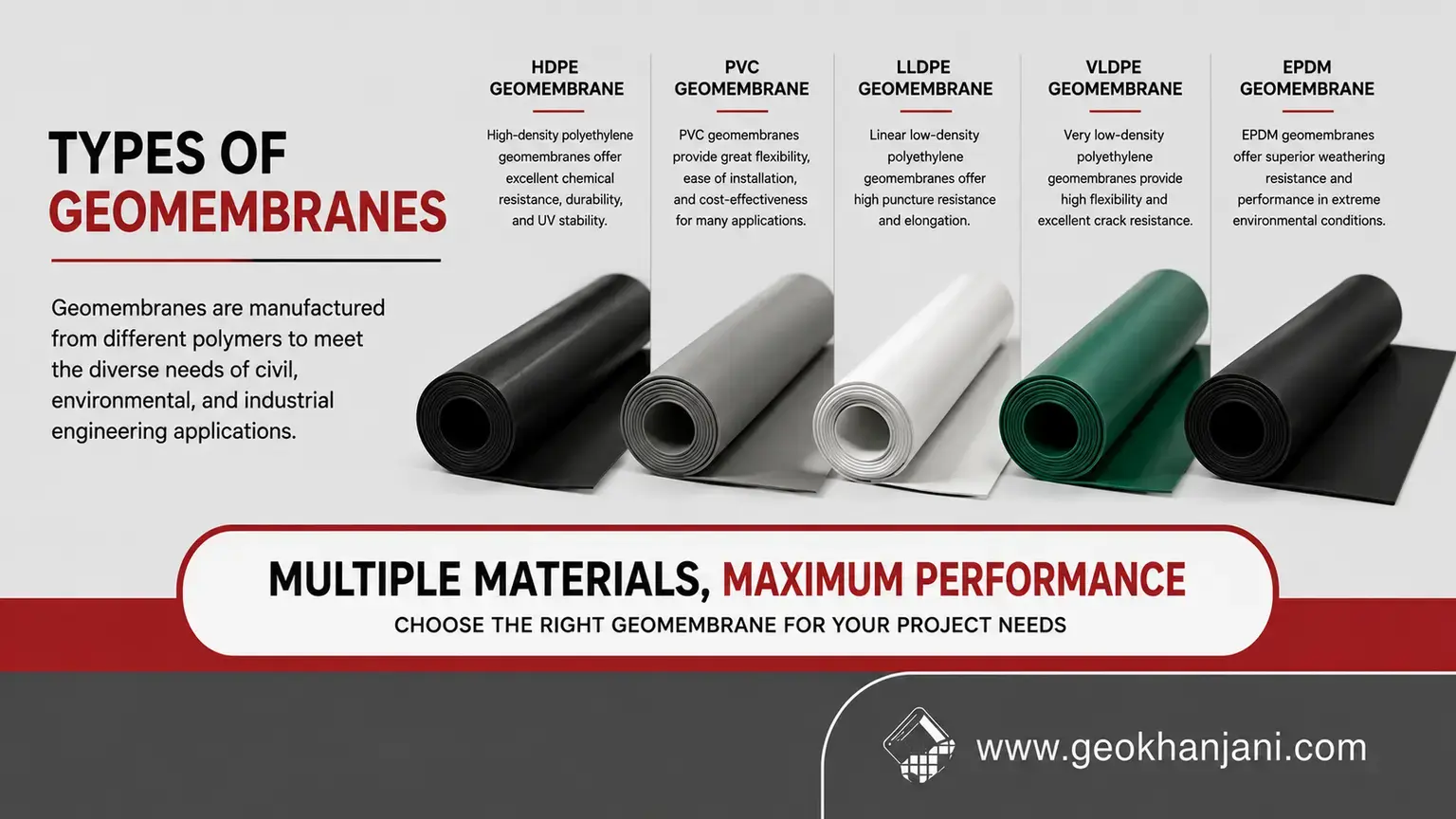 Types of Geomembranes
Geomembrane sheets are among the most effective waterproofing materials used to prevent the leakage or infiltration of water, chemicals, and other liquids into or out of the ground. Thanks to their excellent impermeability, competitive cost, fast installation, and long service life of up to 50–100 years under appropriate design and installation conditions, geomembrane sheets have become one of the most reliable solutions for environmental containment and waterproofing projects.
Geomembrane sheets are widely used across civil engineering, mining, agriculture, environmental protection, and industrial sectors. Selecting the right geomembrane depends on the project's specific requirements, including chemical exposure, mechanical performance, UV resistance, and installation conditions. Our technical team can help you choose the most suitable geomembrane solution for your application.
Geomembranes are used in a wide variety of engineering and environmental projects. Some of their most common applications include:
HDPE geomembranes are extensively used for lining agricultural irrigation ponds, water storage reservoirs, and aquaculture ponds. Their excellent waterproofing performance minimizes water loss, reduces maintenance costs, and provides long-term durability even under continuous outdoor exposure.
Compared with traditional concrete structures, geomembrane-lined ponds are faster to construct, more economical, and easier to maintain.
Geomembranes are widely used as primary liners and capping systems in municipal and industrial landfills. Their extremely low permeability prevents leachate from contaminating surrounding soil and groundwater, helping projects comply with environmental regulations.
Mining operations use geomembranes for heap leach pads, tailings storage facilities, evaporation ponds, and process water containment. Their outstanding chemical resistance makes them suitable for handling aggressive mining solutions while protecting the environment.
Geomembrane liners are commonly installed in reservoirs, irrigation canals, dams, and water conveyance systems to reduce seepage losses and improve water conservation.
Geomembranes are also used as waterproofing membranes in green roof systems. They protect building structures from water infiltration while supporting sustainable landscaping solutions for residential, commercial, and industrial buildings.
Industrial facilities rely on geomembranes for secondary containment areas, wastewater treatment plants, chemical storage facilities, and hazardous liquid containment systems where long-term chemical resistance and impermeability are critical.
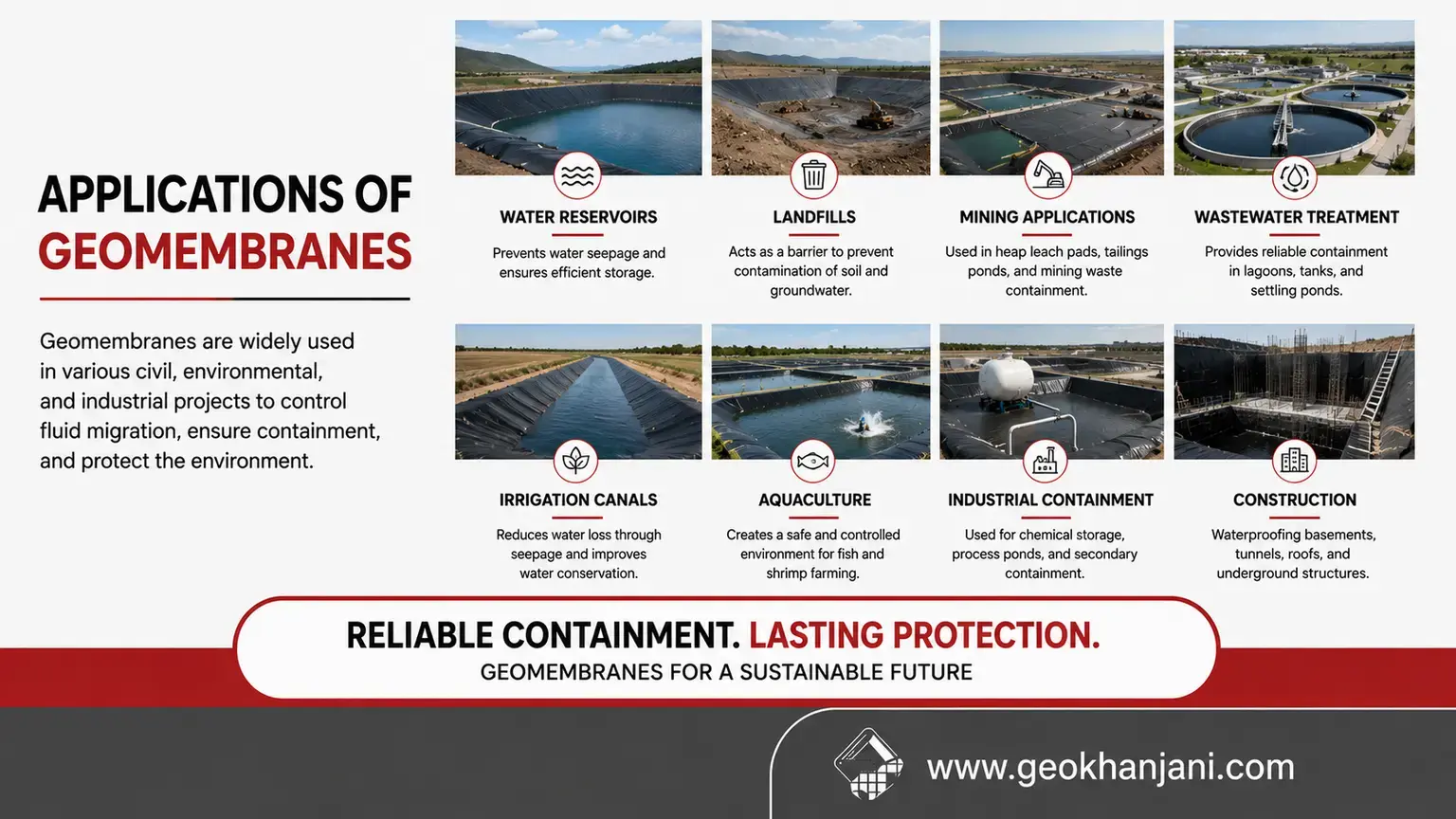 Applications of Geomembranes
Geomembrane liners offer numerous advantages over traditional waterproofing materials, making them the preferred choice for many infrastructure projects.
Geomembranes provide an almost impermeable barrier against water, chemicals, and other liquids, ensuring reliable long-term containment.
High-quality geomembranes can provide decades of reliable performance when properly designed, installed, and maintained.
Large panel sizes and advanced welding techniques significantly reduce installation time compared to conventional waterproofing systems.
Geomembranes reduce both construction and maintenance costs while providing superior waterproofing performance.
HDPE geomembranes offer exceptional resistance to acids, alkalis, salts, and many industrial chemicals.
Properly stabilized geomembranes containing carbon black and antioxidant packages maintain excellent performance under prolonged UV exposure and harsh environmental conditions.
Various materials, thicknesses, and surface textures allow engineers to select the most suitable geomembrane for each project.
Although geomembranes provide significant advantages, several factors should be considered during design and installation.
A smooth, well-prepared foundation is essential to prevent punctures and ensure long-term performance.
Welding quality has a direct impact on liner integrity. Installation should be carried out by experienced technicians using certified welding equipment.
Different geomembrane materials are designed for different applications. Selecting the wrong material may reduce long-term performance.
Although geomembranes require relatively low maintenance, regular inspections help identify potential damage and ensure continued performance throughout the service life.
Geokhanjani is a specialized manufacturer of high-quality geomembrane and geosynthetic solutions, serving civil engineering, environmental, mining, agricultural, and industrial projects. We are committed to delivering reliable waterproofing systems that meet international performance and quality standards.
By utilizing advanced manufacturing technologies and strict quality control procedures, we produce geomembranes designed for long-term durability, excellent chemical resistance, and outstanding environmental performance. Our products are manufactured to support modern infrastructure projects where safety, sustainability, and reliability are essential.
Our experienced team of engineers and technical specialists continuously works to develop innovative solutions that meet the evolving needs of contractors, consultants, and project owners. Every stage of production is carefully monitored to ensure consistent product quality and compliance with internationally recognized testing methods and specifications.
At Geokhanjani, customer satisfaction is at the heart of everything we do. We provide not only high-quality geomembrane products but also technical consultation, product selection guidance, and engineering support to help clients choose the most suitable solution for their specific applications.
With a strong commitment to quality, innovation, and sustainable engineering, Geokhanjani continues to expand its presence in international markets by supplying reliable geomembrane solutions for infrastructure projects around the world.
The technical performance of geomembranes varies depending on the polymer type, thickness, manufacturing process, and project requirements. High-quality geomembranes provide excellent waterproofing performance, chemical resistance, and long-term durability in demanding environmental conditions.
Typical Performance | Property |
0.5 – 3.0 mm | Thickness |
Varies by material type | Density |
High mechanical strength | Tensile Strength |
Excellent flexibility depending on polymer type | Elongation at Break |
Approximately -50°C to +80°C (material dependent) | Operating Temperature |
Excellent (with carbon black stabilization) | UV Resistance |
Excellent | Chemical Resistance |
Outstanding | Waterproof Performance |
Up to 50 years or more (depending on application and installation conditions) | Service Life |
Yes | Recyclability |
Water reservoirs, landfills, mining, canals, wastewater treatment, industrial containment, agriculture | Typical Applications |
Chemical Resistance | Operating Temperature | Water Absorption | Density (g/cm³) | Typical Thickness (mm) | Geomembrane Type |
Excellent | -50°C to +80°C | Very Low | 0.94 – 0.97 | 0.5 – 3.0 | HDPE |
Excellent | -50°C to +80°C | Very Low | 0.91 – 0.93 | 0.5 – 2.0 | LDPE |
Excellent | -50°C to +80°C | Very Low | 0.92 – 0.94 | 0.5 – 3.0 | LLDPE |
Very Good | -20°C to +60°C | Very Low | 1.20 – 1.45 | 0.5 – 2.0 | PVC |
Excellent | -10°C to +100°C | Very Low | 0.90 – 0.92 | 0.5 – 2.0 | PP |
Excellent | -45°C to +120°C | Very Low | 1.10 – 1.50 | 0.75 – 2.5 | EPDM |
Excellent | -50°C to +80°C | Very Low | 0.90 – 0.92 | 0.5 – 3.0 | VLDPE |
Geokhanjani is a specialized manufacturer of premium geomembrane and geosynthetic products for civil engineering, environmental, mining, agricultural, oil & gas, and industrial applications.
Our production facilities are equipped with advanced manufacturing technology and strict quality control systems to ensure consistent product performance and compliance with international standards. We manufacture high-quality geomembrane sheets in thicknesses ranging from 0.75 mm to 3.0 mm, offering reliable waterproofing solutions for a wide variety of engineering projects.
Whether your project requires HDPE, PVC, VLDPE, LLDPE, or other geomembrane materials, our engineering team can help you select the most suitable solution based on your technical requirements and project conditions.
open