V-Grip Geomembrane
V-Grip Geomembrane features an integrated anchoring profile for superior bonding with concrete, providing long-lasting waterproofing for tunnels, reservoirs, wastewater plants, and industrial structures.
HDPE geomembranes are commonly available in black and blue and are produced in thicknesses ranging from 0.75 mm to 2.0 mm, with other custom specifications available depending on project requirements. Thanks to their outstanding mechanical properties and superior resistance to chemicals, moisture, ultraviolet (UV) radiation, oxidation, and environmental stress cracking, HDPE geomembranes have become one of the most widely used lining materials for environmental, hydraulic, mining, agricultural, and industrial containment applications.
Categories:
HDPE geomembrane
HDPE geomembranes are manufactured from a premium-grade compound consisting of approximately 97.5% High-Density Polyethylene (HDPE) and 2.5% carbon black, antioxidants, and proprietary stabilizing additives. This carefully engineered formulation provides exceptional durability, chemical resistance, and long-term performance in demanding environmental conditions.
HDPE geomembranes are commonly available in black and blue and are produced in thicknesses ranging from 0.75 mm to 2.0 mm, with other custom specifications available depending on project requirements.
Thanks to their outstanding mechanical properties and superior resistance to chemicals, moisture, ultraviolet (UV) radiation, oxidation, and environmental stress cracking, HDPE geomembranes have become one of the most widely used lining materials for environmental, hydraulic, mining, agricultural, and industrial containment applications.
Typical applications include landfill lining systems, mining operations, agricultural water reservoirs, wastewater containment, aquaculture ponds, canals, and environmental protection projects where long-term impermeability and chemical resistance are essential.
High-Density Polyethylene (HDPE) is a high-performance thermoplastic polymer widely recognized for its excellent combination of strength, durability, and chemical resistance. These characteristics make it the preferred raw material for manufacturing geomembranes used in critical containment applications.
One of HDPE's most significant advantages is its exceptional resistance to ultraviolet (UV) radiation, allowing it to maintain its mechanical properties even after prolonged exposure to sunlight. This makes HDPE geomembranes particularly suitable for outdoor applications where long-term weather resistance is required.
HDPE also performs exceptionally well in low-temperature environments. Unlike many conventional waterproofing materials, it retains its flexibility and structural integrity in cold climates without becoming brittle or cracking.
Another key benefit is its outstanding resistance to a broad range of chemicals, including acids, alkalis, salts, hydrocarbons, and many industrial compounds. This excellent chemical compatibility makes HDPE geomembranes the preferred solution for hazardous waste containment, mining facilities, industrial lagoons, and chemical storage systems.
In addition to their outstanding performance characteristics, HDPE geomembranes are highly cost-effective and can be joined using specialized hot wedge and extrusion welding equipment. These welding methods create homogeneous, leak-proof seams that provide long-term waterproof performance throughout the life of the project.
For these reasons, HDPE geomembranes are extensively used in the construction of:
Because HDPE is chemically inert, it does not react with stored water or aquatic environments, making it particularly suitable for fish and shrimp farming applications while maintaining water quality.
When manufactured according to international quality standards and properly installed, HDPE geomembranes can provide a service life exceeding 50 years, making them one of the most reliable long-term waterproofing solutions available today.
Despite their numerous advantages, HDPE geomembranes also present certain practical considerations during transportation and installation.
Due to the material's relatively high density and stiffness, transporting large geomembrane rolls may require specialized handling equipment, particularly for large-scale projects.
Installation should always be performed by qualified technicians using dedicated geomembrane welding equipment to ensure seam integrity and long-term waterproof performance.
Unlike some factory-fabricated lining systems, HDPE geomembranes are generally welded together on-site after delivery. This allows installers to accommodate complex site geometries while producing continuous, fully sealed lining systems tailored to the specific dimensions of each project.
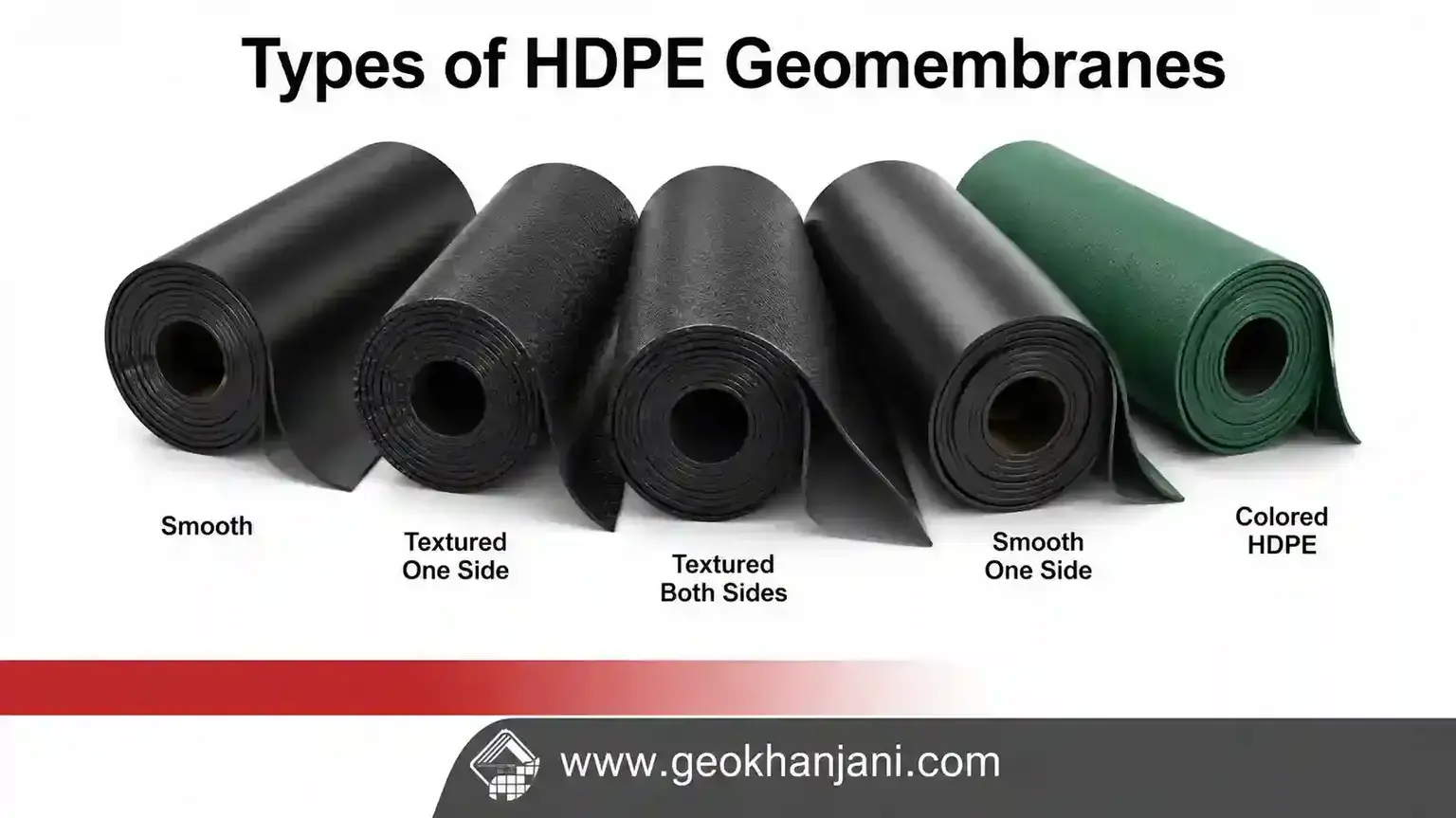
HDPE geomembranes are manufactured in a variety of configurations to satisfy different engineering, environmental, and industrial requirements.
Common product categories include:
Each type is engineered to provide specific performance characteristics depending on the project's environmental conditions, loading requirements, and installation method.
HDPE geomembranes have become the preferred lining solution for a wide range of environmental, hydraulic, and industrial applications due to their outstanding mechanical properties and long-term durability. Their combination of strength, flexibility, and chemical resistance provides a reliable barrier system capable of performing under the most demanding service conditions.
Key advantages of HDPE geomembranes include:
Although HDPE geomembranes offer exceptional long-term performance, several practical considerations should be taken into account during project planning and installation.
These include:
When installed in accordance with international standards and project specifications, these considerations have minimal impact on overall system performance.
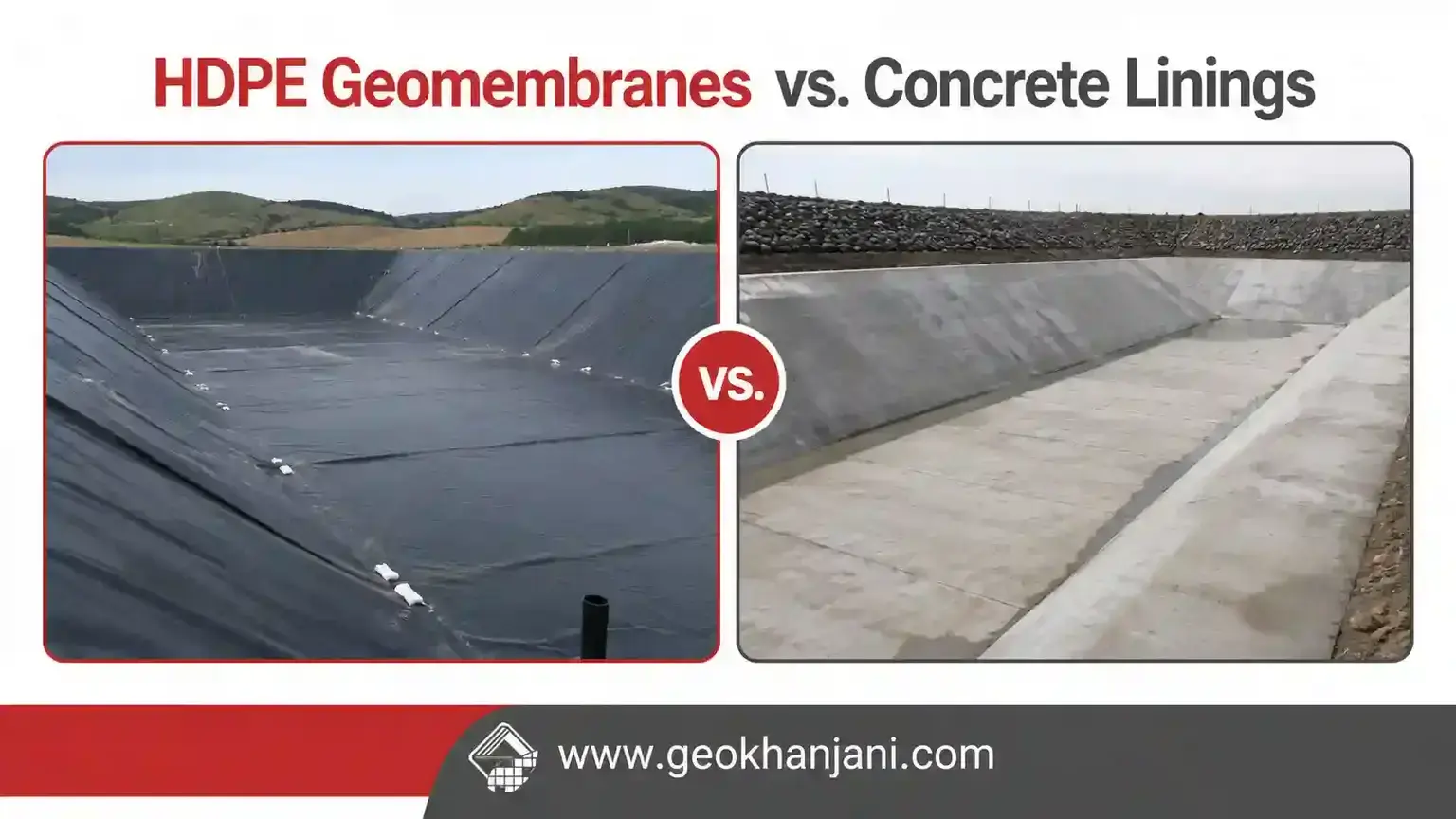 HDPE Geomembranes vs. Concrete Linings
For decades, concrete was the conventional material used for constructing agricultural reservoirs, irrigation ponds, and artificial lakes. Today, HDPE geomembranes have emerged as a more efficient, economical, and durable alternative for many water containment applications.
HDPE geomembrane lining systems are significantly more cost-effective than concrete structures. In many agricultural water storage projects, the total construction cost of a geomembrane-lined reservoir is approximately one-third that of a comparable concrete reservoir.
Concrete construction involves excavation, formwork, reinforcement, pouring, curing, and finishing, resulting in lengthy construction schedules.
By contrast, HDPE geomembranes can be installed rapidly, with experienced installation teams capable of completing up to 1,000 m² per day, substantially reducing project completion times.
Unlike rigid concrete structures, HDPE geomembranes accommodate differential settlement, ground movement, and thermal expansion without cracking.
This flexibility allows the liner to maintain its waterproof integrity even under varying environmental and loading conditions.
Properly manufactured and professionally installed HDPE geomembranes are designed to provide decades of reliable service.
Under typical operating conditions, high-quality HDPE liners can achieve an expected service life of 50 years or more, with some applications demonstrating significantly longer performance.
Because HDPE geomembranes are resistant to cracking, corrosion, and chemical attack, they require considerably less maintenance than conventional concrete structures, resulting in lower long-term operating costs.
 Why HDPE Geomembranes Have Replaced Concrete in Many Applications
The evolution of geosynthetic technology has transformed modern water containment systems.
Compared with traditional concrete linings, HDPE geomembranes provide:
For these reasons, HDPE geomembranes have become the preferred lining solution for agricultural reservoirs, industrial lagoons, aquaculture ponds, mining facilities, and environmental containment systems worldwide.
One of the greatest advantages of HDPE geomembranes is their exceptional long-term durability.
Manufactured from premium-quality polyethylene resins and stabilized with carbon black and antioxidant additives, these liners maintain their physical and mechanical properties even after decades of exposure to harsh environmental conditions.
When properly designed, installed, and maintained, HDPE geomembranes provide reliable containment performance throughout the operational life of the facility, making them one of the most cost-effective waterproofing solutions available.
Thanks to their exceptional impermeability, chemical resistance, and long-term durability, HDPE geomembranes have become one of the most widely specified geosynthetic lining materials across a broad range of civil, environmental, hydraulic, agricultural, and industrial applications.
Some of the most common applications include:
HDPE geomembranes are extensively used as primary containment liners in municipal solid waste and hazardous waste landfills. Their impermeable barrier prevents leachate from migrating into surrounding soil and groundwater, helping protect the environment and comply with stringent environmental regulations.
Mining facilities rely on HDPE geomembranes for heap leach pads, tailings storage facilities, evaporation ponds, and process solution containment systems.
Their exceptional resistance to aggressive chemicals makes them suitable for handling acidic and alkaline mining solutions while preventing contamination of surrounding ecosystems.
HDPE geomembranes are widely used in wastewater treatment plants as impermeable liners for treatment lagoons, sludge ponds, equalization basins, and industrial wastewater storage facilities.
Their excellent chemical resistance and long service life ensure reliable containment under demanding operating conditions.
In transportation infrastructure, HDPE geomembranes function as waterproof barriers that protect pavement structures from groundwater infiltration and moisture-related deterioration.
They are also incorporated into tunnel waterproofing systems, bridge abutments, and other underground civil engineering structures.
One of the most critical functions of HDPE geomembranes is environmental containment.
By preventing hazardous liquids from infiltrating underlying soil and groundwater, HDPE liners significantly reduce the risk of environmental pollution and help protect public health.
The oil and gas sector utilizes HDPE geomembranes for:
Their resistance to hydrocarbons and industrial chemicals makes them an ideal solution for these demanding applications.
HDPE geomembranes are frequently installed between concrete structures and surrounding soil to provide a durable waterproofing barrier while minimizing moisture penetration, chemical attack, and concrete deterioration.
Within the construction industry, HDPE geomembranes are commonly used as waterproofing membranes for:
These applications help prevent moisture intrusion while extending the service life of the structure.
Agricultural reservoirs represent one of the largest markets for HDPE geomembranes.
Compared with traditional concrete reservoirs, geomembrane-lined ponds offer:
These advantages have made HDPE geomembranes the preferred lining material for irrigation water storage worldwide.
HDPE geomembranes are installed in canals, rivers, and water conveyance systems to minimize seepage losses and improve hydraulic efficiency.
They also protect channel beds against erosion and reduce long-term maintenance requirements.
Modern dam engineering increasingly incorporates HDPE geomembranes as waterproof lining systems for reservoirs, decorative lakes, recreational water bodies, and hydraulic containment structures.
Their flexibility allows them to accommodate foundation movement without compromising impermeability.
HDPE geomembranes are widely recognized as the preferred lining material for fish farms, shrimp farms, and other aquaculture facilities.
Because HDPE is chemically inert, it does not react with water or release harmful substances, helping maintain optimal water quality and providing a healthier environment for aquatic species.
The wide variety of geomembrane materials available today allows engineers to select lining systems based on project-specific environmental conditions and performance requirements.
Among these materials, HDPE geomembranes remain one of the most widely specified solutions due to their exceptional combination of durability, chemical resistance, cost efficiency, and long-term reliability.
Key reasons for selecting HDPE geomembranes include:
These characteristics make HDPE geomembranes the preferred choice for infrastructure projects requiring reliable, long-term containment performance.
The cost of HDPE geomembranes depends on several technical and commercial factors, including:
Since raw material prices fluctuate over time, the most accurate pricing can be obtained by consulting directly with the manufacturer and providing detailed project specifications.
Selecting a reputable manufacturer is essential to ensuring product quality and long-term performance.
Geo Khanjani specializes in the manufacture and supply of premium geosynthetic products, including high-quality HDPE geomembranes designed in accordance with internationally recognized quality standards.
Supported by experienced engineers, advanced manufacturing technologies, and rigorous quality control procedures, Geo Khanjani delivers reliable waterproofing solutions for projects ranging from agricultural reservoirs to complex environmental containment systems.
Our technical team is available to assist clients with:
Geo Khanjani supplies premium-quality HDPE geomembranes for use in civil engineering, infrastructure, mining, environmental protection, agriculture, and water management projects.
By choosing our products, clients benefit from:
Our HDPE geomembranes are backed by a 10-year product warranty and are engineered to provide a minimum design service life of more than 50 years under normal operating conditions.
HDPE geomembranes have established themselves as the industry standard for impermeable lining systems due to their exceptional durability, chemical resistance, mechanical performance, and long-term reliability.
From agricultural reservoirs and aquaculture ponds to landfills, mining facilities, wastewater treatment plants, and industrial containment systems, HDPE geomembranes provide a cost-effective, environmentally responsible, and technically advanced solution for fluid containment and waterproofing.
By selecting high-quality materials manufactured in accordance with international standards and ensuring proper installation by qualified professionals, project owners can achieve decades of reliable performance while minimizing maintenance costs and maximizing environmental protection.
frequently asked question
V-Grip Geomembrane features an integrated anchoring profile for superior bonding with concrete, providing long-lasting waterproofing for tunnels, reservoirs, wastewater plants, and industrial structures.
TRP Geomembrane provides superior strength, flexibility, UV resistance, and long-lasting waterproof performance for industrial, mining, agricultural, and environmental containment projec
RPP Geomembrane is a reinforced polypropylene liner offering superior strength, flexibility, UV resistance, and long-lasting waterproof performance for industrial, agricultural, mining, and environmental containment applications.
EPDM Geomembrane offers superior flexibility, UV resistance, and long-lasting waterproof performance for ponds, reservoirs, landscaping, wastewater, and industrial containment applications.
Textured Geomembrane offers superior slope stability, high friction, excellent chemical resistance, and long-lasting waterproofing for landfill, mining, reservoirs, and environmental containment projects.
PVC Geomembrane is a flexible and durable waterproofing liner designed for superior containment and leak prevention. It offers excellent chemical resistance, UV stability, and long-term performance for industrial, environmental, and water management applications.
LLDPE geomembrane is one of the types of geomembranes. For more information about the different types and applications of geomembranes, you can refer to the relevant link. LLDPE is a polymer known as polyethylene linear low density.
VLDPE Geomembrane (Very Low-Density Polyethylene Geomembrane) is a highly flexible geosynthetic liner manufactured from premium-grade very low-density polyethylene resin. Thanks to its exceptional elasticity and softness, VLDPE geomembrane easily conforms to irregular surfaces, making it an excellent choice for projects requiring superior flexibility and reliable waterproofing.