PVC Waterstop
When water has to be kept out of a concrete structure, the joints between different concrete sections deserve special attention. Even well-designed concrete can develop leakage paths at construction and movement joints if these areas aren't properly sealed.
PVC waterstop is a flexible joint sealing profile designed to be embedded into concrete and provide a continuous barrier against water migration. Because it's manufactured in different shapes and sizes, it can be selected for a wide range of concrete joint configurations.
It's commonly used in water tanks, swimming pools, tunnels, foundations, dams, wastewater treatment plants, underground structures, retaining walls, and other water-retaining concrete structures.
What Is PVC Waterstop?
PVC waterstop is a specially formulated flexible PVC profile installed across a concrete joint before or during concrete placement.
Once embedded, the profile creates a barrier within the concrete. Its ribs, fins, or center-bulb sections increase the contact area with concrete and help prevent water from finding a continuous path through the joint
Unlike hydrophilic products, PVC waterstop doesn't depend on swelling when exposed to water. Its waterproofing performance comes primarily from its profile geometry, flexibility, embedment, and how continuously it's installed.
Why Is PVC Waterstop Important?
Concrete joints show up in many construction projects — they may be needed because concrete is poured in separate stages, because structural movement has to be accommodated, or because the construction sequence requires planned interruptions.
Without an appropriate joint sealing system, these interfaces can become vulnerable to water infiltration.
PVC waterstop addresses that vulnerability by placing a flexible barrier directly within the joint, which can be an important part of the overall waterproofing strategy for water-retaining structures.
Main PVC Waterstop Profiles
PVC waterstops aren't available in just one standard shape — different profiles suit different joint conditions.
Center Bulb PVC Waterstop
A center bulb PVC waterstop includes a flexible bulb in the middle of the profile. The bulb adds extra flexibility and is commonly associated with joints where movement needs to be accommodated.
These profiles are often used for expansion or movement joints where the joint detail calls for controlled deformation.
Ribbed PVC Waterstop
Ribbed profiles feature longitudinal ribs or fins that become embedded in the concrete.
The ribs increase mechanical interlock between the waterstop and the surrounding concrete, and are commonly used for construction joints and other applications where a fixed sealing barrier is needed.
Flat PVC Waterstop
Flat profiles have a relatively simple cross-section and can work well for specific construction details where the available space and joint design allow their use.
The appropriate width and thickness should be chosen according to the concrete section and project requirements.
Combination Profiles
Some PVC waterstops combine ribs with a center bulb or other profile features. These designs can offer both concrete anchorage and flexibility, making them suitable for more demanding joint configurations.
The profile should always be selected based on the actual movement and joint detail rather than by appearance alone.
PVC Waterstop Applications
PVC waterstop is widely used in structures where water leakage through concrete joints has to be controlled.
Typical applications include swimming pools, water reservoirs, drinking water tanks, wastewater treatment plants, dams, tunnels, underground parking structures, basement walls, foundations, retaining structures, water channels, hydraulic structures, industrial concrete tanks, and underground utility structures.
The required profile can vary significantly between applications, so project-specific joint details should be reviewed before ordering.
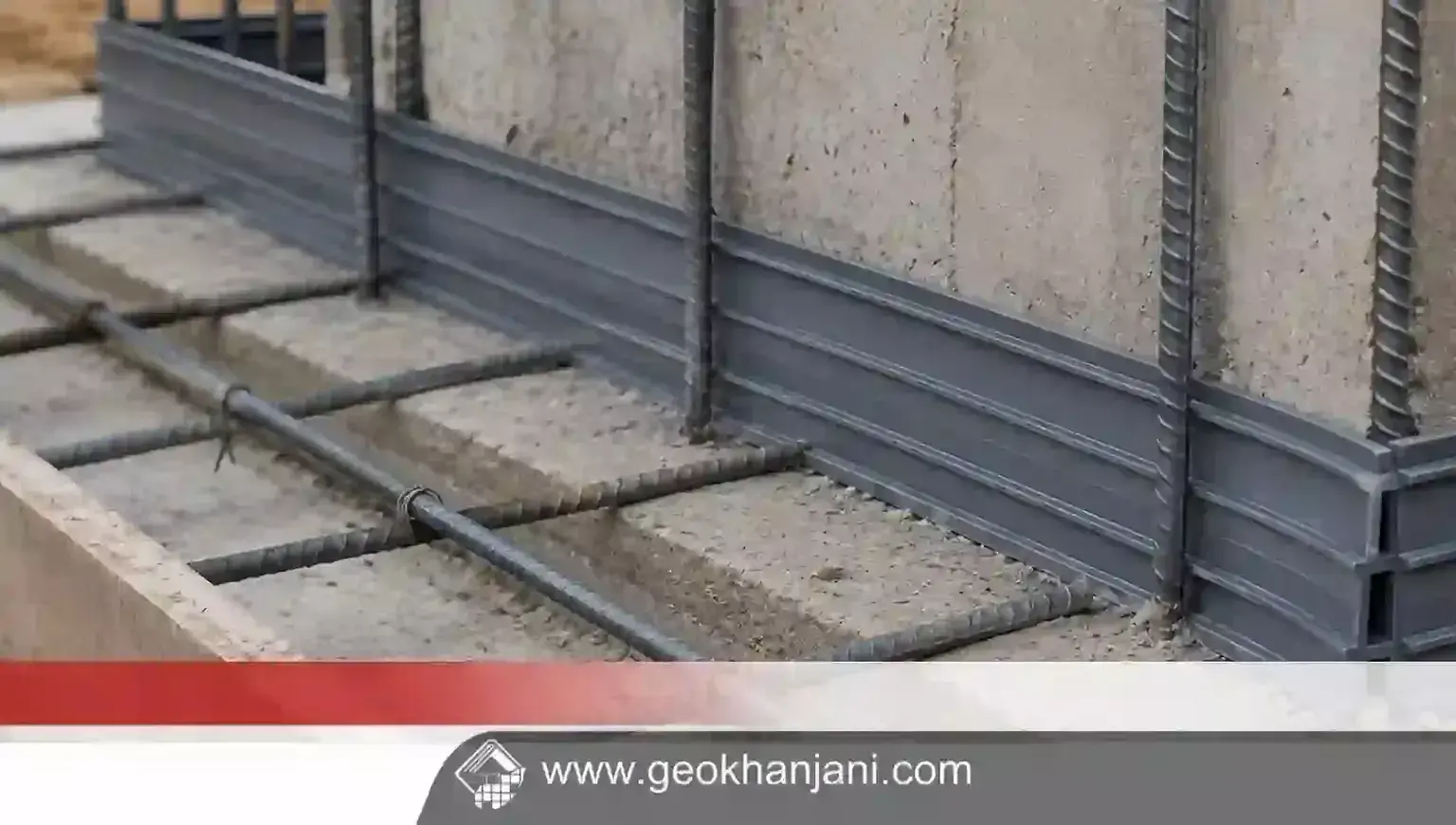 PVC Waterstop Applications
How Does PVC Waterstop Work?
The waterproofing mechanism of PVC waterstop is based on creating a continuous physical barrier within the concrete.
During concrete placement, the profile becomes embedded on both sides of the joint. Its geometry creates an extended, irregular path that water would have to travel through to cross the joint.
The flexible nature of PVC also lets the profile accommodate a certain degree of deformation, depending on its design. For movement joints, profiles with a center bulb or other movement-accommodating features can be used where specified by the structural and waterproofing design.
PVC Waterstop Installation
Correct installation is one of the most important factors affecting how a waterstop performs.
It starts with reviewing the joint detail — identifying the type of joint and determining the required waterstop profile, since construction joints and movement joints shouldn't automatically use the same profile.
The PVC profile then needs to be positioned accurately along the joint line, following the approved construction detail so that adequate concrete surrounds the embedded sections.
From there, the profile has to be secured firmly enough to prevent movement during reinforcement work, formwork installation, and concrete placement — special waterstop clips or other suitable fixing methods may be used depending on the profile and reinforcement arrangement.
Maintaining continuity matters a lot too. Connections between waterstop sections need careful attention — corners, intersections, changes in direction, and end connections should be fabricated according to the manufacturer's recommended procedure so the waterproofing barrier stays continuous.
Finally, concrete should be placed and compacted carefully around the profile. Proper vibration and consolidation are especially important around the waterstop, since honeycombing, voids, or poorly compacted concrete can create leakage paths alongside the profile.
PVC Waterstop Welding
One important difference between PVC waterstop and many strip-type hydrophilic products is how sections get connected.
PVC waterstop sections can commonly be joined using heat welding techniques designed for compatible PVC profiles. Welding should produce a continuous connection without damaging or deforming the profile.
On large projects, special attention should go to factory-fabricated corners, intersections, and site-welded connections, since these areas can become critical points in the waterproofing system.
The exact welding temperature, equipment, preparation, and procedure should always follow the waterstop manufacturer's instructions.
PVC Waterstop for Construction Joints
A construction joint forms when a concrete pour is interrupted and another pour is completed later. The interface between the two pours can become a potential leakage path.
A ribbed PVC waterstop can be embedded across this interface, letting the surrounding concrete lock around the profile and creating a physical barrier that interrupts water movement through the joint.
The system's effectiveness depends not just on the waterstop itself but also on concrete quality, correct positioning, adequate embedment, and proper joint preparation.
PVC Waterstop for Expansion Joints
Expansion and movement joints behave differently from static construction joints. They're designed to allow controlled movement from things like temperature changes, shrinkage, structural deformation, or other design conditions.
For these applications, a PVC profile with a suitable center bulb or movement zone may be the right choice. The key question is whether the profile can accommodate the expected joint movement without losing its sealing function.
A standard flat or construction-joint profile shouldn't be used for a movement joint just because it's available or less expensive.
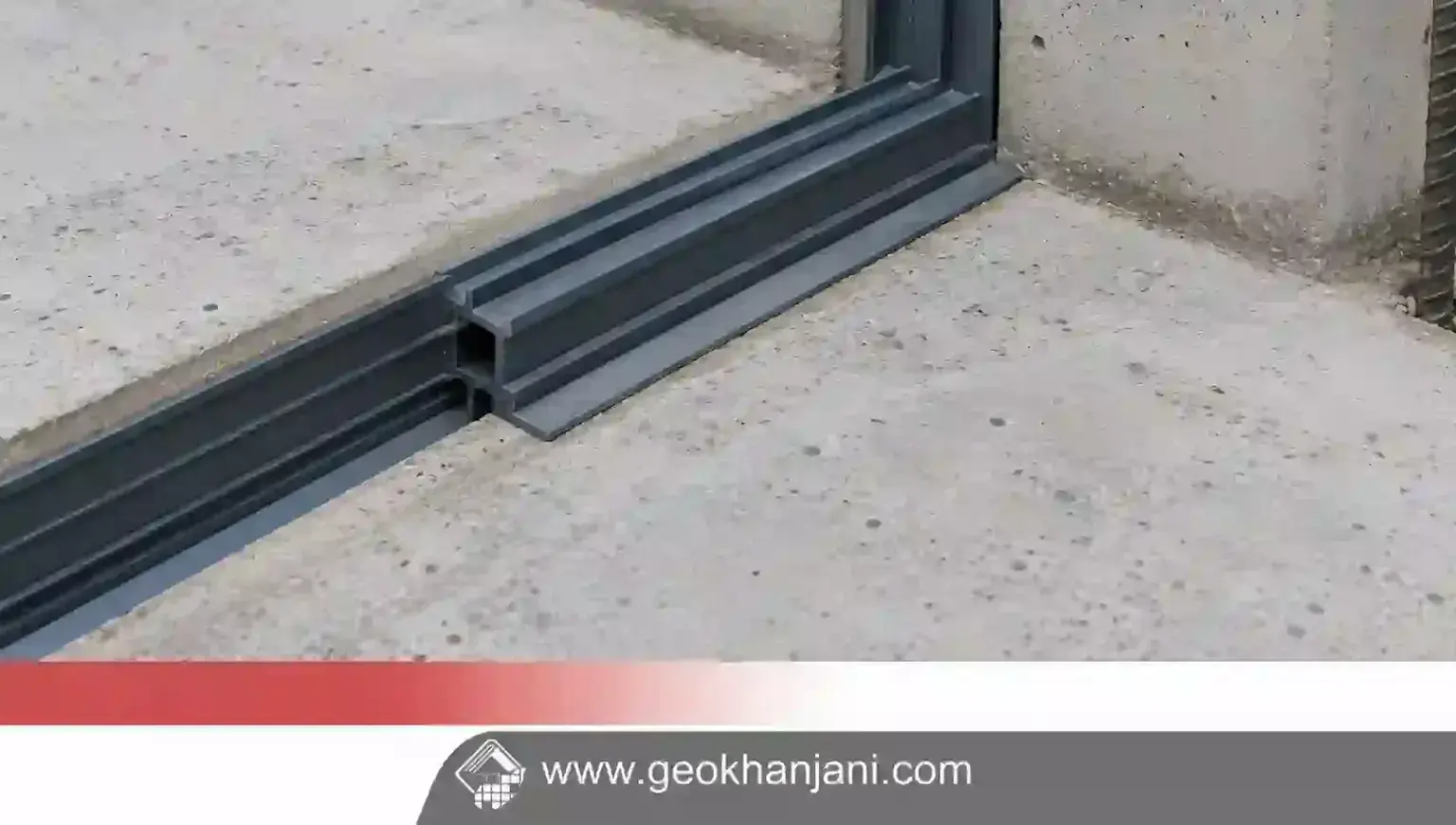 PVC Waterstop for Expansion Joints
Advantages of PVC Waterstop
PVC waterstop offers several benefits when correctly specified. It's a flexible material suited to concrete joint applications, available in many profiles and dimensions, and suitable for both construction and selected movement joints. It creates a continuous physical water barrier, can be heat-welded into continuous sections, and resists long-term water exposure.
It also works across a wide range of civil engineering applications, can be integrated into complex concrete joint details, and comes in different widths and thicknesses.
Actual performance still depends on material quality, profile design, installation, concrete conditions, and the project environment.
PVC Waterstop Limitations
PVC waterstop is highly useful, but it's not a universal solution for every waterproofing detail.
Problems can arise if the wrong profile is selected for the joint, if the waterstop isn't properly anchored, if the profile moves during concrete placement, if connections are poorly welded, if the concrete around the profile contains voids, if the waterstop gets cut or damaged during construction, or if the joint movement exceeds what the selected profile can handle.
For demanding projects, the waterstop should be treated as part of the engineered joint detail, not an afterthought.
PVC Waterstop vs. Hydrophilic Waterstop
The two products rely on fundamentally different sealing mechanisms.
PVC waterstop creates a physical barrier inside the concrete, with performance depending on the profile, embedment, flexibility, and continuity of installation. Hydrophilic waterstop, by contrast, reacts to water and expands, and is commonly used in construction joints where movement is limited.
PVC waterstop may be the better fit where the joint needs a designed profile for movement accommodation, while hydrophilic waterstop offers a compact solution for suitable static or low-movement construction joints.
The decision should be based on the joint design, not just a comparison of the materials themselves.
Factors Affecting PVC Waterstop Price
The price of PVC waterstop depends on several variables: profile type, width and thickness, PVC formulation, manufacturing quality, brand, required quantity, factory-fabricated accessories, welding requirements, and project specifications.
Center-bulb and specialized profiles may cost differently than standard ribbed profiles because their geometry and manufacturing requirements differ.
For large projects, it's also worth factoring in the cost of installation, welding, accessories, and prefabricated components rather than comparing only the price per meter.
Buying PVC Waterstop
Before purchasing PVC waterstop, pin down the actual requirements of the concrete joint.
It helps to work through a few questions: Is the joint a construction joint, contraction joint, or movement joint? Does the project need a ribbed, flat, center-bulb, or combination profile? What width, thickness, and profile geometry are required? Is the joint expected to open, close, or move laterally? What water pressure and environmental exposure apply? What are the fixing requirements, and will site welding be necessary? How much length is needed, allowing for connections, corners, and waste? And has the manufacturer provided product specifications and installation instructions?
Common PVC Waterstop Installation Mistakes
Poor installation can undermine an otherwise suitable product. Common mistakes include incorrect waterstop positioning, insufficient concrete cover, inadequate fixing, unnecessarily cutting the profile, poorly welded joints, damaging the waterstop during reinforcement work, using an inappropriate profile for the joint's movement, inadequate concrete consolidation, letting concrete debris interfere with the profile, and failing to inspect connections before concrete placement.
Site quality control should include inspecting the waterstop both before and during concrete placement.
PVC Waterstop for Water Tanks and Pools
Water tanks and swimming pools are among the most familiar applications for PVC waterstop.
These structures are built to retain water, so leakage at concrete joints can lead to maintenance problems and deterioration of surrounding components. A properly selected PVC waterstop provides a continuous barrier within the joint and can be worked into the concrete construction sequence.
For tanks containing drinking water or chemically treated water, the suitability of the PVC formulation should be verified against the project's requirements.
PVC Waterstop for Tunnels and Underground Structures
Underground structures are exposed to groundwater pressure and moisture from the surrounding soil, so tunnels, basement walls, underground parking areas, and similar structures can benefit a lot from carefully designed joint waterproofing.
PVC waterstop can be built into construction and movement joints to reduce the risk of water traveling through these interfaces. The final waterproofing design may also include drainage systems, membranes, sealants, or other complementary measures depending on the project.
Easy PVC Waterstop Purchase from GeoKhanjani
Looking for a reliable PVC Waterstop at a competitive price? GeoKhanjani provides PVC waterstop products suitable for concrete construction joints, water tanks, swimming pools, tunnels, foundations, and other waterproofing projects.
You can easily review the product specifications, choose the required size and quantity, and place your order through the GeoKhanjani website. Our team can also help you select the appropriate PVC Waterstop based on your project requirements and joint type.
Choose the right PVC Waterstop, order easily, and benefit from competitive pricing through GeoKhanjani.