Geosynthetic Clay Liner (GCL)
A Geosynthetic Clay Liner (GCL) is an advanced composite geosynthetic designed to provide an effective hydraulic barrier for modern civil engineering and environmental containment projects. It consists of a layer of high-quality natural sodium bentonite
encapsulated between woven and nonwoven geotextiles, or bonded to a geomembrane, using needle-punching or adhesive bonding technology.
When exposed to water, the bentonite swells and forms an extremely low-permeability barrier that effectively prevents the migration of liquids and contaminants. Compared with conventional compacted clay liners, GCLs offer faster installation, lower transportation costs, consistent quality, and excellent long-term hydraulic performance.
Today, GCLs are widely used in landfills, mining operations, reservoirs, canals, wastewater treatment plants, secondary containment systems, and numerous environmental protection projects where reliable waterproofing is essential.
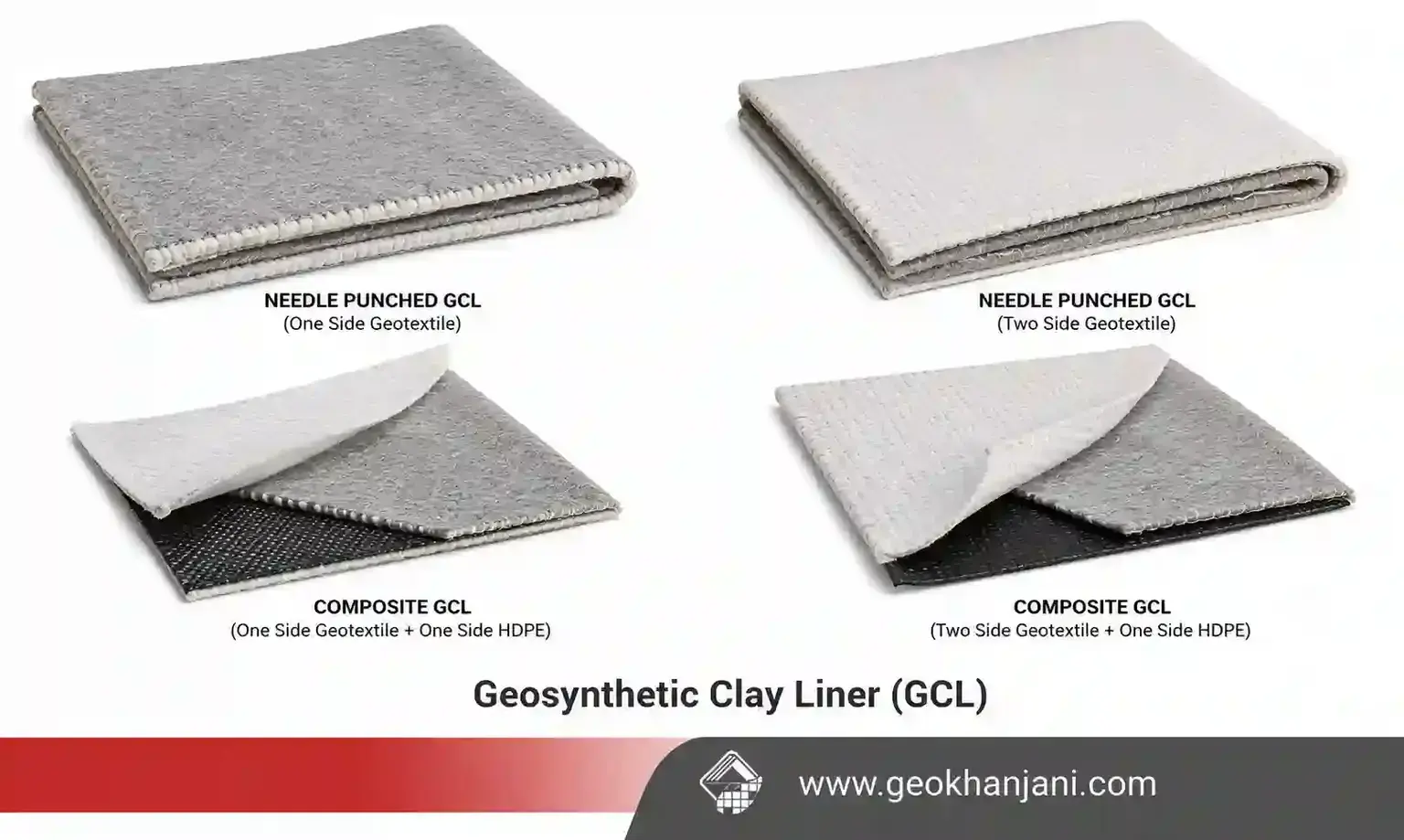 Geosynthetic Clay Liner
Geosynthetic Clay Liner Applications
Geosynthetic Clay Liners are widely used in:
- Municipal and hazardous waste landfills
- Mining heap leach pads
- Tailings storage facilities
- Water reservoirs
- Irrigation ponds
- Decorative and agricultural ponds
- Canal lining systems
- Wastewater treatment plants
- Secondary containment systems
- Oil & gas facilities
- Industrial lagoons
- Environmental remediation projects
- Tunnel waterproofing
- Underground structures
- Green roof waterproofing
- Civil engineering infrastructure
Geosynthetic Clay Liner Key Features
- Extremely low hydraulic conductivity
- Self-sealing capability
- Excellent waterproofing performance
- High chemical resistance
- Outstanding puncture resistance
- Durable needle-punched construction
- Flexible and easy to install
- Reduces construction time
- Environmentally friendly
- Long service life
- Compatible with geomembrane lining systems
- Excellent performance under confinement
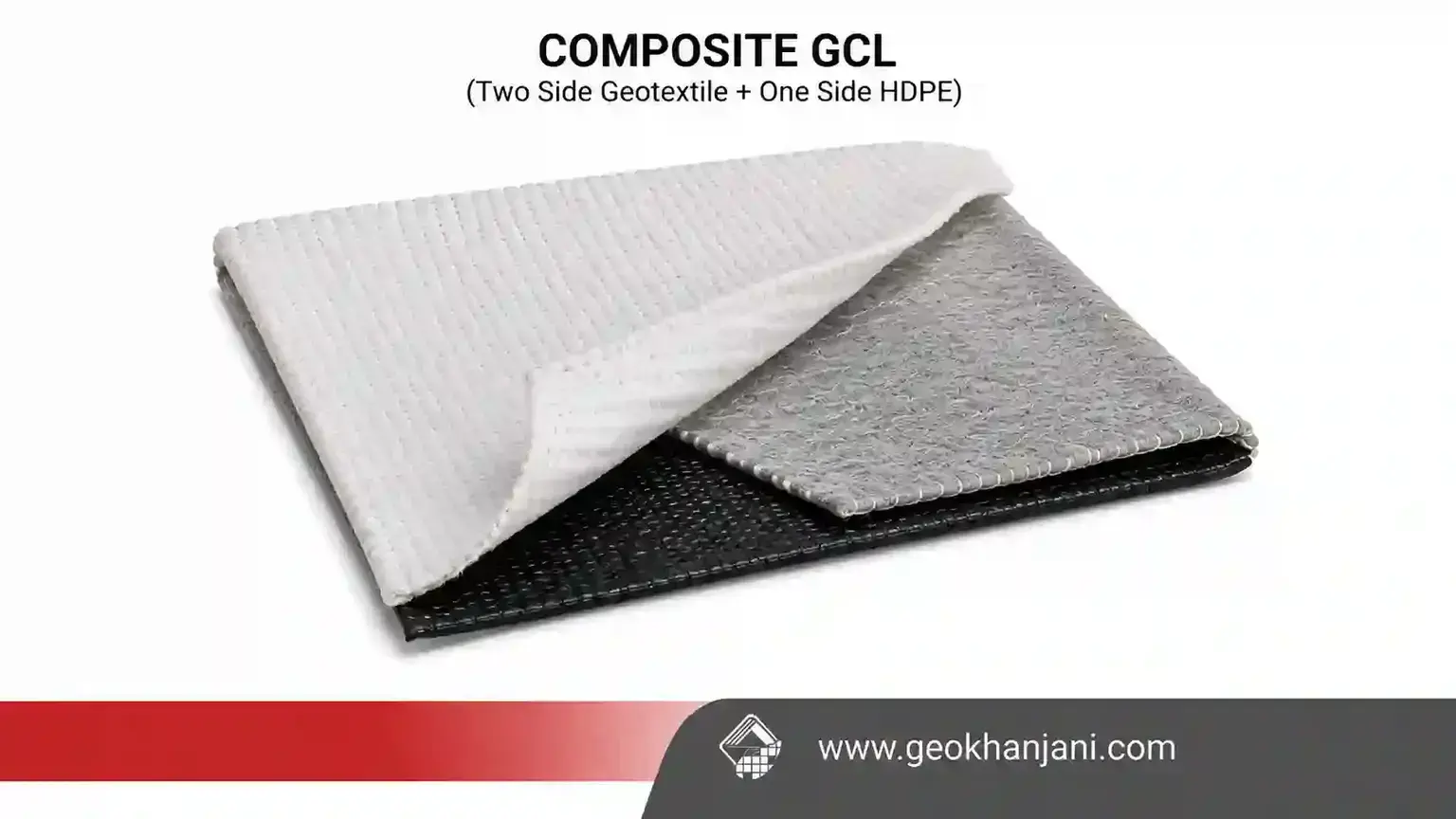 Geosynthetic Clay Liner
Geosynthetic Clay Liner Benefits
Using GCL provides several engineering and economic advantages:
- Superior hydraulic barrier performance
- Faster installation than compacted clay liners
- Reduced transportation and material costs
- Lower labor requirements
- Consistent factory-controlled quality
- Self-healing properties when punctured
- Reduced construction footprint
- Long-term environmental protection
- Improved project efficiency
- Lower life-cycle costs
Manufacturing Process
GCLs are manufactured by encapsulating a uniform layer of premium-quality sodium bentonite between geotextiles. The layers are mechanically reinforced using needle-punching technology, creating an integrated composite liner with excellent internal shear strength and durability.
Some GCL products are additionally laminated with an HDPE geomembrane to provide enhanced hydraulic performance in demanding applications.
Typical Technical Specifications
- Bentonite Type: Natural Sodium Bentonite
- Structure: Needle-Punched Composite
- Carrier Geotextile: Woven / Nonwoven
- Cover Geotextile: Nonwoven
- Hydraulic Conductivity: ≤ 5 × 10⁻¹¹ m/s
- Bentonite Mass: Typically 4–6 kg/m²
- Roll Width: Up to 6 meters
- Roll Length: Depending on product specification
- Excellent Internal Shear Strength
- High Peel Strength
- Chemical Resistance
- UV Resistance (during installation period)
Types of Geosynthetic Clay Liners (GCL)
Geosynthetic Clay Liners (GCLs) are available in several configurations, each engineered to meet specific project requirements and site conditions. Understanding the different types of GCL enables engineers and project designers to select the most appropriate solution based on structural demands, environmental conditions, and long-term performance objectives.
Needle-Punched GCL
Needle-punched GCL is one of the most widely used configurations. It consists of a layer of sodium bentonite encapsulated between a woven and a nonwoven geotextile, which are mechanically bonded through a needle-punching process. This manufacturing method creates a strong internal reinforcement, significantly improving shear strength and mechanical stability.
Thanks to its enhanced structural integrity, needle-punched GCL is particularly suitable for slope applications, embankments, landfill lining systems, and other projects where resistance to shear stresses and differential settlement is essential.
Reinforced GCL
Reinforced GCL incorporates additional reinforcing elements within its structure to improve its ability to withstand higher mechanical loads and demanding site conditions.
This type of GCL is recommended for projects involving significant surcharge loads, differential settlement, or elevated shear stresses, where enhanced tensile strength and long-term stability are required.
Geomembrane-Backed GCL
A Geomembrane-Backed GCL combines a conventional Geosynthetic Clay Liner with a thin polymeric geomembrane that is factory-laminated or bonded during installation.
This composite system combines the self-sealing capability of sodium bentonite with the excellent chemical resistance and extremely low permeability of geomembranes, making it an ideal solution for environmentally sensitive applications such as hazardous waste landfills, mining facilities, chemical containment systems, and other high-performance barrier installations.
Sodium Bentonite vs. Calcium Bentonite GCL
The bentonite core of a Geosynthetic Clay Liner may consist of either natural sodium bentonite or modified calcium bentonite, depending on the chemical conditions and performance requirements of the project.
Sodium bentonite is widely preferred because of its exceptional swelling capacity, which enables it to form an extremely low-permeability hydraulic barrier when hydrated.
Calcium bentonite, on the other hand, offers improved stability in certain chemically aggressive environments. Modified calcium bentonite formulations are often selected for projects where groundwater chemistry or contaminant composition could reduce the swelling performance of conventional sodium bentonite.
Selecting the appropriate bentonite type is a critical engineering decision that directly influences the long-term hydraulic performance, durability, and reliability of the GCL system.
How to Install Clay Liner (GCL)
The Geosynthetic Clay Liner (GCL) will work well for a long time if it is a good quality product and if it is installed correctly. Even if you have a good Geosynthetic Clay Liner (GCL) it will not work properly if it is not installed in the right way. So it is very important to follow the instructions for installing the Geosynthetic Clay Liner (GCL)
First you need to prepare the ground where the Geosynthetic Clay Liner (GCL) will be installed. The ground should be smooth and even. It should not have any sharp stones or other things that could damage the Geosynthetic Clay Liner (GCL). Once the ground is ready you can unroll the Geosynthetic Clay Liner (GCL). Put it in the right place. The different parts of the Geosynthetic Clay Liner (GCL) should overlap each other in the way to make sure that water cannot get through.
The way you connect the parts of the Geosynthetic Clay Liner (GCL) is very important. You should follow the instructions given by the company that made the Geosynthetic Clay Liner (GCL) to make sure that the connections are done correctly. Sometimes you need to put a kind of soil called granular sodium bentonite on the connections to make sure they are tight. If the Geosynthetic Clay Liner (GCL) is being installed on a slope you may need to use special anchors or other devices to keep it in place.
The weather can also affect how well the Geosynthetic Clay Liner (GCL) is installed. The Geosynthetic Clay Liner (GCL) should be installed when the ground is dry and not wet. If the Geosynthetic Clay Liner (GCL) gets wet before the protective layer is put on top of it it may not work properly. If you follow these instructions, the Geosynthetic Clay Liner (GCL) will work well for a time and will prevent water from getting through.
How to Buy Geosynthetic Clay Liner (GCL)
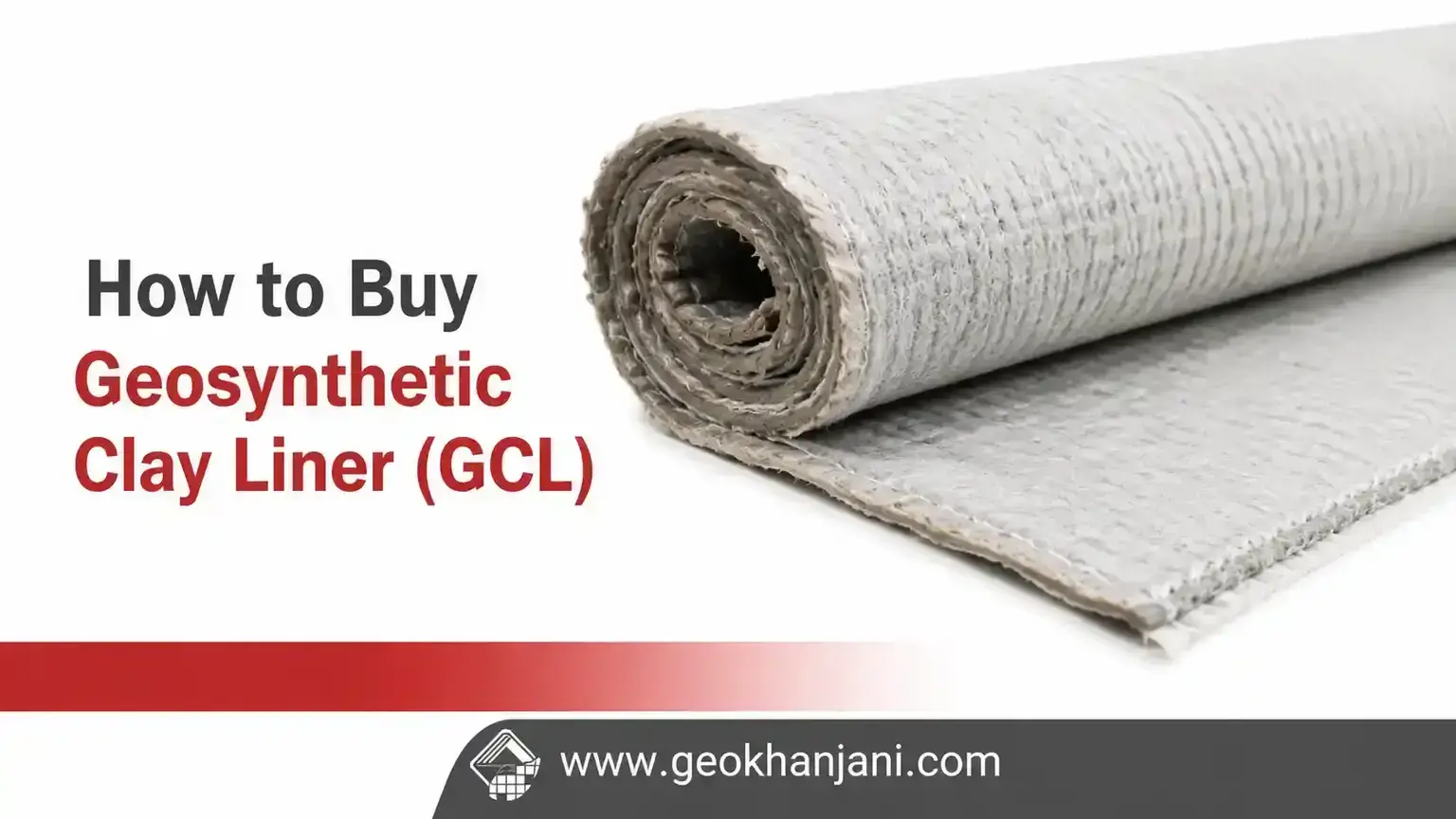
When you want to buy a Geosynthetic Clay Liner (GCL) you should buy it from a company that is known for making quality products. The company should have experience in making Geosynthetic Clay Liner (GCL). Should follow international standards. This will ensure that the Geosynthetic Clay Liner (GCL) is safe and will work well for a time.
Buy Clay Liner (GCL) from GEOKHANJANI
GEOKHANJANI is a company that sells high quality Geosynthetic Clay Liners (GCLs). They have experience in providing solutions, for engineering, mining and environmental projects. The company uses technology and has experts who can help you with your project. They can give you advice design the project and help you install the Geosynthetic Clay Liner (GCL).
If you need a Geosynthetic Clay Liner (GCL) for your project you can contact GEOKHANJANI. They will help you choose the product and give you support during the installation. The company sells high quality Geosynthetic Clay Liners (GCLs) at prices and provides good customer service. You can visit the GEOKHANJANI website to see the projects they have completed and the different applications of the Geosynthetic Clay Liner (GCL).