High-Performance Geogrid for Soil Reinforcement and Ground Stabilization
Polyester Geogrid (PET Geogrid) is a high-performance geosynthetic reinforcement material manufactured from high-tenacity polyester yarns coated with a protective polymer layer. It is specifically engineered to improve the mechanical performance of soil by increasing tensile resistance, reducing deformation, and enhancing load distribution.
Unlike conventional construction methods that rely on thicker aggregate layers or concrete structures, Polyester Geogrid creates a reinforced composite system with surrounding soil. This interaction significantly improves bearing capacity while reducing settlement and extending the service life of civil engineering projects.
Due to its excellent tensile properties, low creep behavior, chemical resistance, and long-term durability, Polyester Geogrid has become one of the preferred reinforcement solutions for highways, railways, retaining walls, bridge abutments, embankments, foundations, mining projects, and slope stabilization.
What is Polyester Geogrid?
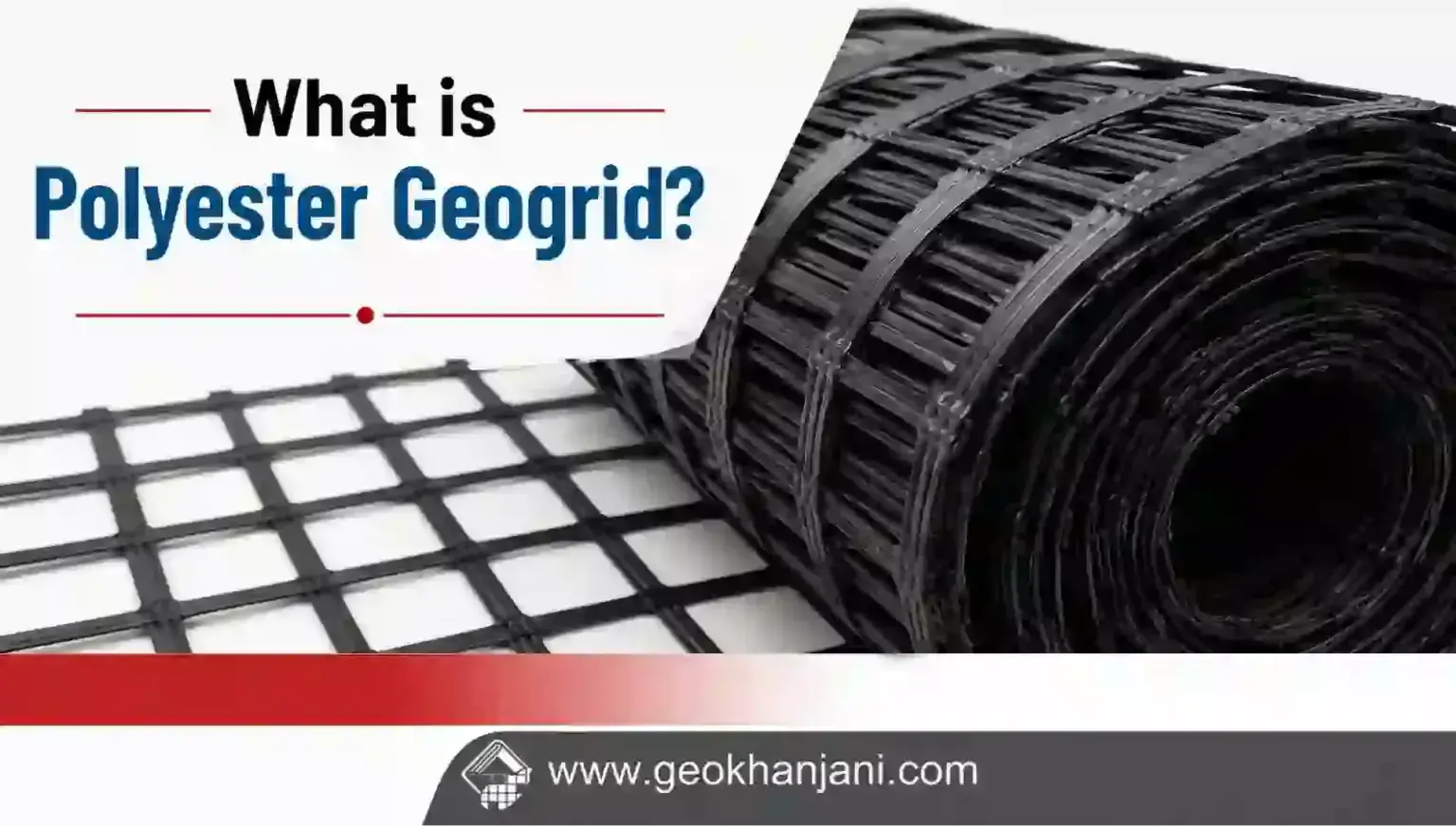 What is Polyester Geogrid?
Polyester Geogrid is a flexible reinforcement grid manufactured from high-modulus polyester fibers arranged in either uniaxial or biaxial configurations. The fibers are woven or knitted together and then coated with PVC, bitumen, or specialized polymer compounds to protect against mechanical damage, ultraviolet exposure, moisture, and chemical attack.
The open aperture structure allows aggregates and soil particles to interlock within the grid, creating a stable reinforced layer capable of transferring tensile forces efficiently throughout the structure.
This reinforcement mechanism greatly enhances soil performance while minimizing differential settlement and structural deformation.
How Polyester Geogrid Works
When external loads are applied to weak soil, tensile stresses develop within the ground.
Since soil has relatively low tensile strength, deformation begins quickly.
Polyester Geogrid absorbs these tensile forces through its high-strength polyester yarns and distributes the loads over a larger area.
This reinforcement mechanism:
- Restrains lateral soil movement
- Improves confinement of aggregates
- Reduces rutting
- Controls settlement
- Increases overall structural stability
- Enhances load transfer efficiency
The result is a stronger, more durable foundation capable of supporting heavier loads with reduced maintenance.
Key Features of Polyester Geogrid
High Tensile Strength
Manufactured from premium polyester fibers capable of providing exceptional tensile resistance under both static and dynamic loading conditions.
Excellent Long-Term Creep Resistance
Polyester exhibits extremely low creep characteristics, maintaining its reinforcement capacity throughout the design life of the project.
Superior Load Distribution
Optimizes stress distribution throughout the soil mass, reducing localized failures and improving foundation performance.
High Chemical Resistance
Resistant to acids, alkalis, salts, and naturally occurring chemicals found in soils.
UV Protection
Protective polymer coating prevents degradation caused by prolonged ultraviolet exposure during installation.
Flexible Installation
Can easily conform to uneven ground surfaces while maintaining structural integrity.
Durable Polymer Coating
The coating protects polyester yarns against abrasion, installation damage, biological attack, and environmental degradation.
Lightweight Material
Easy transportation and handling significantly reduce construction time and labor costs.
Technical Characteristics
Typical technical properties include:
- High tensile strength in longitudinal and transverse directions
- Low elongation at maximum load
- High junction strength
- Excellent dimensional stability
- Outstanding creep performance
- Superior installation damage resistance
- Long-term durability exceeding 100 years under proper design conditions
- Excellent interaction with granular materials
Available in various strength grades depending on project requirements.
Types of Polyester Geogrid
Uniaxial Polyester Geogrid
Designed primarily for reinforcement in one direction.
Applications include:
- Retaining walls
- Reinforced soil walls
- Bridge abutments
- Steep slopes
- Embankments
Biaxial Polyester Geogrid
Provides reinforcement in both machine and cross-machine directions.
Ideal for:
- Roads
- Railways
- Industrial yards
- Parking areas
- Airport pavements
- Foundation stabilization
- Applications of Polyester Geogrid
- Road Construction
Improves pavement performance by reducing rutting, increasing bearing capacity, and extending pavement service life.
Railway Infrastructure
Enhances ballast confinement, minimizes track settlement, and improves long-term stability under repeated train loads.
Retaining Walls
Provides tensile reinforcement for mechanically stabilized earth (MSE) retaining wall systems.
Bridge Abutments
Improves load transfer while minimizing differential settlement near bridge structures.
Embankments
Allows safe construction over soft soils while improving global stability.
Slope Reinforcement
Enhances slope stability by increasing soil shear resistance and reducing erosion risk.
Industrial Platforms
Creates stable working platforms for warehouses, heavy equipment, logistics centers, and industrial facilities.
Mining Projects
Supports haul roads, working platforms, and reinforced foundations in demanding mining environments.
Airport Runways
Provides reinforcement beneath pavement systems exposed to heavy cyclic aircraft loading.
Foundation Improvement
Improves weak subgrade performance while reducing excavation depth and imported fill requirements.
- Advantages of Polyester Geogrid
- Exceptional tensile strength
- Low long-term creep
- Excellent dimensional stability
- High resistance to environmental degradation
- Superior soil interaction
- Faster installation
- Reduced aggregate consumption
- Lower maintenance costs
- Longer infrastructure service life
- Sustainable construction solution
- Cost-effective ground improvement
- Compatible with various soil types
Why Choose Polyester Geogrid?
Polyester Geogrid offers an ideal combination of strength, flexibility, durability, and long-term performance.
Compared with traditional ground improvement methods, it provides:
- Reduced construction costs
- Faster project completion
- Improved structural reliability
- Lower environmental impact
- Enhanced engineering performance
- Greater design flexibility
For projects requiring long-term reinforcement under heavy loading conditions, Polyester Geogrid remains one of the most reliable geosynthetic solutions available.
Installation Process
Successful installation generally includes the following steps:
- Site preparation and grading
- Removal of unsuitable materials
- Placement of Polyester Geogrid
- Tensioning and alignment
- Overlapping adjacent rolls as specified
- Placement of aggregate or fill material
- Layer-by-layer compaction
- Quality inspection and verification
Proper installation is essential to achieve maximum reinforcement performance.
Quality Standards
High-quality Polyester Geogrids are typically manufactured in accordance with internationally recognized quality management systems and are tested according to ASTM and ISO standards for:
- Tensile strength
- Elongation
- Junction efficiency
- Creep behavior
- Durability
- UV resistance
- Installation damage resistance
- Chemical resistance
Why Choose GeoKhanjani Polyester Geogrid?
GeoKhanjani supplies premium Polyester Geogrid solutions engineered for demanding civil engineering applications. Every product is manufactured using high-tenacity polyester yarns and advanced polymer coating technology to ensure long-term structural performance, durability, and reliability.
Our technical team assists engineers, consultants, and contractors in selecting the appropriate reinforcement solution based on project-specific requirements, ensuring optimal performance and cost efficiency.