Geonet for Drainage, Filtration and Geotechnical Applications
Geonet is a three-dimensional geosynthetic drainage material designed to provide an efficient pathway for collecting and moving liquids or gases within civil engineering and environmental projects.
Manufactured from durable polymeric materials, geonet consists of a network of intersecting ribs that creates continuous drainage channels. It's commonly used alongside geotextiles or geomembranes to build reliable drainage and protection systems.
What Is Geonet?
Geonet is a synthetic drainage layer with a three-dimensional structure. Unlike conventional flat drainage materials, its interconnected channels let water and other fluids move efficiently through the plane of the material.
Depending on what the project needs, geonet can be used on its own or combined with geotextiles to form a geocomposite drainage system. Its structure delivers high drainage capacity while staying lightweight and easy to install.
Applications of Geonet
Geonet fits a wide range of civil engineering, environmental, and construction applications.
One important use is in landfill drainage systems, where it can be installed above or below geomembrane liners to collect and transport leachate while helping protect the liner underneath.
Behind retaining walls and other vertical structures, geonet can provide a continuous drainage path that directs water away from the structure and helps reduce hydrostatic pressure.
Around foundations and basement walls, geonet drainage layers help water move away and reduce moisture buildup. In road construction, it can be built into drainage systems wherever controlled collection and movement of water is needed.
It also shows up in green roofs and roof gardens, where its three-dimensional structure creates channels for excess water while supporting the drainage layer above. When installed alongside a geomembrane, geonet contributes to drainage and helps form a protective layer within a multilayer geosynthetic system.
And in mining facilities, industrial containment areas, ponds, reservoirs, and similar projects, geonet is a common choice wherever controlled drainage is required.
Key Features of Geonet
Geonet stands out for its three-dimensional drainage structure and high in-plane drainage capacity. It's lightweight, flexible, and easy to handle, with good chemical resistance and resistance to moisture. It also holds its shape well, installs simply, and works compatibly with geomembranes and geotextiles — which makes it a solid fit for large-scale drainage systems.
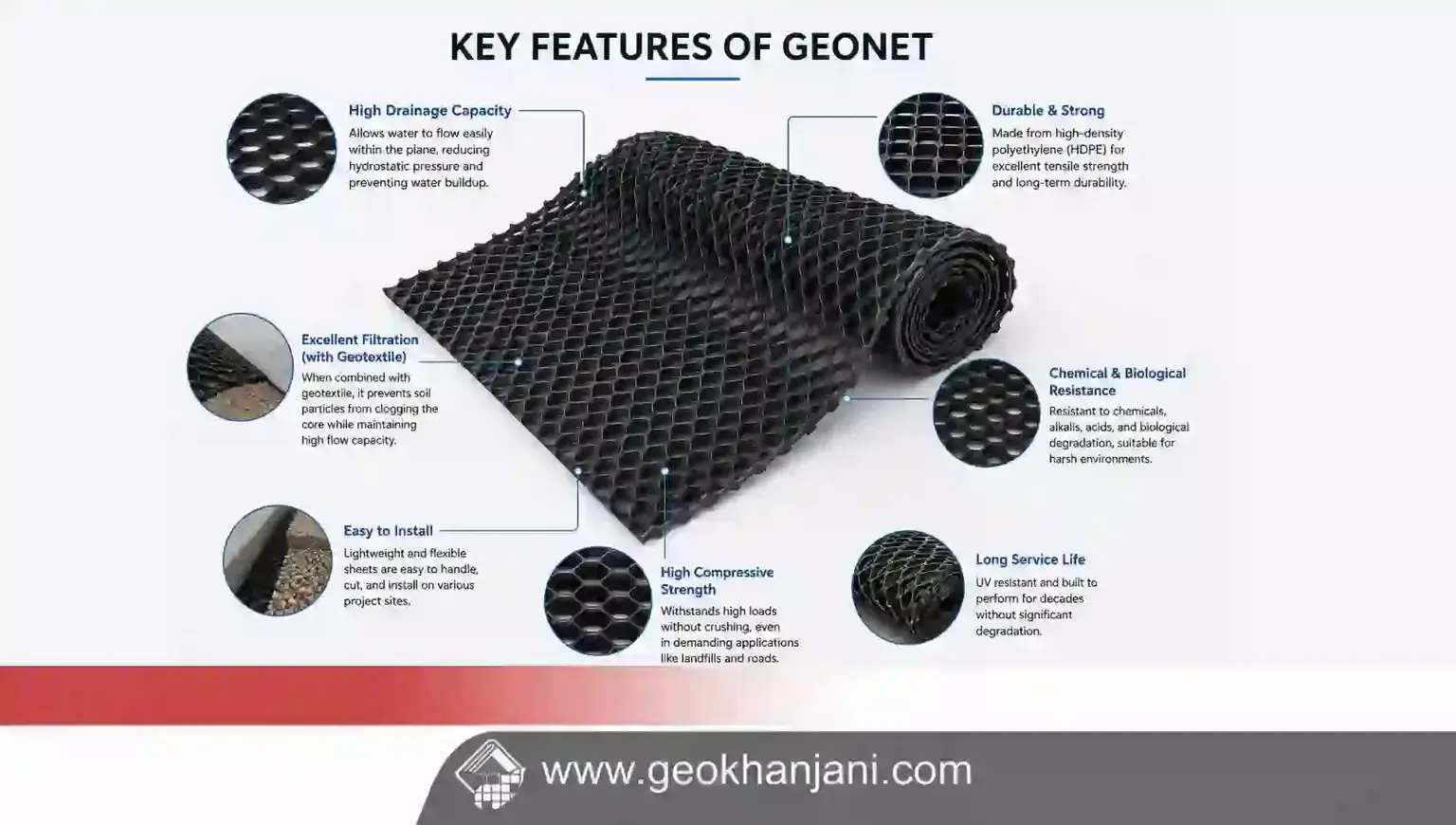 Key Features of Geonet
Advantages of Geonet
The interconnected ribs create continuous channels that let water flow efficiently through the plane of the material, making drainage genuinely effective rather than just adequate.
Compared with traditional granular drainage layers, geonet is much lighter, which makes it easier to transport and install. It can also deliver effective drainage without needing the same thickness as conventional aggregate drainage materials, which saves construction depth. The rolls can be brought to the installation area and placed relatively quickly, cutting down on handling requirements at the site.
Polymeric geonets also offer good resistance to many chemicals and environmental conditions, which suits demanding applications like landfill and industrial drainage well. And because geonet works effectively as part of multilayer systems, it integrates smoothly with geomembranes, geotextiles, and other geosynthetic materials.
Geonet vs. Traditional Aggregate Drainage
Traditional drainage systems often rely on layers of gravel or other granular materials. They work, but they can require significant quantities of material along with substantial transportation and installation effort.
Geonet offers a lightweight alternative by creating dedicated drainage channels within a thin synthetic layer instead.
The right solution ultimately depends on the required drainage capacity, hydraulic conditions, loading, soil characteristics, and overall project design.
Geonet Installation
Proper installation matters a lot for maintaining the drainage performance of geonet.
A typical installation starts with preparing and cleaning the installation surface, then unrolling the geonet in the specified direction. Adjacent rolls are placed with the required overlap, and the material is secured to prevent movement during construction. The drainage layer then gets connected to the designed collection system, and any required geotextile or geomembrane layers are installed. Finally, the geonet needs to be protected from damage during whatever construction activities happen afterward.
The installation method should always follow the project design and the manufacturer's technical recommendations rather than general assumptions.
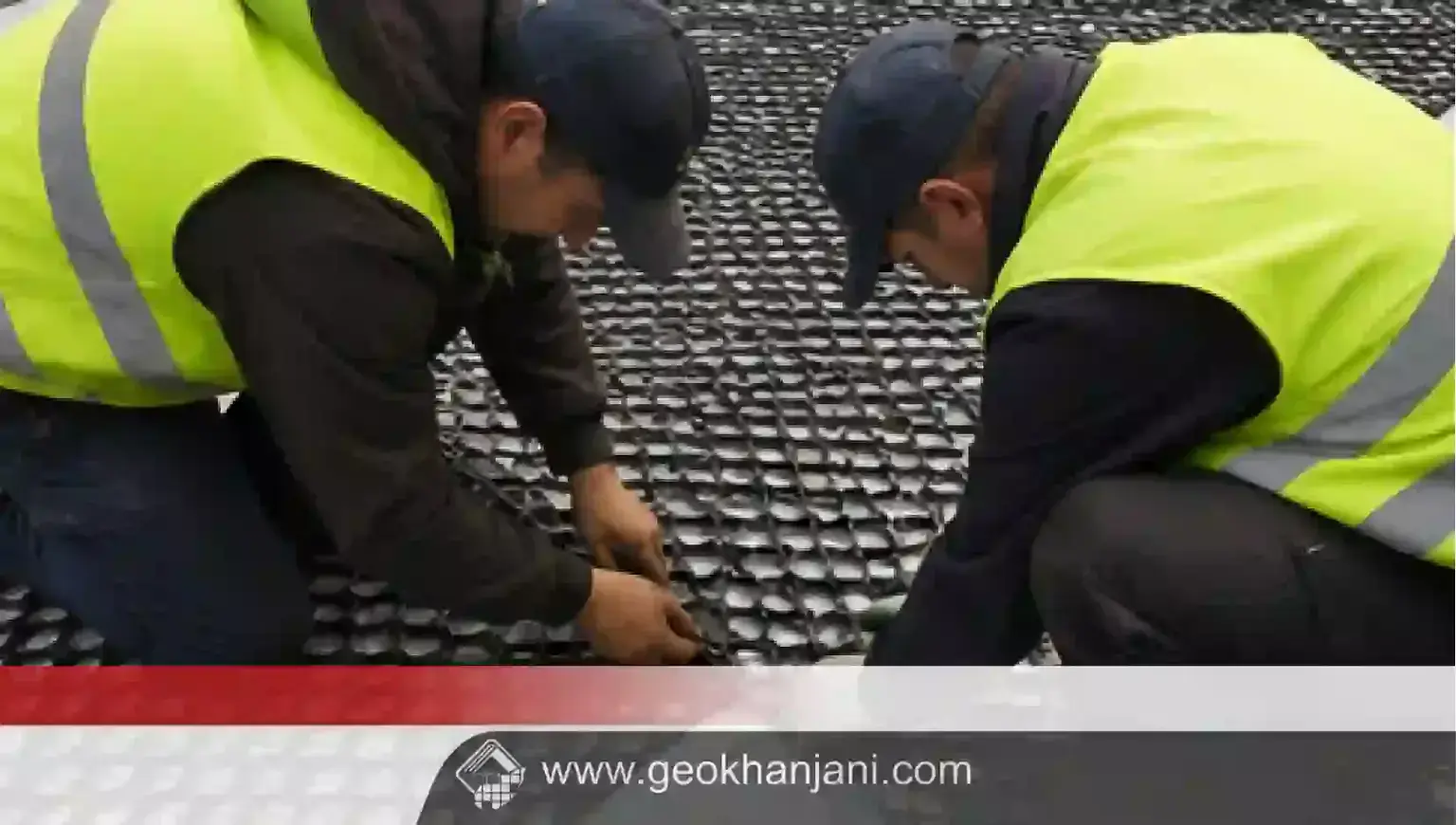 Geonet Installation
Geonet and Geocomposite Drainage
A geonet can be combined with one or two layers of geotextile to create a geocomposite drainage layer. In this setup, the geonet provides the drainage core, while the geotextile lets water enter the drainage layer and also helps keep surrounding soil particles from clogging the drainage channels.
Together, this combination delivers filtration, drainage, and separation within a single engineered system.
How to Choose the Right Geonet?
Selecting a geonet should come down to the actual requirements of the project, not just its thickness or appearance.
Important factors include the required drainage capacity, hydraulic gradient, expected compressive load, long-term performance, chemical exposure, temperature conditions, the geonet's thickness and structure, its compatibility with adjacent geosynthetics, and the installation conditions on site.
For high-load applications, drainage capacity should be evaluated under the expected compressive stress, since the geonet's structure can change under load — a spec that looks fine unloaded may perform differently once real weight is on it.
Geonet Supply by GeoKhanjani
GeoKhanjani supplies geosynthetic solutions for drainage, waterproofing, filtration, and environmental engineering projects.
Geonet products can be selected according to the required drainage performance, the project's actual conditions, and compatibility with other geosynthetic materials like geomembranes and geotextiles.
For large-scale projects, it's worth reviewing the technical specifications and drainage requirements carefully before settling on a particular geonet.
Conclusion
Geonet is an efficient three-dimensional geosynthetic drainage material used across construction, environmental, and geotechnical applications. Its lightweight structure, drainage capacity, chemical resistance, and compatibility with geomembranes and geotextiles make it a strong fit for landfill drainage, retaining walls, foundations, green roofs, roads, mining projects, and industrial containment systems.
When correctly designed and installed, geonet offers an effective alternative to conventional drainage layers while cutting down on material volume, transportation, and installation effort.