Geocell
If you work in the fields of civil engineering, road construction, or soil erosion control, you have probably heard of Geocells. A geocell is a three-dimensional cellular confinement system manufactured primarily from High-Density Polyethylene (HDPE) or Polypropylene (PP). It is specifically designed to reinforce soil, increase load-bearing capacity, minimize settlement, and prevent soil movement and slope failure.
Imagine constructing a roadway over weak or soft soil. Without adequate ground reinforcement, the underlying layers will gradually settle under repeated traffic loads. A geocell functions as a flexible honeycomb structure that is expanded on the ground and filled with soil, aggregate, gravel, or other suitable infill materials. Once filled and compacted, the system distributes loads evenly across a wider area, significantly improving ground stability and structural performance.
Originally developed by the United States Army during the 1970s for the rapid construction of temporary roads in sandy environments, geocell technology has since become one of the most effective geosynthetic solutions used in modern civil engineering. Today, it is widely utilized in road construction, dam engineering, retaining walls, slope stabilization, erosion control, and numerous other geotechnical applications.
Geocells are flexible polymer panels consisting of interconnected strips welded together to form a three-dimensional cellular network. Once expanded, these cells are filled with materials such as soil, cement, gravel, crushed stone, or concrete to reinforce and stabilize the infill material.
Throughout this website, we introduce the advantages, characteristics, and engineering applications of geocell systems and explain why they have become an essential solution for modern infrastructure projects.
Geocell systems are classified as geosynthetic products designed to improve soil performance through cellular confinement. They consist of expandable three-dimensional panels manufactured from polymeric materials such as High-Density Polyethylene (HDPE) or polyester. During installation, the interconnected strips expand to create flexible cellular walls that are subsequently filled with soil, sand, crushed stone, or other suitable aggregates. Once compacted, the infill forms a stable composite layer while allowing efficient drainage and preventing lateral displacement through confinement.
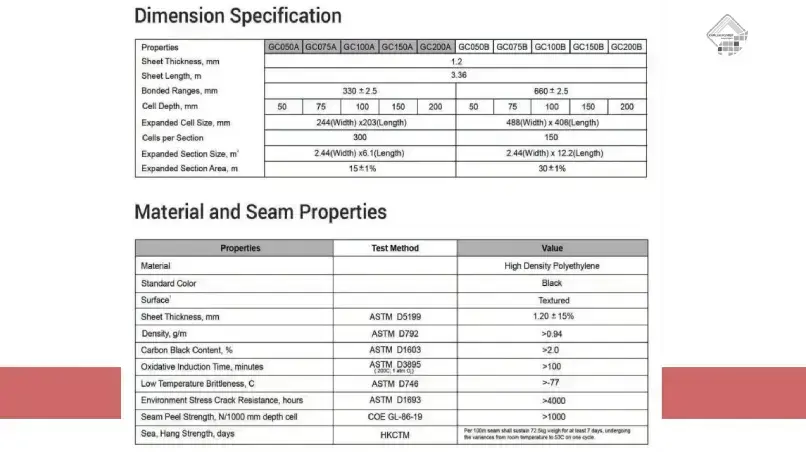 Geocell
What Is a Geocell?
Geocells are expandable three-dimensional panels manufactured from High-Density Polyethylene (HDPE), polyester, and other high-performance polymer materials. During installation, the interconnected strips expand to create a flexible cellular structure capable of confining various fill materials, including sand, soil, crushed stone, recycled aggregates, and concrete.
After compaction, the confined material forms a stable structural layer that provides excellent load distribution while allowing free drainage. The cellular confinement mechanism prevents lateral movement of the infill through tensile reinforcement, significantly increasing soil strength and reducing deformation under applied loads.
What Is a Geocell System?
Geocell systems belong to the family of geosynthetic products that provide exceptional performance in civil engineering and construction through their unique three-dimensional cellular structure.
Unlike conventional ground improvement methods, geocells combine vertical load transfer with lateral confinement, creating a reinforced composite layer that significantly improves the engineering properties of weak soils. This unique combination of flexibility, strength, and confinement enhances the stability, durability, and long-term performance of civil engineering structures.
As a result, geocell systems have become one of the preferred solutions for infrastructure projects requiring efficient ground stabilization and reliable soil reinforcement.
History of Geocell
The history of geocell technology dates back to the 1970s, when engineers working for the United States Army began researching innovative methods for constructing tactical roads over soft and unstable ground.
Their studies demonstrated that confining coarse-grained and sandy materials within interconnected cellular structures could dramatically improve road performance on weak subgrades. The confinement system also reduced deterioration caused by moisture while providing superior long-term durability compared with traditional construction methods.
By 1981, engineers further refined the original concept through improved manufacturing techniques and the introduction of advanced materials, including perforated aluminum sheets and polymer components. Eventually, High-Density Polyethylene (HDPE) became the preferred material because of its lightweight nature, excellent compressive strength, chemical resistance, flexibility, and long service life.
The first commercial manufacturer to introduce geocell technology into the civil engineering market was Presto Geosystems, which utilized HDPE materials to produce cellular confinement systems for slope protection, erosion control, and heavy-load support throughout the United States and Canada during the early 1980s.
Since then, geocells have become one of the world's most widely recognized geosynthetic solutions for soil stabilization and infrastructure reinforcement.
Geocell: A Honeycomb Structure for Soil Reinforcement and Erosion Control
Geocells are engineered cellular confinement systems that resemble a honeycomb structure. Their primary purpose is to improve soil stability, reinforce weak foundations, and effectively control erosion. By confining fill materials within individual cells, geocells increase the structural integrity of the ground while minimizing lateral displacement and surface erosion.
What Materials Are Geocells Made From?
Geocells are primarily manufactured from high-performance polymer materials, most commonly High-Density Polyethylene (HDPE). HDPE is an engineered thermoplastic known for its exceptional resistance to impact, cracking, chemicals, ultraviolet (UV) radiation, and environmental degradation. These characteristics make it one of the most reliable materials for demanding geotechnical and civil engineering applications.
Geocells are produced as expandable three-dimensional cellular structures designed to reinforce weak soils, control erosion, support heavy loads, and improve the engineering performance of subgrades. The durability and mechanical properties of HDPE ensure long-term performance even under severe environmental conditions.
The technical specifications of geocell products vary depending on the project requirements and are generally determined by factors such as cell height, wall thickness, weld strength, perforation pattern, and polymer grade.
Key Features of Geocells
One of the primary advantages of geocell systems is their ability to prevent soil erosion and maintain the long-term stability of infrastructure. By confining the infill material within interconnected cells, geocells minimize lateral movement, reduce soil washout, and protect the structural integrity of the foundation.
This enhanced protection significantly reduces maintenance requirements, lowers lifecycle costs, and extends the service life of engineering structures.
As an innovative ground stabilization solution, geocells improve both the quality and durability of civil engineering projects. In addition to protecting the surrounding environment from erosion, they create a stable foundation capable of supporting heavy loads while ensuring long-term structural performance.
By integrating advanced polymer engineering with geotechnical principles, geocell systems have become an essential component in modern infrastructure projects, delivering improved safety, efficiency, and sustainability.
Buy Geocells
We are proud to be one of Iran's leading manufacturers of geocells, supplying high-quality products directly from our manufacturing facility.
Our geocells are manufactured from premium-grade polymer materials that provide outstanding strength, flexibility, durability, and long-term performance. They are suitable for a wide range of applications, including soil stabilization, drainage systems, erosion control, load support, slope protection, pavement reinforcement, and numerous other geotechnical projects.
Purchasing directly from our factory ensures competitive pricing, reliable product quality, and professional technical support throughout your project.
For consultation, technical assistance, or product selection, our engineering team is available to help you choose the most suitable geocell system for your specific application.
One of the key advantages of purchasing geocells from Geo Khanjani is our 10-year product warranty, reflecting our confidence in the quality and durability of our products.
Geocell Price
Geocell pricing varies depending on several factors, including product specifications, cell dimensions, material type, wall thickness, project requirements, and order quantity.
Since numerous types of geocells are available in today's market, prices can differ considerably between manufacturers and product grades.
To obtain an accurate quotation, customers are encouraged to provide the required specifications—including cell height, weld spacing, wall thickness, project type, and total installation area—so that the most appropriate product and pricing can be recommended.
Geocell Manufacturer
Geo Khanjani is recognized as the first geocell manufacturer in the Middle East and a leading producer of a comprehensive range of geosynthetic products.
Our expertise extends beyond manufacturing to include professional installation services, technical consultation, and complete geotechnical engineering solutions. Proper production and installation of geocells play a significant role in improving the durability, stability, and service life of civil engineering structures.
Our manufacturing team combines advanced production technologies with strict quality control procedures to ensure that every product complies with international engineering standards.
In addition to delivering premium-quality products, we are committed to offering competitive pricing and dependable customer support. We believe that partnering with Geo Khanjani provides clients with reliable, cost-effective, and high-performance geosynthetic solutions for projects of every scale.
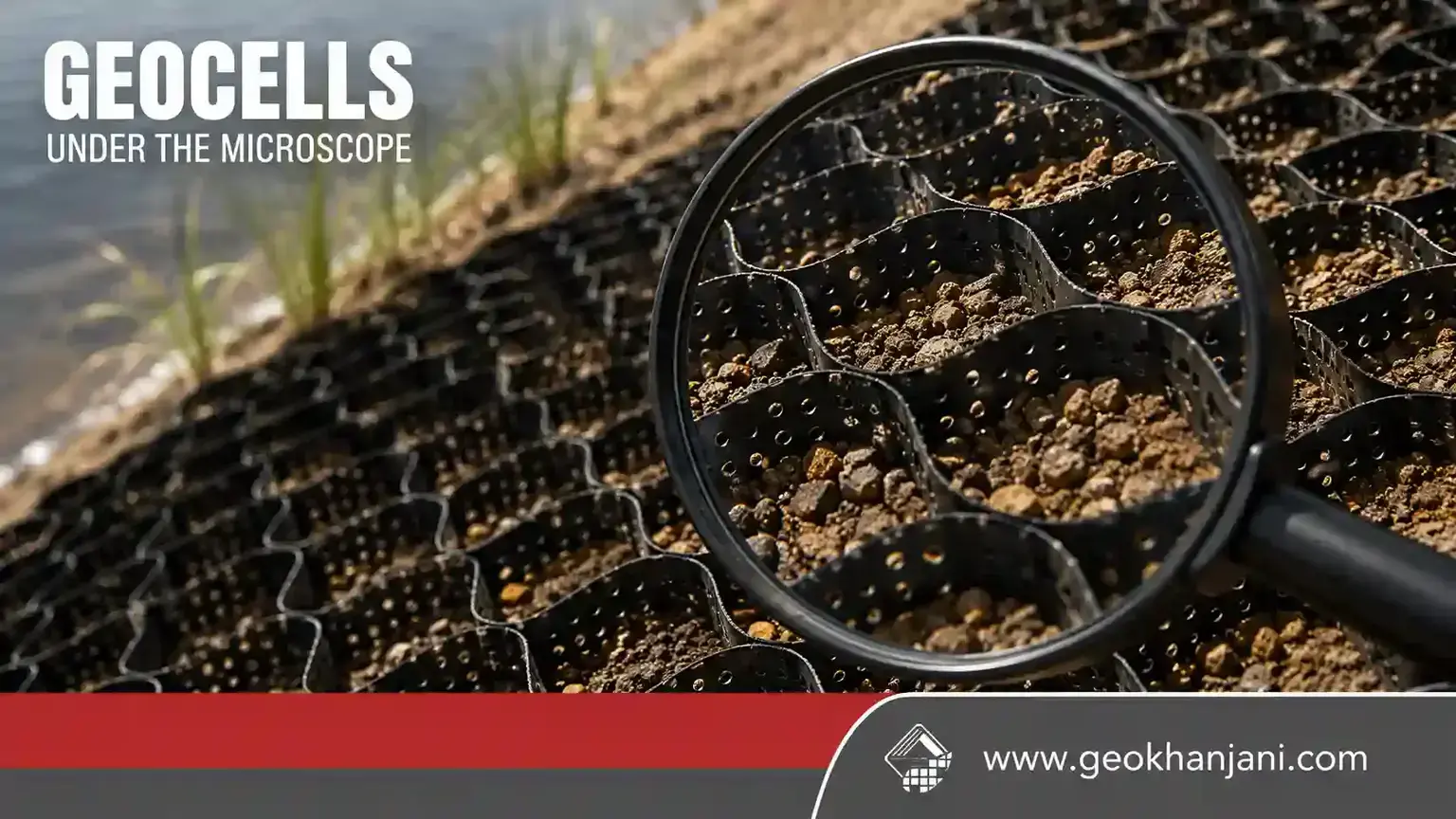 Geocells Under the Microscope
Geocells Under the Microscope
Geocells are heavy-duty polymeric cellular confinement systems featuring a honeycomb-like structure specifically designed for soil stabilization, erosion control, and slope protection.
They are particularly effective in reducing environmental impacts, preventing landslides, and improving the long-term stability of embankments and steep slopes.
Typical geocells are manufactured with heights ranging from 75 mm to 150 mm, while individual cell dimensions generally vary between 100 mm and 300 mm, depending on project requirements.
One of the unique characteristics of geocells is their versatility. The cells can be filled with various materials—including soil, crushed stone, gravel, recycled aggregates, vegetation, or concrete—allowing engineers to design customized solutions for a wide variety of infrastructure projects.
Their flexibility and adaptability make geocells an innovative structural component for roadways, retaining walls, landscaping, railway construction, hydraulic engineering, and environmental protection.
How Geocells Work
The performance of a geocell system is based on the principle of three-dimensional cellular confinement. By restricting the lateral movement of soil, aggregates, or concrete, the system transforms loose fill materials into a stable composite layer with significantly improved mechanical properties.
This confinement mechanism increases the load-bearing capacity of the subgrade by distributing applied loads over a larger area and reducing stress concentrations. As a result, geocells minimize settlement, improve structural stability, and enhance the overall performance of pavements and foundations.
This technology, commonly referred to as a cellular confinement system, is widely used in pedestrian pathways, roadways, railway foundations, embankments, and other infrastructure projects where weak or unstable soils require reinforcement.
Beyond improving road and channel foundations, geocells play an essential role in stabilizing soft ground, protecting embankments, and reducing the environmental impacts associated with erosion and slope failure. Their ability to increase the service life of infrastructure while lowering maintenance costs makes them one of the most efficient ground improvement solutions available today.
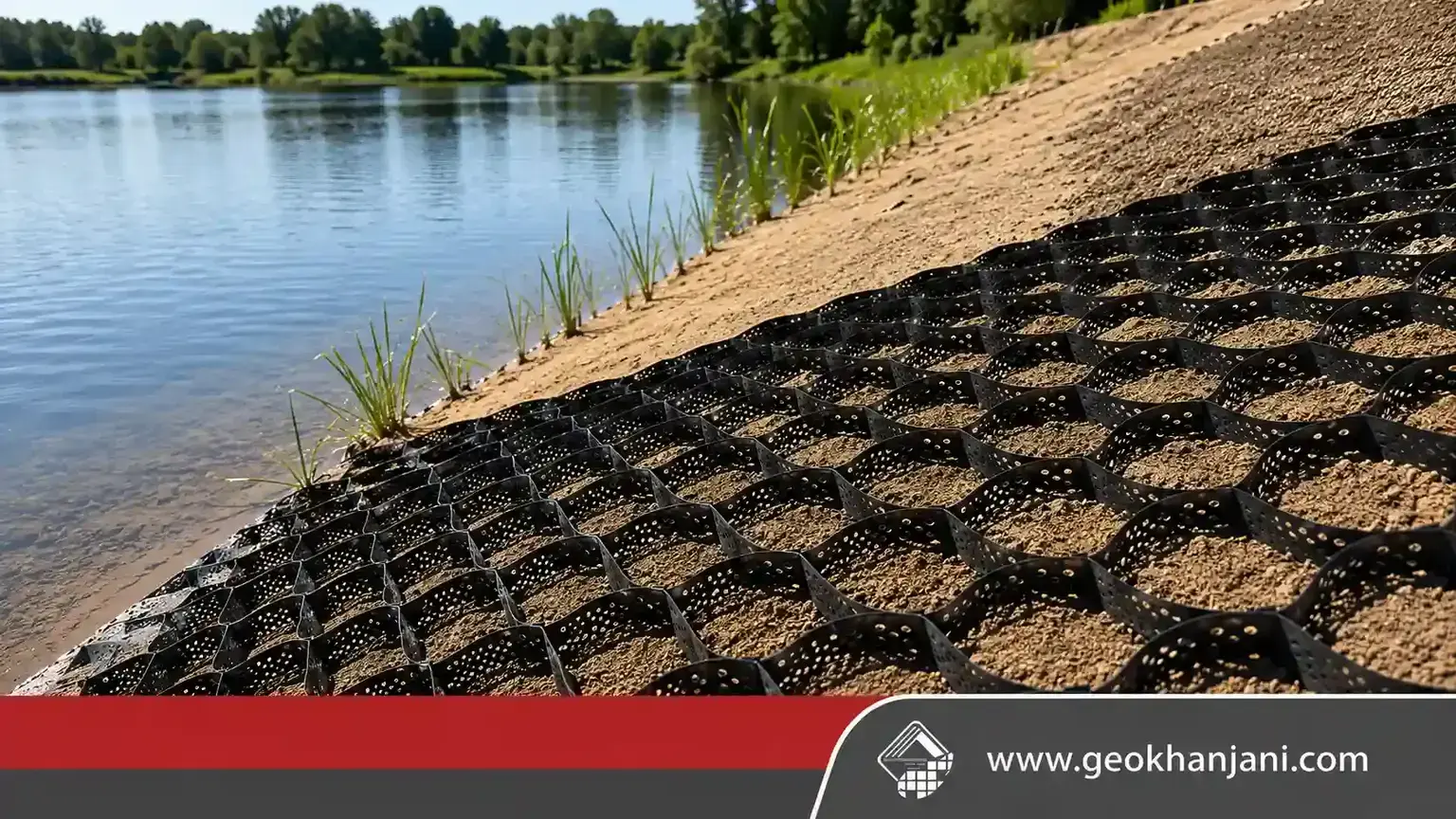 Geocell Installation
Geocell Installation
During installation, interconnected polymer strips are expanded to form a three-dimensional honeycomb structure. The expanded cells are securely anchored in place before being filled with selected materials such as sand, gravel, crushed stone, soil, or concrete.
After placement, the infill material is compacted to create a dense, stable layer within each cell.
The resulting structure forms a free-draining reinforcement system that confines the fill material, prevents lateral displacement, and improves tensile resistance. This significantly enhances the stability of weak soils while reducing settlement, erosion, and slope instability.
The use of geocell systems also contributes to faster construction, lower maintenance requirements, and improved long-term performance, making them an economical solution for modern civil engineering projects.
Types of Geocells
Geocells are manufactured in various configurations to meet different engineering requirements. Selecting the appropriate product depends on the project type, loading conditions, soil characteristics, and environmental factors. Consultation with experienced geotechnical specialists is recommended to ensure the most suitable system is selected.
Common types of geocells include:
Each type is engineered to deliver optimal performance for its intended application while maintaining long-term structural stability.
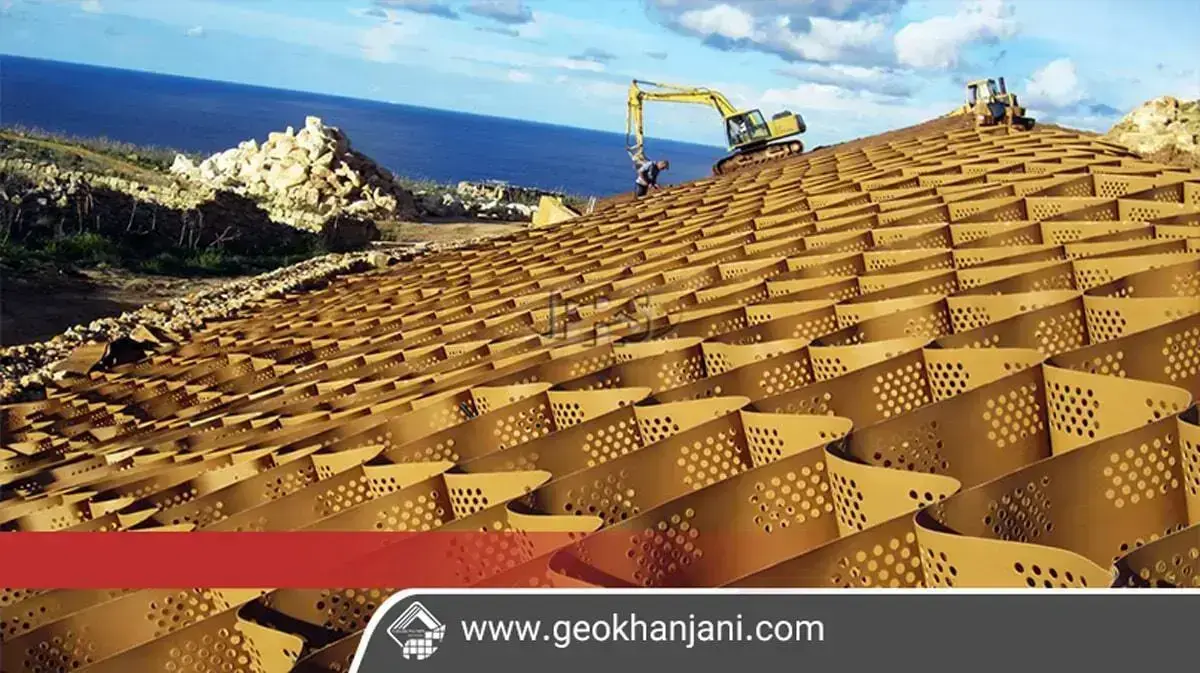
Applications of Geocells
Since their invention in the late 1970s, geocell systems have undergone continuous development in design, materials, and installation techniques. Today, they are recognized worldwide as one of the most effective solutions for soil stabilization and ground reinforcement.
The interconnected three-dimensional cellular structure provides exceptional confinement of infill materials, resulting in improved strength, reduced deformation, and enhanced durability.
Geocells are widely used in the following applications:
- Unpaved roads and access roads
- Highway and pavement reinforcement
- Railway track foundations
- Temporary construction roads
- Retaining walls
- Slope stabilization
- Erosion control systems
- Canal and drainage channel protection
- Riverbank stabilization
- Shoreline protection
- Landfill construction
- Foundation reinforcement
- Load support platforms
- Embankment stabilization
- Vegetation support on steep slopes
- Green infrastructure and landscaping
- Mining roads
- Industrial yards
- Airport pavements
- Port and marine infrastructure
For more than four decades, honeycomb cellular confinement systems have been successfully used in railway and transportation projects around the world. By creating a stable reinforced layer, HDPE geocells provide confinement and apparent cohesion to materials that would otherwise remain unstable over weak subgrades.
Another significant advantage of geocell technology is its contribution to reducing the carbon footprint of construction projects. Because geocells reduce the required thickness of aggregate layers, they decrease material consumption, transportation, equipment operation, and installation activities.
Overall, geosynthetic solutions have demonstrated the potential to reduce carbon emissions in civil engineering projects by up to 50% or more, making geocells an environmentally sustainable alternative to conventional ground improvement methods.
Advantages of Geocells
Geocells offer far more than simple soil reinforcement. Their unique three-dimensional confinement system provides numerous engineering and economic benefits, including:
- Increased load-bearing capacity through effective load distribution.
- Reduced differential settlement in weak foundation soils.
- Superior erosion protection on slopes, embankments, and exposed surfaces.
- Enhanced stability under both static and dynamic loading conditions.
- Long service life, often exceeding 50 years under normal operating conditions.
- Excellent resistance to ultraviolet (UV) radiation, chemicals, and environmental degradation.
- Lightweight construction for easy transportation and handling.
- Fast and efficient installation compared with conventional stabilization methods.
- Lower maintenance and repair costs throughout the service life of the structure.
- Reduced construction time and overall project costs.
- Improved environmental sustainability by minimizing the use of natural aggregates.
- Compatibility with vegetation, making geocells suitable for environmentally sensitive projects.
Technical Features of Geocells
Geocells offer a combination of mechanical strength, durability, and environmental compatibility, making them one of the most effective ground stabilization solutions available. Their key technical characteristics include:
- Excellent resistance to extreme temperature fluctuations
- High resistance to biological degradation and microbial activity
- Outstanding chemical resistance against acids, alkalis, and other aggressive substances
- Long service life with minimal maintenance requirements
- Recyclable and environmentally friendly materials
- High flexibility combined with excellent tensile strength
- Lightweight construction for easy transportation and installation
- Cost-effective solution for long-term infrastructure performance
Equipment Required for Geocell Installation
Proper installation requires the use of appropriate equipment and accessories to ensure optimum performance and long-term stability.
Typical installation equipment includes:
- Flat-head anchor stakes
- U-shaped steel pins
- J-shaped anchor pins
- Rivets (where required)
- Excavation and earthmoving equipment
- Transportation and material handling equipment
- Geotextiles (when specified by the project design)
- Geocomposite drainage systems for ground stabilization
- Measuring tools
- Hammers
- Shovels
- Compaction equipment
- Ropes, layout tools, and surveying instruments
The specific equipment required may vary depending on project size, site conditions, and engineering specifications.
Geocell Installation Procedure
Successful geocell installation begins with proper site preparation and continues through several carefully controlled construction stages.
1. Site Preparation
The construction area should be cleared of vegetation, debris, loose materials, and any unsuitable soil. The subgrade must then be graded and leveled according to the project design.
2. Surface Grading
Low and high spots should be corrected to create a uniform surface capable of supporting the geocell system without excessive deformation.
3. Geotextile Placement (If Required)
Where specified, a geotextile separation or filtration layer is installed before placing the geocell system. This helps prevent contamination between soil layers while improving drainage performance.
4. Geocell Expansion
The geocell panels are expanded to their specified dimensions and positioned according to the project layout.
5. Temporary Anchoring
Temporary anchor pins are installed along the edges and within selected cells to maintain the designed geometry during installation.
6. Permanent Anchoring
Once the panels are correctly aligned, additional anchors are installed to securely fix the geocell system in place while minimizing movement during filling operations.
7. Cell Filling
The expanded cells are filled with the specified material, such as:
- Soil
- Sand
- Crushed stone
- Gravel
- Recycled aggregate
- Concrete
The selected fill material should comply with the engineering specifications of the project.
8. Compaction
The infill material is compacted using appropriate equipment until the required density is achieved, creating a stable reinforced layer with excellent load-bearing characteristics.
Geocell Installation for Retaining Walls
When geocells are used in retaining wall applications, the installation procedure generally includes the following steps:
Install a geotextile layer behind the retaining wall to function as a separation and filtration system while preventing fine soil particles from entering the drainage layer
Position the drainage pipe on the prepared foundation. Depending on project requirements, drainage materials may include gravel, crushed stone, or other free-draining aggregates.
Expand and position the geocell panels according to the project design.
Fill each cell with the specified backfill material and compact it thoroughly to achieve the required engineering performance.
Continue constructing subsequent layers until the retaining wall reaches its designed elevation.
This installation method creates a reinforced retaining structure capable of supporting significant lateral earth pressures while maintaining long-term stability.
Comparison of Geocells with Other Geosynthetic Products
Engineers often compare geocells with geogrids and geotextiles when selecting the most appropriate ground improvement solution.
Although all three belong to the geosynthetic family, they serve different engineering purposes.
Geocell vs. Geogrid
A geogrid is a two-dimensional reinforcement material primarily used to improve the tensile strength of soil layers.
A geocell, however, provides three-dimensional cellular confinement, which significantly enhances the stability of infill materials by restricting their lateral movement. This makes geocells more effective in applications involving weak soils, heavy loads, and erosion control.
Geocell vs. Geotextile
Geotextiles mainly function as separation, filtration, protection, and drainage layers between different soil strata.
Geocells, on the other hand, actively reinforce the soil by confining fill materials within their cellular structure. When the primary objective is structural stabilization, increased bearing capacity, or erosion protection, geocells are generally the preferred solution.
Geocell Selection Guide
Selecting the appropriate geocell system requires careful evaluation of several engineering factors.
Before purchasing a geocell product, consider the following:
Cell Height: Higher cells generally provide greater load-bearing capacity and improved confinement.
Wall Thickness: Thicker cell walls offer increased durability and structural performance under heavy loading.
Polymer Type: High-Density Polyethylene (HDPE) is the industry standard due to its excellent durability, flexibility, and chemical resistance.
Project Requirements: Cell dimensions should be selected according to the intended application. Smaller cells are typically preferred for slope stabilization, while larger cells are commonly used for road foundations and heavy-load applications.
Product Quality: Always choose products that comply with recognized international standards and are supplied by reputable manufacturers.
Globally recognized manufacturers include Presto Geosystems, Strataglobal, Texdelta, and Polyfabrics, all of which have established strong reputations for producing high-quality geocell systems.
GeoKhanjani – Geocell Manufacturer in Iran
GeoKhanjani is one of Iran's leading manufacturers of geocells and a trusted supplier of geosynthetic solutions for civil engineering and infrastructure projects.
Backed by years of technical expertise and manufacturing experience, we provide professional consultation to help clients select the most suitable geocell system for their specific applications.
Whether your project involves road construction, drainage systems, slope stabilization, retaining structures, or soil reinforcement, our engineering team is ready to provide comprehensive technical support and customized solutions.
Conclusion
Geocells have become one of the most advanced and effective geosynthetic solutions for soil stabilization, ground reinforcement, and erosion control. Their unique three-dimensional cellular confinement structure significantly improves load distribution, enhances soil stability, reduces settlement, and extends the service life of civil engineering structures.
With applications ranging from highways and railways to retaining walls, embankments, drainage systems, and environmental protection projects, geocells offer a reliable, durable, and cost-effective alternative to conventional ground improvement methods.
If you are looking for high-quality geocells manufactured to international standards, GeoKhanjani offers premium products, expert technical consultation, and comprehensive engineering support to help ensure the success of your project. Contact our team today to learn more about our geocell solutions and find the right product for your specific requirements.