Corrugated Pipe
A comprehensive guide to corrugated pipes, covering their features, types, applications, advantages, installation methods, and key factors to consider when choosing the right pipe for drainage and underground projects.
Drainage pipes are used to collect and transfer excess water from soil, agricultural land, foundations, retaining walls, roads, and other structures. Perforated drainage pipes are often combined with geotextile and drainage aggregate to improve water collection and filtration. This guide explains the applications, advantages, types, installation methods, and key factors for selecting the right drainage pipe.
Categories:
Drainage Pipe
A drainage pipe is a specially designed pipe used to collect and transfer excess water from soil, construction sites, agricultural fields, roads, retaining structures, and other areas where water accumulation can cause damage.
Drainage pipes play an important role in subsurface drainage and water management systems. They help control groundwater and surface water, reduce water pressure around structures, and prevent excessive moisture from accumulating in soil.
Depending on the project requirements, drainage pipes can be manufactured from materials such as PVC, HDPE, or other polymers. Perforated drainage pipes are commonly installed inside a layer of gravel and geotextile to allow water to enter the pipe while reducing the migration of soil particles.
Important characteristics of a quality drainage pipe include:
Perforated structure for collecting surrounding water
Good mechanical strength
Resistance to moisture and corrosion
Lightweight and easy handling
Long service life
Suitable hydraulic flow capacity
Easy connection and installation
Compatibility with geotextile and drainage aggregate systems
The design of the perforations, pipe diameter, stiffness, and material should be selected according to the project's hydraulic and geotechnical conditions.
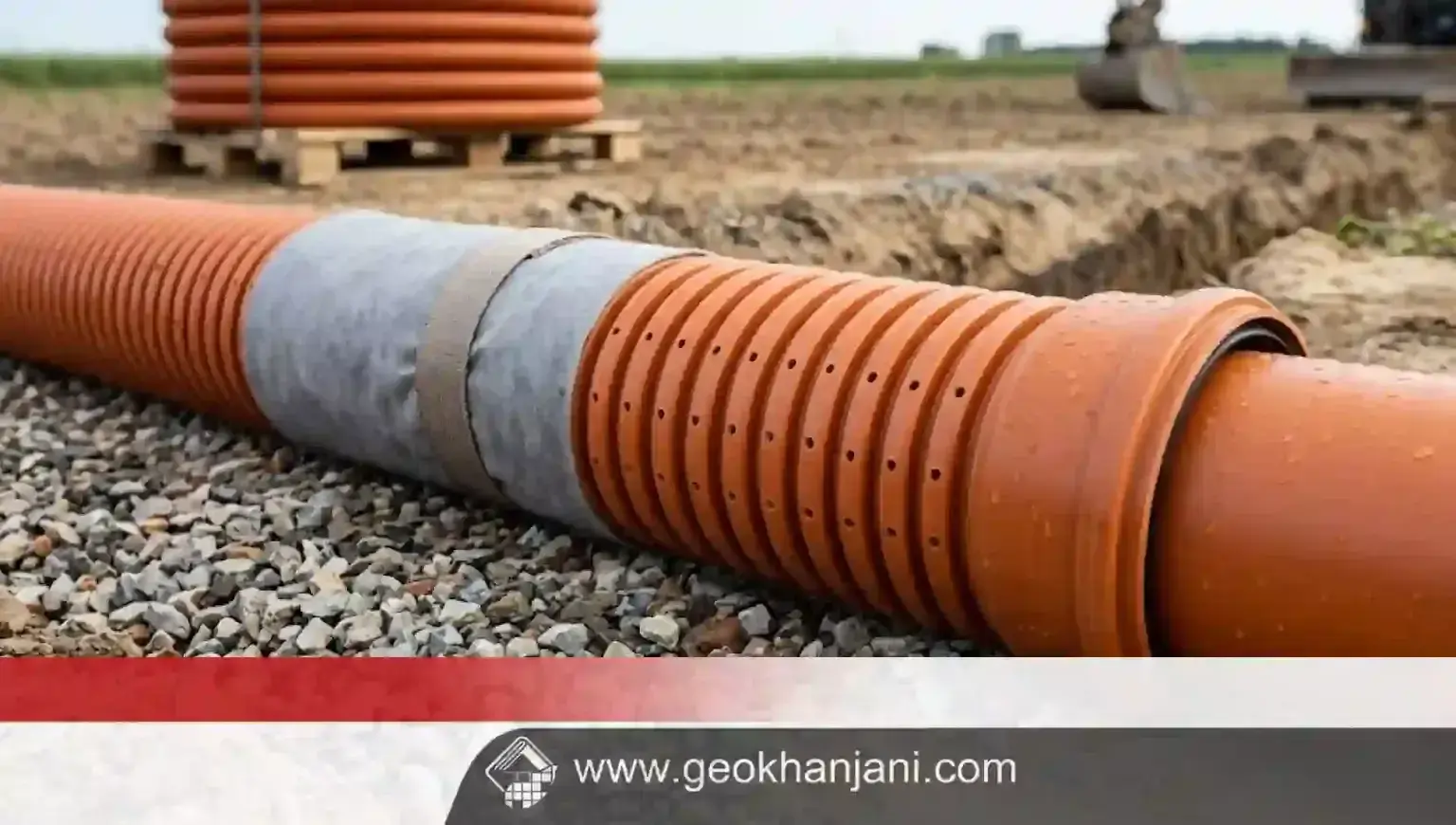 Drainage Pipe
Drainage pipes are used in a wide range of civil engineering, agricultural, and construction projects.
1. Agricultural Drainage
In agricultural land, excessive groundwater can negatively affect soil conditions and plant growth. Perforated drainage pipes can be installed below the ground to collect excess water and direct it toward an appropriate discharge point.
2. Foundation Drainage
Drainage pipes are commonly used around building foundations to control groundwater and reduce hydrostatic pressure. A properly designed drainage system can help protect underground structures from excessive moisture.
3. Retaining Wall Drainage
Water accumulation behind retaining walls can increase hydrostatic pressure. Drainage pipes, combined with suitable aggregate and geotextile layers, can help collect and discharge water behind the wall.
4. Road and Highway Drainage
Subsurface drainage systems are used beneath or alongside roads to control water infiltration and protect pavement structures. Drainage pipes can help remove accumulated groundwater from critical areas.
5. Landscape and Green Roof Drainage
Drainage pipes can be integrated into landscaping and green roof systems to manage excess water and prevent waterlogging.
6. Landfill and Environmental Projects
In engineered landfill systems, drainage components can be used to collect and transfer liquids. Depending on the design, drainage pipes may work together with geomembrane, geotextile, geonet, and other geosynthetic materials.
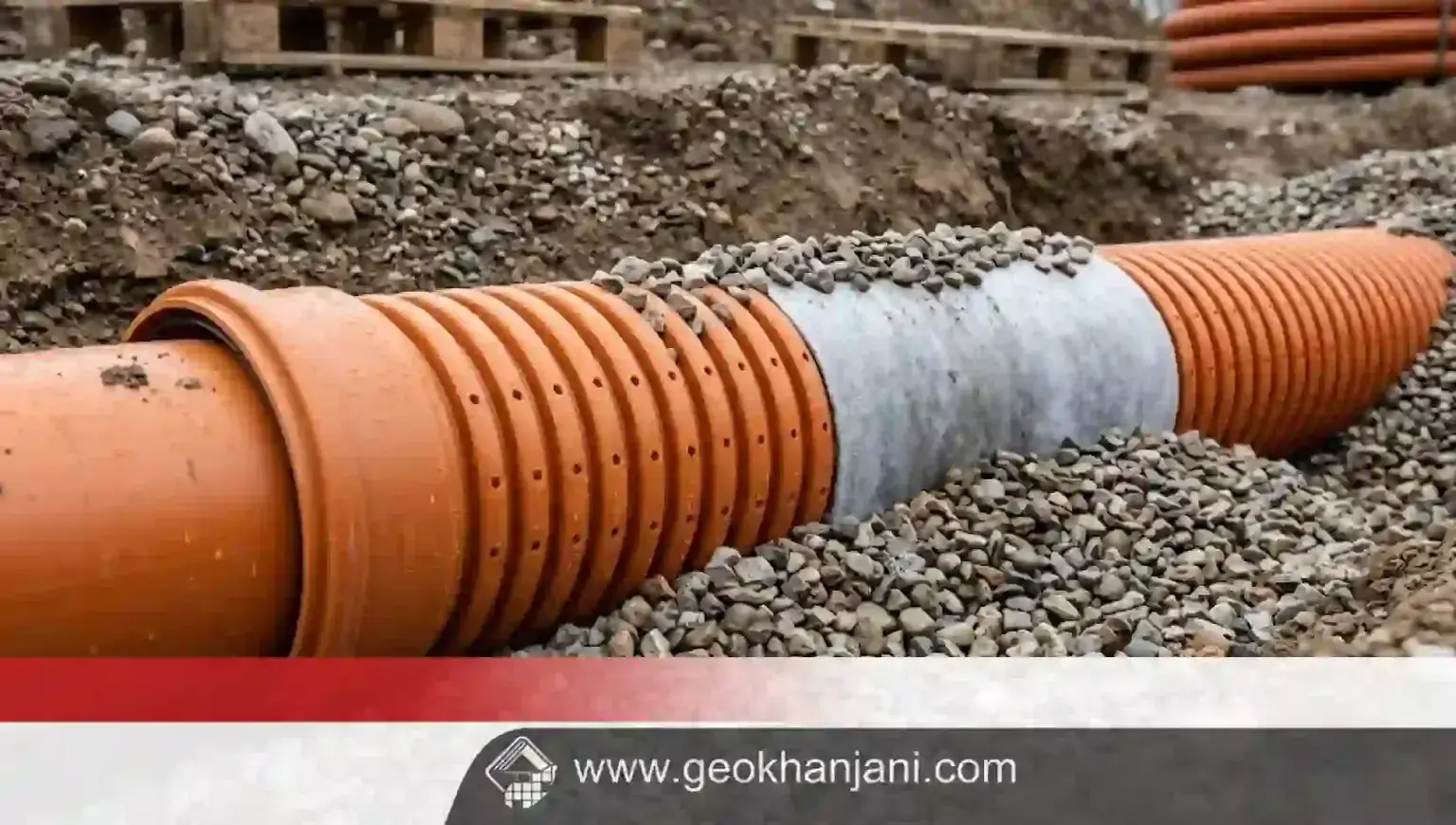 Drainage Pipe
Using a suitable drainage pipe provides several benefits:
Efficient collection and transfer of excess water
Reduction of hydrostatic pressure
Protection of foundations and underground structures
Improved soil drainage
Reduced risk of waterlogging
Resistance to corrosion in many environments
Relatively simple installation
Compatibility with modern geosynthetic drainage systems
Perforated Drainage Pipe
A perforated drainage pipe contains openings along part or all of its surface. These openings allow water from the surrounding soil or drainage layer to enter the pipe.
The collected water then flows through the pipe toward a suitable outlet or collection system.
For many underground drainage applications, the pipe is installed with a surrounding layer of clean drainage aggregate and a geotextile filter. The geotextile helps limit the migration of fine soil particles into the drainage layer and pipe.
The combination of drainage pipe and geotextile is widely used in subsurface drainage systems.
A typical system may consist of:
Prepared trench
Geotextile filter layer
Drainage aggregate
Perforated drainage pipe
Additional aggregate cover
Geotextile wrapping or separation layer
Backfill material
The exact configuration depends on soil type, groundwater conditions, expected flow rate, and project design.
Selecting a drainage pipe requires consideration of several technical factors:
Pipe diameter
Perforation pattern
Flow capacity
Pipe stiffness
Installation depth
Soil characteristics
Groundwater level
Expected water volume
Traffic or external loading
Chemical and environmental conditions
Connection and outlet requirements
For large infrastructure projects, hydraulic and geotechnical calculations should be performed before selecting the final pipe specification.
Proper installation has a major effect on drainage performance. The trench should be prepared according to the project design, with appropriate slope and bedding.
A filter geotextile and drainage aggregate can be used around the perforated pipe where required. The pipe should be installed with the correct alignment and slope to ensure efficient water movement.
After installation, the system should be carefully backfilled to avoid crushing, deformation, or displacement of the pipe.
Drainage pipes can form part of advanced waterproofing and drainage systems. In projects such as reservoirs, landfills, tunnels, retaining structures, foundations, and agricultural water-management systems, drainage pipes may be combined with geomembranes and geotextiles.
For example, a geomembrane can provide a low-permeability barrier, while a drainage layer and pipe system can collect and direct water or other liquids away from sensitive areas.
Drainage pipe is an essential component of many water management and subsurface drainage systems. Its main function is to collect and transfer excess water while helping protect soil, foundations, roads, retaining walls, agricultural land, and other structures.
Selecting the correct diameter, material, perforation design, stiffness, and installation method is essential for achieving reliable long-term performance. In many projects, combining drainage pipes with geotextiles, drainage aggregates, geomembranes, and other geosynthetic products can create a more effective and durable drainage system.
frequently asked question
A comprehensive guide to corrugated pipes, covering their features, types, applications, advantages, installation methods, and key factors to consider when choosing the right pipe for drainage and underground projects.
Drainage pipes are used to collect and transfer excess water from soil, agricultural land, foundations, retaining walls, roads, and other structures. Perforated drainage pipes are often combined with geotextile and drainage aggregate to improve water collection and filtration. This guide explains the applications, advantages, types, installation methods, and key factors for selecting the right drainage pipe.
PVC pipe is a lightweight, corrosion-resistant, and durable piping solution widely used in water supply, agricultural irrigation, drainage, sewerage, electrical conduit, and industrial applications. This guide explains the main features and advantages of PVC pipes, different types, installation methods, maintenance requirements, and the most important factors to consider when selecting the right pipe for a project.