Best Waterproofing Material: Types, Applications, and Complete Selection Guide
107
0
Choosing the best waterproofing material is essential for protecting structures, water storage systems, and industrial projects from leakage and moisture damage. This guide reviews different waterproofing solutions such as geomembranes, PVC membranes, EPDM, bitumen, and liquid coatings, explaining their applications, benefits, and key factors for selecting the most suitable option.
Waterproofing is one of the most important steps in protecting buildings, industrial facilities, agricultural projects, and infrastructure from water damage. Choosing the best waterproofing material depends on several factors, including project type, environmental conditions, water pressure, expected service life, and installation requirements.
Different waterproofing solutions have been developed to meet specific needs. Traditional materials such as bitumen and asphalt-based products are still widely used, while modern solutions like geomembranes, liquid waterproofing coatings, PVC membranes, EPDM sheets, and other geosynthetic materials offer higher performance for more demanding applications.
This guide walks through the most common waterproofing materials, their advantages, their applications, and how to pick the right option for different types of projects.
What Is Waterproofing Material?
Waterproofing materials are protective systems designed to prevent water penetration and moisture damage. They create a barrier between water sources and the surfaces being protected, which helps increase durability and cut down on maintenance costs.
A suitable waterproofing system can protect structures against water leakage, moisture penetration, chemical exposure, soil humidity, freeze-and-thaw cycles, and general structural deterioration.
The right waterproofing material should offer excellent water resistance, mechanical strength, flexibility, and long-term durability all at once.
Types of Waterproofing Materials
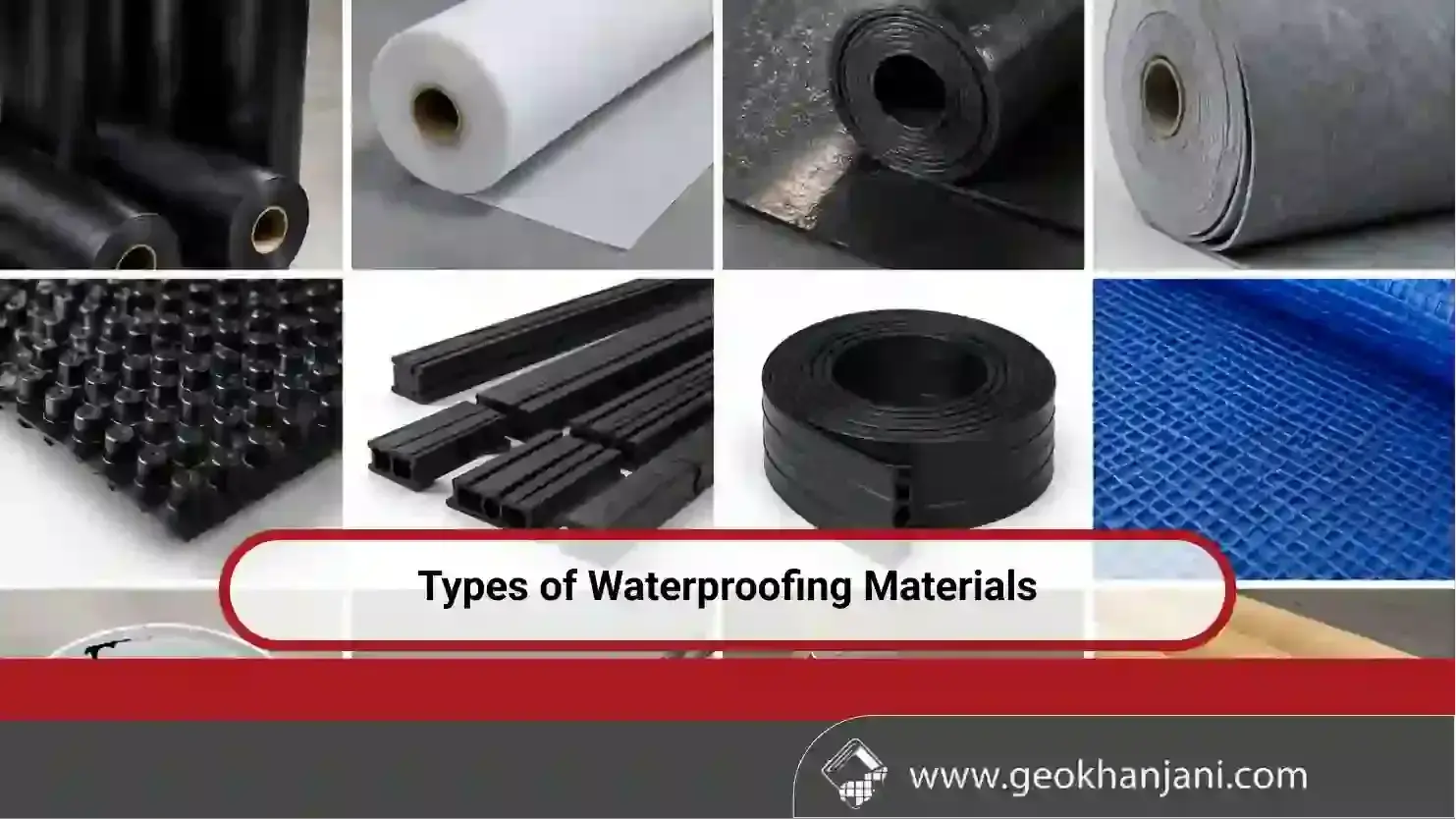 Types of Waterproofing Materials
Geomembrane Waterproofing
Geomembranes are synthetic waterproofing liners manufactured from polymer materials such as HDPE, LLDPE, PVC, EPDM, and polypropylene. They're widely used in projects that need reliable water containment and environmental protection.
Common applications include agricultural water storage ponds, reservoirs and irrigation channels, wastewater treatment facilities, landfills, mining applications, industrial containment systems, and artificial lakes.
Their advantages include high resistance to water leakage, a long service life, excellent chemical resistance, suitability for large-scale projects, flexible installation, and low maintenance requirements. Geomembranes are especially effective anywhere a continuous waterproof barrier is required.
Bituminous Waterproofing
Bitumen-based waterproofing systems are among the oldest waterproofing solutions around, commonly available as asphalt coatings or modified bitumen membranes.
They're typically used for roof waterproofing, basement protection, foundations, and underground structures. Their advantages include being cost-effective, easy to source, and offering good water resistance.
Their limitations are worth keeping in mind too: they're sensitive to temperature changes, may need regular maintenance, and generally have a shorter lifespan compared with some modern membranes.
PVC Waterproofing Membrane
PVC membranes are flexible synthetic sheets commonly used in building waterproofing systems.
They work well for flat roofs, swimming pools, tunnels, and underground structures. Their benefits include a flexible structure, good UV resistance, an easy welding process, and reliable waterproof performance — making them a solid choice for projects where flexibility and fast installation matter.
EPDM Waterproofing Membrane
EPDM is a synthetic rubber membrane known for its flexibility and weather resistance.
It's commonly used in roofing systems, water features, reservoir lining, and landscape waterproofing. Its main advantages are excellent elasticity, resistance to sunlight and weather conditions, and a long operational lifespan — which is why EPDM tends to get chosen for projects that need high flexibility along with resistance to environmental swings.
Liquid Waterproofing Coatings
Liquid waterproofing materials are applied as a coating that forms a seamless protective layer once it cures. Common types include polyurethane coatings, acrylic coatings, and cement-based waterproofing.
They're typically used in bathrooms, balconies, roof surfaces, and concrete structures, with the advantages of seamless application, suitability for complex surfaces, and easy repair and maintenance down the line.
Cementitious Waterproofing
Cement-based waterproofing products are commonly used in concrete structures — water tanks, swimming pools, foundations, and concrete walls. They're valued for being easy to apply, bonding strongly to concrete, and working well in wet areas.
Best Waterproofing Material for Different Applications
For agricultural ponds and water reservoirs, geomembranes are considered one of the most reliable solutions. HDPE geomembranes in particular offer strong resistance against water loss, soil chemicals, and environmental conditions.
For roofs, common options include bituminous membranes, PVC membranes, EPDM membranes, and liquid coatings — the best choice really depends on the roof structure, the local climate, and how much maintenance the owner is willing to take on.
For swimming pools, which need to withstand constant water pressure, common solutions include PVC membranes, EPDM liners, and geomembranes.
For landfills and industrial projects, large environmental projects usually call for high-performance materials such as HDPE geomembranes, thanks to their chemical resistance and durability.
How to Choose the Best Waterproofing Material?
A few things are worth thinking through before settling on a waterproofing system.
Project type matters first — different projects call for different solutions, and a roof waterproofing system isn't necessarily suitable for a water storage pond. Environmental conditions matter too, since temperature changes, sunlight exposure, soil conditions, and chemical contact all affect how a material performs over time.
Expected lifespan is another factor — projects with long-term requirements should lean toward durable materials that keep repair costs down. Installation method matters as well, since some materials need specialized equipment and skilled installers while others are much easier to apply.
And budget and maintenance should be considered together — the initial price tag shouldn't be the only factor, since long-term maintenance and eventual replacement costs matter just as much to the total cost of ownership.
Geomembrane vs Traditional Waterproofing Materials
Modern waterproofing systems have changed the way engineers approach water protection. Compared with traditional materials, geomembranes tend to offer better performance in large-scale applications, higher resistance to chemicals, more reliable waterproof barriers, and a longer service life in harsh environments.
That said, choosing the right material always comes down to the specific requirements of the project at hand.
Conclusion
The best waterproofing material is determined by the application, environmental conditions, durability requirements, and installation method. Traditional waterproofing materials remain useful for a lot of building applications, but advanced solutions like geomembranes offer excellent performance for water containment, industrial projects, agricultural ponds, and environmental protection systems.
Choosing a professional waterproofing solution can significantly increase a project's durability and reduce future repair costs.