A Complete Guide to Waterproofing and Drainage Systems for Construction Excavations Using Geomembranes and Geodrain
119
0
Construction excavations are highly vulnerable to groundwater, rainwater, and soil moisture, making proper waterproofing and drainage essential for protecting foundations and underground structures. This complete guide explains how geomembranes and geodrain systems can be combined to create an effective waterproofing and drainage solution ..
- • Protecting Deep Excavations with Modern Geosynthetic Solutions
- • Why Waterproofing and Drainage Are Critical in Construction Excavations
- • Understanding the Role of Geomembranes
- • Why Geodrain Is Equally Important
- • Why Combine Geomembrane and Geodrain?
- • Factors to Consider When Selecting a Waterproofing System
- • Soil Characteristics
- • Excavation Depth
- • Chemical Exposure
- • Structural Design
- • Selecting the Right Geomembrane
- • Choosing the Appropriate Geodrain
- • Typical Waterproofing System Installation
- • Common Applications
- • Benefits of Integrated Geosynthetic Systems
- • Conclusion
A Complete Guide to Waterproofing and Drainage Systems for Construction Excavations Using Geomembranes and Geodrain
Protecting Deep Excavations with Modern Geosynthetic Solutions
Construction excavations are among the most challenging stages of any infrastructure or building project. Groundwater infiltration, hydrostatic pressure, poor soil drainage, and water accumulation can significantly affect excavation stability, increase construction costs, and delay project schedules. Implementing a reliable waterproofing and drainage system is therefore essential for maintaining structural integrity and ensuring long-term project performance.
Among today's most effective solutions, geomembranes combined with geodrain (drainage geocomposites) have become the preferred choice for engineers seeking durable, efficient, and cost-effective groundwater management systems.
This guide explains how to select the right waterproofing and drainage system for construction excavations using these advanced geosynthetic materials.
Why Waterproofing and Drainage Are Critical in Construction Excavations
Water is one of the primary causes of structural deterioration below ground level. Without an effective protection system, excavations may experience:
- Groundwater infiltration
- Hydrostatic pressure buildup
- Soil instability
- Foundation settlement
- Concrete deterioration
- Reinforcement corrosion
- Mold and moisture penetration
- Increased maintenance costs
An integrated waterproofing and drainage system prevents these problems by controlling water movement before it reaches the structure.
Understanding the Role of Geomembranes
A geomembrane is a highly impermeable polymeric liner designed to prevent water migration. It acts as the primary waterproofing barrier between surrounding soil and the structure.
Depending on project requirements, commonly used geomembranes include:
- HDPE Geomembrane
- LLDPE Geomembrane
- PVC Geomembrane
- EPDM Geomembrane
- Reinforced Polypropylene (RPP) Geomembrane
For deep excavation waterproofing, HDPE geomembranes are generally preferred because of their exceptional durability, chemical resistance, and long service life.
Why Geodrain Is Equally Important
While geomembranes prevent water penetration, they do not eliminate groundwater pressure.
This is where Geodrain (Drainage Geocomposite) plays a vital role.
Geodrain collects groundwater and channels it toward drainage outlets before hydrostatic pressure develops behind retaining walls or foundation structures.
A typical geodrain consists of:
- Three-dimensional drainage core
- Nonwoven geotextile filter
- High-flow drainage channels
- Protective filtration layer
The system continuously removes water while preventing soil particles from clogging the drainage core.
Why Combine Geomembrane and Geodrain?
Using only a waterproofing membrane may stop water penetration, but hydrostatic pressure can still accumulate against the structure.
Similarly, installing drainage without waterproofing allows moisture to reach concrete surfaces.
By combining both systems, engineers achieve:
- Complete waterproofing
- Efficient groundwater drainage
- Reduced hydrostatic pressure
- Longer waterproofing service life
- Improved structural durability
- Lower maintenance costs
- Enhanced construction safety
This integrated approach has become the industry standard for modern underground structures.
Factors to Consider When Selecting a Waterproofing System
Every excavation presents unique challenges.
Before choosing a waterproofing solution, engineers should evaluate:
Groundwater Conditions
- Water table elevation
- Seasonal groundwater fluctuations
- Flow direction
- Hydraulic pressure
Soil Characteristics
- Clay
- Sand
- Gravel
- Rock
- Mixed soils
Different soil types influence drainage capacity and waterproofing design.
Excavation Depth
The deeper the excavation, the greater the hydrostatic pressure acting on retaining walls.
High-pressure environments require stronger geomembranes and higher-capacity drainage composites.
Chemical Exposure
Projects near industrial facilities, landfills, or contaminated soils may require chemically resistant geomembranes such as HDPE.
Structural Design
Waterproofing details vary depending on whether the project includes:
- Basement walls
- Underground parking structures
- Metro stations
- Tunnels
- Utility vaults
- Foundation slabs
Selecting the Right Geomembrane
When choosing a geomembrane, consider:
Material
HDPE is recommended for most construction excavations because of its superior chemical resistance and durability.
Thickness
Typical thicknesses include:
- 1.0 mm
- 1.5 mm
- 2.0 mm
The required thickness depends on groundwater pressure and mechanical loading.
Surface Texture
Textured geomembranes provide increased friction on slopes and vertical applications.
Choosing the Appropriate Geodrain
Key selection criteria include:
Drainage Capacity
Higher groundwater flow requires greater transmissivity.
Compressive Strength
The drainage core must withstand backfill loads without collapsing.
Filter Performance
The geotextile filter should prevent soil migration while allowing unrestricted water flow.
Long-Term Durability
Materials should resist biological degradation, chemicals, and long-term compression.
Typical Waterproofing System Installation
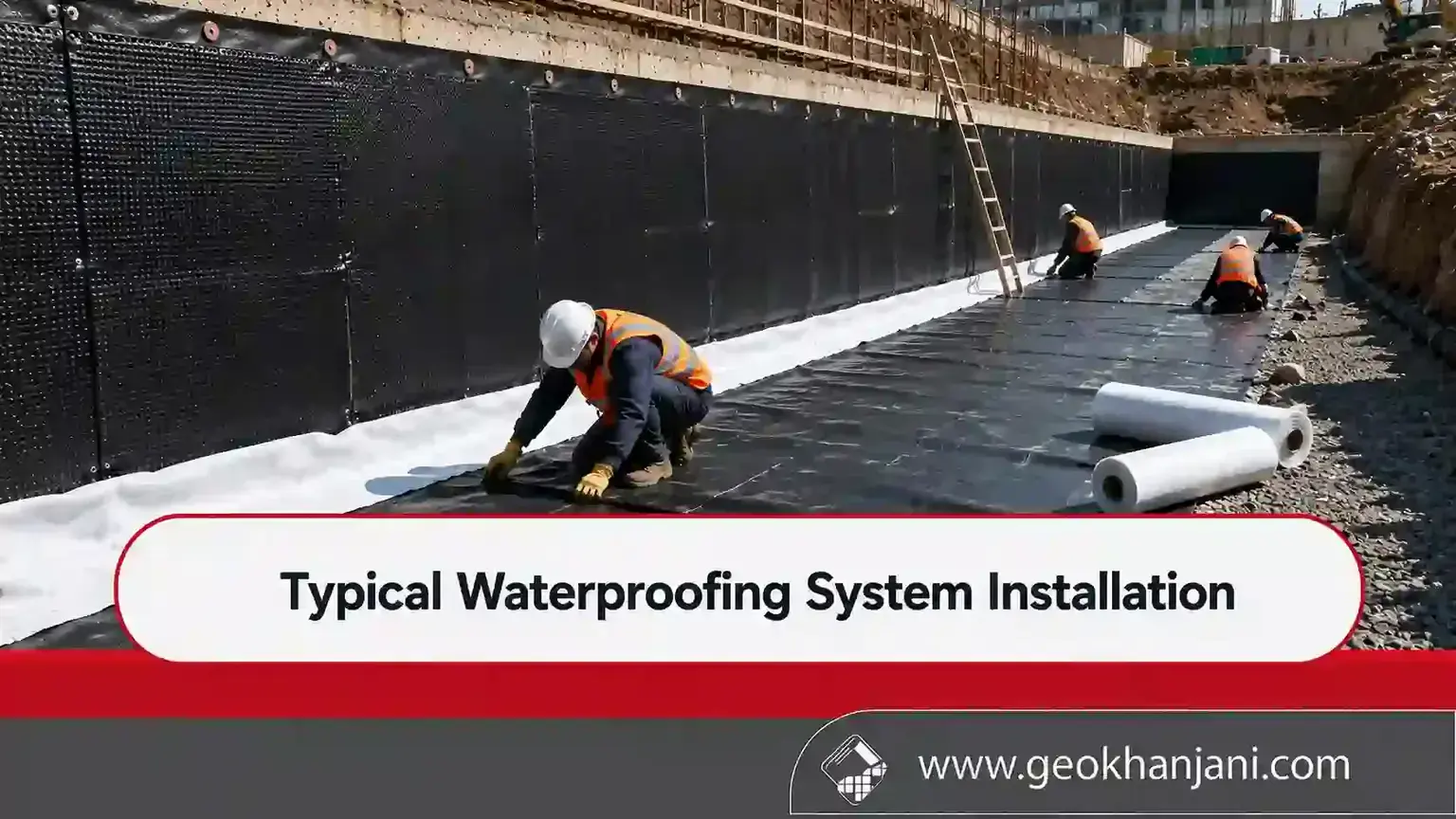 Typical Waterproofing System Installation
A typical excavation waterproofing assembly consists of:
- Prepared substrate
- Geodrain installed against the retaining wall
- Geomembrane waterproofing layer
- Protection geotextile (if required)
- Backfill material
- Perimeter drainage pipe
Each layer contributes to the overall effectiveness of the system.
Common Applications
Geomembrane and Geodrain systems are widely used in:
- High-rise building basements
- Underground parking garages
- Metro stations
- Tunnels
- Retaining walls
- Elevator pits
- Water reservoirs
- Foundation waterproofing
- Utility tunnels
- Commercial buildings
- Industrial facilities
Benefits of Integrated Geosynthetic Systems
Compared with traditional waterproofing methods, integrated geomembrane and geodrain systems provide:
- Faster installation
- Lower lifecycle costs
- Excellent waterproofing performance
- Reliable groundwater control
- Reduced structural maintenance
- Improved construction quality
- Extended service life
- Environmentally sustainable solutions
Conclusion
Selecting the right waterproofing and drainage system is one of the most important decisions in any underground construction project. By combining high-quality geomembranes with efficient geodrain systems, engineers can effectively control groundwater, reduce hydrostatic pressure, and protect underground structures from long-term water damage.
At GEOKHANJANI, we offer complete geosynthetic waterproofing and drainage solutions tailored to the specific requirements of civil engineering, infrastructure, commercial, and industrial projects. Our products are manufactured to international quality standards and supported by expert technical consultation.
If you are planning a basement, tunnel, retaining wall, or deep excavation project, our specialists are ready to help you select the most appropriate waterproofing and drainage system.
Explore our completed projects in the Projects section of the GEOKHANJANI website to see how our geomembrane and geodrain solutions have successfully protected a wide range of construction and infrastructure developments worldwide.