Geomembrane roll width is an important factor in liner design and installation. This guide explains how 2 m, 4 m and 6 m roll configurations can affect panel layout, seam length, material utilization, welding workload, transportation and installation costs...
- • Geomembrane Roll Width: How Panel Dimensions Affect Liner Design, Seaming and Installation Efficiency
- • What Does Geomembrane Roll Width Mean?
- • Why Roll Width Is a Design Parameter
- • The Relationship Between Roll Width and Seam Length
- • Does a Wider Geomembrane Always Mean a Better Solution?
- • Geomembrane Width and Panel Layout
- • The Effect of Width on Material Waste
- • Roll Width and Agricultural Pond Liners
- • Roll Width in Landfill Liner Systems
- • Width Selection for Industrial Containment
- • Transportation and Handling Constraints
- • How Roll Width Affects Installation Productivity
- • Geomembrane Width and Welding Quality
- • How to Calculate Geomembrane Quantity Correctly
- • A Practical Roll-Width Selection Method
- • 2 m vs. 4 m vs. 6 m Geomembrane Width
- • Why the Cheapest Roll May Not Be the Most Economical
- • What Specifications Should Be Confirmed Before Ordering?
- • Can Geomembrane Be Manufactured in Custom Widths?
- • Key Mistakes to Avoid When Selecting Roll Width
- • Final Engineering Perspective
Geomembrane Roll Width: How Panel Dimensions Affect Liner Design, Seaming and Installation Efficiency
When selecting a geomembrane liner, engineers and contractors often focus on polymer type, thickness, tensile strength, puncture resistance and chemical compatibility. Another specification, however, can have a surprisingly large impact on project performance: roll width.
Roll width isn't just a manufacturing dimension. It affects how liner panels are laid out, where seams end up, how much welding is required, how the material is handled, and how efficiently the available membrane gets used.
For a small pond these differences may be relatively minor. For a large reservoir, landfill cell, wastewater facility or industrial containment system, an inefficient roll-width choice can create thousands of additional meters of seams and add considerably to installation time. This guide looks at geomembrane width from a design and installation perspective rather than treating it as just a purchasing spec.
What Does Geomembrane Roll Width Mean?
Roll width is the distance from one longitudinal edge of the manufactured membrane to the opposite edge. Geomembranes are produced in different widths depending on the polymer type, membrane thickness, manufacturing technology, production-line capabilities, project requirements, and transportation or handling limitations.
Common commercial widths tend to run around 2 m, 4 m, 5 m and 6 m, while larger or customized configurations can be arranged for specific projects.
It's worth distinguishing between nominal roll width and usable panel dimensions. The final panel layout has to account for overlaps, trimming, anchor trenches, penetrations and other construction details, so the width printed on a product datasheet shouldn't be used on its own to work out the total quantity needed.
For purchasing geomembrane at a competitive price, visit GeoKhanjani.
Why Roll Width Is a Design Parameter
A geomembrane liner is rarely installed as one continuous sheet. Large areas get divided into panels that are positioned on the prepared subgrade and then joined through field seams. This creates a chain: roll width drives panel quantity, which drives seam length, which drives the welding workload, which drives installation time.
Take a simplified 40-meter-wide containment area as an example. Ignoring overlaps and geometric details, a 2 m roll width would need roughly 20 panels, a 4 m width around 10, a 5 m width about 8, and a 6 m width closer to 7.
The 6-meter option doesn't necessarily use the least material, but it can substantially cut down the number of panel interfaces. That distinction matters: reducing the number of seams isn't the same as reducing total liner area.
The Relationship Between Roll Width and Seam Length
Field seams are among the most important elements of a geomembrane installation. A properly prepared and welded seam gives a reliable connection between adjacent panels, but every additional seam is another operation that has to be correctly aligned, properly welded, inspected, tested where required, and documented as part of quality assurance.
Using wider panels can therefore reduce how much field welding is needed across large, regular surfaces — particularly relevant where long continuous runs are possible.
As a simplified example, take a rectangular area 40 meters wide and 100 meters long. Two-meter-wide panels could require around 20 longitudinal strips; four-meter panels could bring that down to about 10; six-meter panels could reduce it further still. The actual seam layout would depend on panel orientation, slopes, anchor trenches and construction details, but the underlying engineering principle holds: a suitable increase in panel width can reduce field-seam density.
Does a Wider Geomembrane Always Mean a Better Solution?
No. One of the most common misconceptions in geomembrane purchasing is assuming the widest available roll must automatically be the best option. In reality, roll width involves a trade-off between seam optimization and handling requirements.
A wider roll may mean fewer field seams, faster coverage of large areas, a lower welding workload and more efficient panelization. But it may also demand greater lifting capacity, more workers during deployment, larger access routes, more careful roll handling, and appropriate equipment for unfolding and positioning.
For this reason, the optimum width should be chosen based on the complete installation environment, not simply the largest available product dimension.
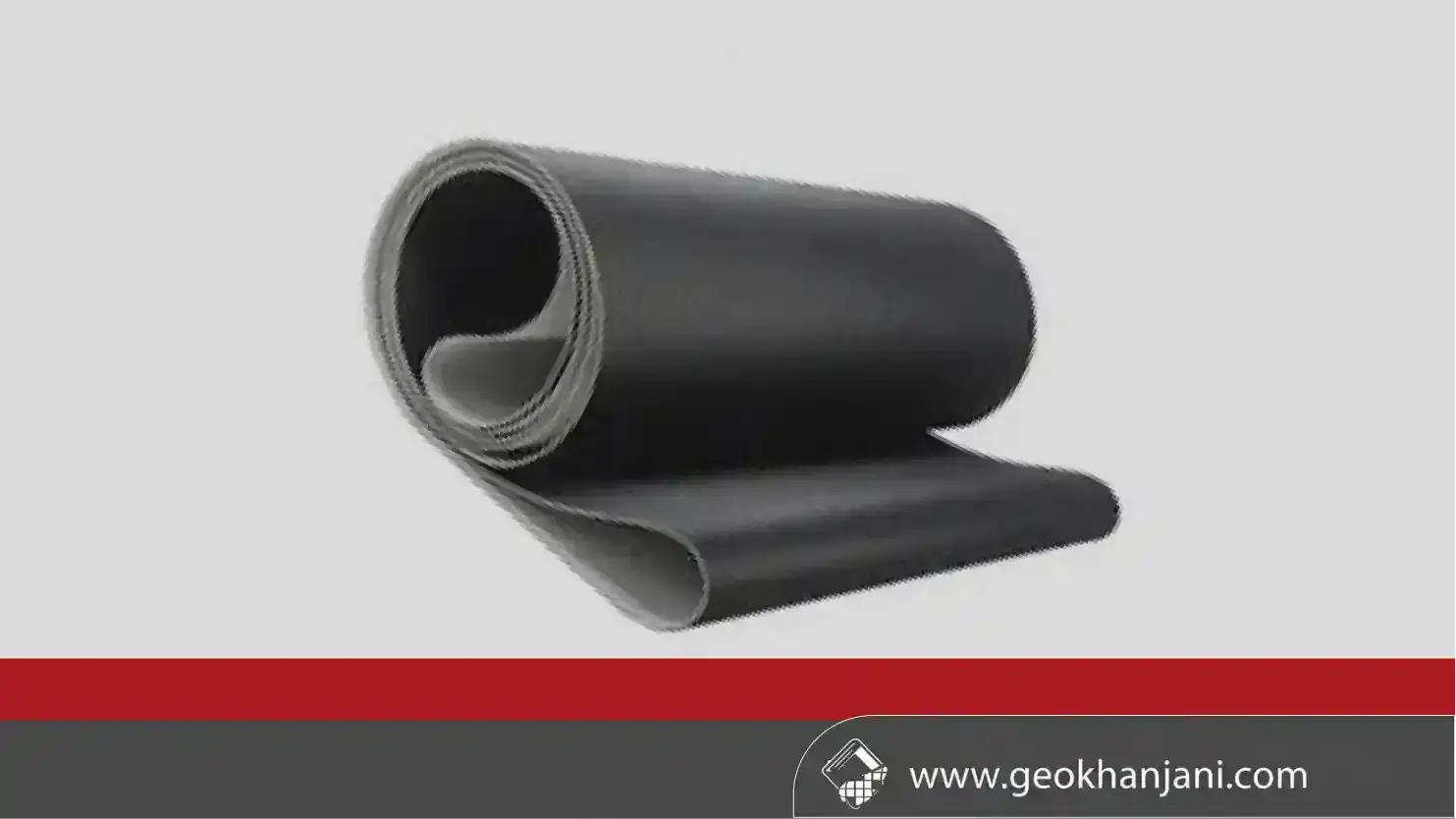 geomembranes
Geomembrane Width and Panel Layout
Professional geomembrane installation should start with a panel layout rather than random placement of rolls. That layout determines panel orientation, seam direction, panel dimensions, starting and termination points, anchor trench locations, penetration details, pipe connections, and expected material waste.
The goal is a layout that balances several factors rather than minimizing just one. Ideally it should minimize unnecessary seams, avoid excessive cutting, keep seams accessible for welding, avoid placing seams in difficult locations, maintain appropriate panel geometry, facilitate inspection and testing, and account for the sequence in which panels will be deployed. This is why roll width should be decided after the project geometry has been evaluated, not before.
The Effect of Width on Material Waste
Geomembrane waste is often tied more to cutting than to the nominal area of the project. Consider two projects with identical surface areas: if one has a simple rectangular geometry and the other has multiple corners, changes in slope, penetrations, steps, irregular boundaries and structural elements, their actual geomembrane requirements can end up quite different.
A roll width that works efficiently on the first project may generate considerable off-cuts on the second. Material optimization should therefore be based on panel nesting and cutting patterns, not simply surface area divided by roll width.
Roll Width and Agricultural Pond Liners
Agricultural reservoirs are one of the most common applications for geomembrane liners. Their geometry usually consists of a relatively large bottom area, sloping sidewalls, a perimeter, and an anchor trench or other termination system.
For a large and fairly regular agricultural pond, wider rolls can reduce the number of seams considerably — but the pond's geometry needs to be considered first. If the slope dimensions aren't compatible with the selected panel width, forcing a wider membrane into the layout can increase cutting and waste.
A better sequence is: pond dimensions, then slope geometry, then panel layout, then seam optimization, and only then roll-width selection — rather than picking an available roll first and trying to adapt the material to the pond afterward.
Roll Width in Landfill Liner Systems
Landfill applications place particularly high demands on liner installation quality. A landfill containment system can incorporate multiple geosynthetic layers, including compacted subgrade, geomembrane, geotextile, geocomposite drainage layers and protective layers.
Large landfill cells can benefit from wider geomembrane panels, since reducing the number of field seams can simplify both deployment and quality-control operations. That said, the panel layout also has to account for side-slope geometry, interface friction, deployment sequence, wind conditions, temporary anchorage, construction traffic and access for welding equipment. So the widest roll shouldn't be chosen automatically without reviewing the complete installation method.
Width Selection for Industrial Containment
Industrial containment projects can have more complicated geometries than agricultural ponds — chemical containment areas, wastewater basins, process-water ponds, secondary containment systems, industrial reservoirs and mining containment facilities among them.
In these applications, membrane selection has to consider both chemical compatibility and installation geometry. A wide roll may reduce seams across a large open floor area, while smaller panels may give better control around penetrations, corners and structural interfaces. The solution may end up involving a combination of panel dimensions rather than one width used throughout the entire project.
Transportation and Handling Constraints
Geomembrane rolls can be heavy, particularly at higher thicknesses and larger widths. As roll width increases, project teams need to weigh roll weight, roll diameter, loading capacity, forklift or crane requirements, truck configuration, site access, storage area, unloading method and deployment equipment.
This matters especially on remote projects — a theoretically efficient roll width can become impractical if the site can't safely receive, unload or deploy the material. Logistics should therefore be part of product selection, not an afterthought once the material has already been bought.
How Roll Width Affects Installation Productivity
Installation productivity depends on many variables, but panel width does influence the number of deployment and welding operations. A wider membrane may let larger areas be covered per deployment pass, potentially reducing panel positioning operations, the number of longitudinal seams, welding passes and repeated material handling.
Productivity depends on more than width, though — weather, wind, subgrade preparation, equipment availability, crew experience and site organization can all matter more than roll dimensions alone. Roll width should be optimized as part of an overall installation plan, not treated in isolation.
Geomembrane Width and Welding Quality
Roll width itself doesn't determine weld quality. That depends primarily on membrane compatibility, welding equipment, temperature, welding speed, surface preparation, ambient conditions, operator skill, equipment calibration and proper seam testing.
Width does affect the number and location of welds, though. A well-designed panel layout can avoid unnecessary seams in areas where welding access is difficult or where complex geometry creates additional installation challenges. So width shapes welding strategy indirectly rather than determining the physical quality of any individual weld.
How to Calculate Geomembrane Quantity Correctly
A common mistake is calculating quantity by simply dividing the project area by the area of one roll — this approach is usually inadequate.
A more reliable calculation adds up the bottom, slopes, walls, terminations and construction allowances to get the required liner area, then refines that figure according to the panel layout — factoring in overlap requirements, anchor trenches, panel intersections, cutting losses, penetrations, irregular geometry and additional material for details. For large projects, a detailed panel drawing or take-off is preferable to a simple area calculation.
A Practical Roll-Width Selection Method
A systematic process can prevent unnecessary material and installation costs. Start by surveying the project to determine actual dimensions, elevations and boundaries, then define the liner geometry by calculating the bottom, slopes, walls and termination zones. Identify complex areas — penetrations, pipes, corners, transitions, structural interfaces — and develop alternative panel layouts, testing different roll widths and panel orientations.
From there, compare seam lengths by estimating the total field welding each layout would require, compare material utilization by evaluating off-cuts and unusable remnants, and check handling requirements to confirm the selected rolls can be transported and deployed safely. The final choice should balance material utilization, seam reduction, handling, installation productivity, and quality control.
2 m vs. 4 m vs. 6 m Geomembrane Width
A 2 m roll is generally easier to handle, produces a higher number of panels and potentially more seam length, and tends to be less efficient for large-area deployment — though it's often easier for complex geometry and needs lower equipment requirements, making it moderately suited to large projects.
A 4 m roll sits in the middle on handling and panel count, offers efficient large-area deployment, remains flexible for complex geometry, and needs moderate equipment — generally a strong fit for large projects.
A 6 m roll is more demanding to handle, produces fewer panels and less potential seam length, and is highly efficient for large-area deployment when suitable, though complex geometry may require more planning and equipment needs are higher. It's well suited to large projects when logistics allow.
This should be read as a general engineering comparison rather than a universal rule — actual performance depends on the project layout and the manufacturer's product configuration.
Why the Cheapest Roll May Not Be the Most Economical
Comparing geomembranes solely by price per square meter can be misleading. A complete cost assessment should factor in material, waste, transportation, deployment, welding, testing, labor and equipment together.
A slightly more expensive roll width may reduce the total number of seams enough to lower overall installation costs, while an inexpensive but impractical roll can increase labor and waste. The more accurate financial metric is total installed cost, not just purchase price per square meter.
What Specifications Should Be Confirmed Before Ordering?
Before placing an order, it's worth requesting a complete product specification from the supplier — geomembrane polymer, nominal thickness, roll width, roll length, roll weight, density, tensile properties, elongation, tear resistance, puncture resistance, dimensional stability, chemical resistance, relevant manufacturing standards, and available roll configurations.
For critical projects, the buyer should also confirm whether the quoted dimensions represent nominal figures or actual manufacturing tolerances.
Can Geomembrane Be Manufactured in Custom Widths?
Depending on the manufacturer and production line, custom-width geomembranes may be available for specific project requirements. Custom production can make sense when the project is exceptionally large, a particular panel layout has already been engineered, seam reduction is a major objective, transportation and deployment are manageable, or the order volume justifies it.
That said, custom dimensions can come with minimum order quantities and longer production lead times, so for many standard projects, selecting an available commercial width remains more practical.
Key Mistakes to Avoid When Selecting Roll Width
Automatically choosing the widest roll is a common misstep, since maximum width doesn't always mean maximum efficiency. Ordering before preparing the panel layout can lead to unnecessary cutting and extra seams, and calculating only the pond's floor area overlooks how much slopes, walls, anchor trenches and overlaps can add to the actual requirement.
Ignoring transportation is another pitfall — a roll that can't be safely delivered or unloaded isn't a practical choice regardless of its other advantages. Comparing only price per square meter misses installation and welding costs that belong in the economic assessment, and ignoring seam accessibility can turn a theoretically efficient layout into a problematic one if welding equipment can't operate effectively in certain locations.
Final Engineering Perspective
Geomembrane roll width is best treated as a project-design variable rather than a simple product dimension. There's no universally optimal width for every application — a 2-meter roll may suit a compact or geometrically complex installation, while 4-meter or 6-meter configurations can offer real advantages on large, relatively regular containment surfaces.
The right decision comes from balancing panel geometry, seam length, material utilization, installation productivity, handling requirements, transportation, welding access, quality control and total installed cost. The most effective approach is to design the liner layout first and choose the roll configuration around that design — not the other way around.
For geomembrane projects involving agricultural ponds, reservoirs, aquaculture facilities, landfills, industrial containment or wastewater systems, a properly optimized panel layout can improve both installation efficiency and long-term liner reliability.
For affordable geomembrane prices, it is important to consider factors such as geomembrane type, thickness, roll width, required quantity, and installation costs. At GeoKhanjani, you can check the latest prices of different geomembrane sheets and choose the most suitable option for your project. For current prices and more information, visit the Geomembrane Sheet Price .