Geotextile Selection Guide: How to Choose the Right GSM and Type for Your Project
100
0
Selecting the right geotextile is a critical step in ensuring the long-term performance of civil engineering,transportation,drainage,and environmental protection projects.The appropriate geotextile should be selected based on its type,GSM (grams per square meter),tensile strength,permeability,and ..
- • What Is a Geotextile?
- • Primary Functions of Geotextiles
- • Types of Geotextiles
- • Understanding Geotextile GSM
- • Key Factors for Selecting the Right Geotextile
- • Recommended Geotextile GSM by Application
- • Common Mistakes When Selecting Geotextiles
- • Benefits of Choosing the Right Geotextile
- • International Standards
- • Conclusion
Guide to choosing the best geotextile type and GSM for your needs
The selection of the correct geotextile involves much more than the GSM or thickness of the fabric. Each project has different engineering requirements such as weight of the soil or loading, required water drainage characteristics, exposure conditions and ultimate design life. Selecting an inappropriate geotextile can result in failure of the system, reduced filtration properties, excessive ongoing maintenance costs or a shorter design life.
This is an easy to follow guide on the various factors involved in the selection of most appropriate geotextile for construction, infrastructure, environmental and hydraulic engineering projects.
What Is a Geotextile?
A geotextile is a permeable geosynthetic formed from polymeric materials, mainly polypropylene (PP) or polyester (PET) fibers. Typical applications include separation, filtration, drainage, reinforcement, protection and erosion control.
The feature of geotextile in civil engineering is to accomplish one or more engineering functions at the same time, in accordance with the demands of the project.
Primary Functions of Geotextiles
- Soil separation
- Filtration
- Drainage
- Soil reinforcement
- Geomembrane protection
- Erosion control
Types of Geotextiles
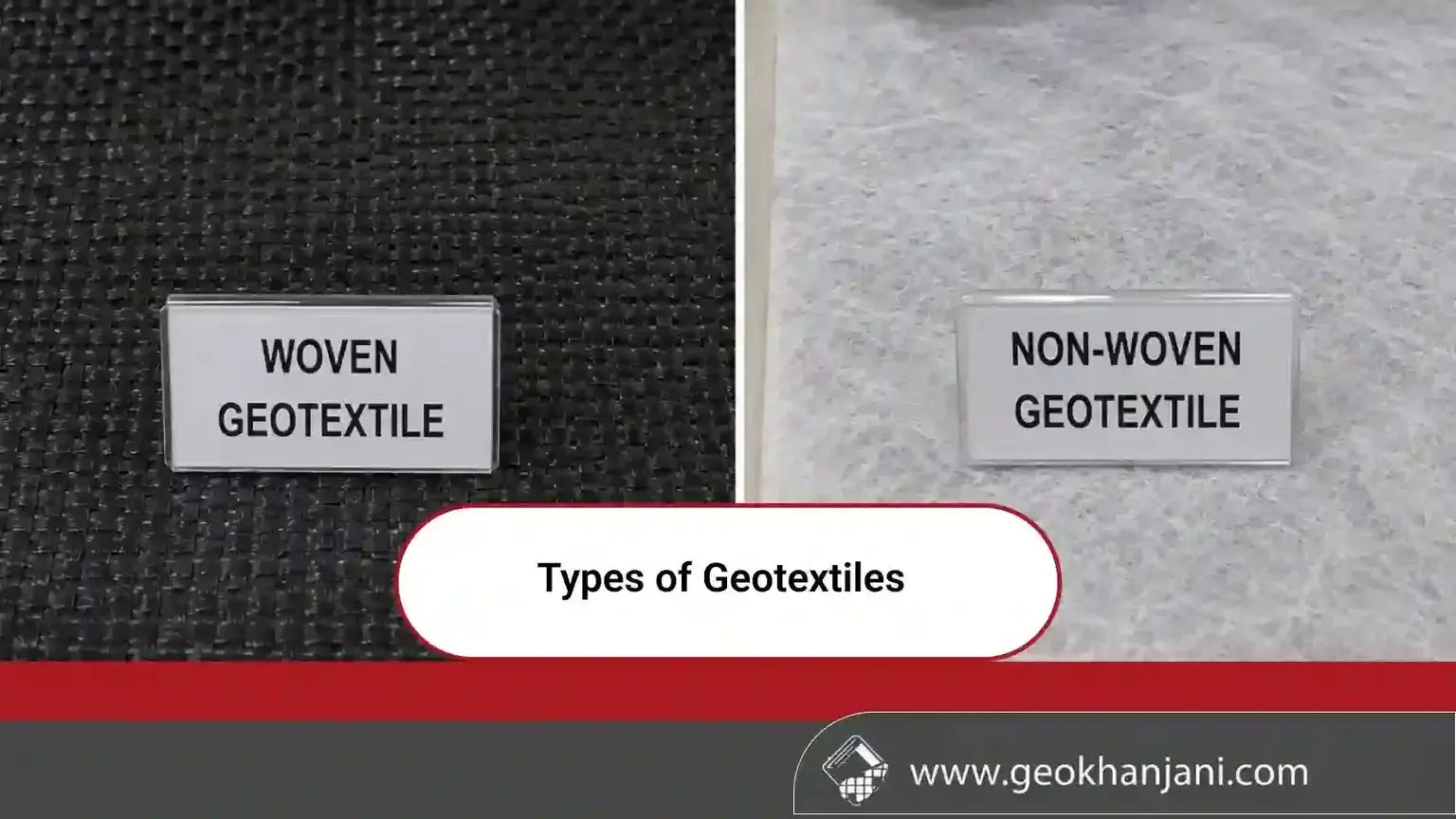 Types of Geotextiles
Nonwoven Geotextile
Nonwoven geotextiles are produced by needle-punching or thermal bonding. Being highly permeable, these are the most suitable materials for filtration, drainage and cushioning of geomembrane.
Typical Applications
- Landfill liner systems
- Water reservoirs
- Agricultural ponds
- Drainage systems
- Green roofs
- Tunnel construction
Woven Geotextile
Woven geotextiles involve the weaving of yarn to provide high tensile strength and good dimensional stability. Typical applications involve use in reinforcement and stabilization of soils.
Typical Applications
- Road construction
- Highway subgrades
- Railway foundations
- Embankments
- Retaining structures
Understanding Geotextile GSM
What is the most important technical feature of a geotextile? Answer:the GSM (grams per square meter).
While GSM affects puncture resistance and durability, should not be the single selection criterion. Mechanical and hydraulic properties also need to meet project specifications.
Common GSM Ranges
- 150-250 GSM: Minimal weight land drainage and landscape products
- 250-400 GSM:average civil engineering projects12 1 2 3
- 400-600 GSMHeavy duty infrastructure & geomembrane protection
- 600-800+ GSM: Landfill, Mining, High loads applications
Key Factors for Selecting the Right Geotextile
1. Project Type
The selection of the necessary properties of a geotextile depends
The application for which it will be used.
Examples include:
- Highway construction
- Rail infrastructure
- Landfill engineering
- Pond lining
- Drainage systems
- Coastal protection
Different applications need different performance characteristics.
2. Soil Conditions
The properties of subgrade are important for the selection of geotextile.
Consider:
- Soil classification
- Particle size distribution
- Moisture content
- Bearing capacity
- Settlement potential
Ground (Teagsi) is generally divided into fine- and coarse-grained soils appropriate to application of poorly permeable textiles such as Geotextile or applied woven reinforcement.
3. Load Requirements
Projects having a large volume of traffic or structural load must utilize geotextiles possessing sufficient tensile strength, puncture resistance and elongation properties.
Choosing an underdesign geotextile could cause deformation and structural failure.
4. Drainage and Filtration Performance
In cases where control over the water flow is very important, permeability and filtration capabilities are the most important factor in the choice of material.
The well-chosen of nonwoven geotextiles are in good condition of maintaining the soil be balance and flow of water.
5. Geomembrane Protection
Within containment systems a. Geotextile is used as a cushion between the subgrade and the Geomembrane to prevent puncture by stones, aggregate or uneven surfaces.
This protective overlay will greatly increase the life of the geomembrane liner system.
Recommended Geotextile GSM by Application
| Application | Recommended GSM |
Road Building :250-400 GSM:
| Drains | 200-300 GSM |
| Agricultural Ponds | 300-500 GSM |
Eco-waste. Landfills. 500-800 GSM.
| Green Roof Systems | 250-400 GSM |
|Protection of Geomembrate| 400-800GSM
Common Mistakes When Selecting Geotextiles
The following mistakes frequently reduce project performance:
- Choosing the cheapest geotextile available.
- Ignoring project-specific engineering requirements
- Choosing an inappropriate GSM
- Overlooking soil characteristics
- Failing to distinguish between woven and nonwoven geotextiles
- Not checking ASTM or ISO compliance has been met
Benefits of Choosing the Right Geotextile
Proper geotextile selection offers numerous long-term advantages:
- Increased service life
- Improved drainage efficiency
- Enhanced soil stability
- Reduced maintenance costs
- Better protection for geomembranes
- Improved structural performance
- Lower lifecycle costs
International Standards
Would recommend seeking a geotextile that meets all approved international standards for, such as:
- ASTM Standards
- ISO Standards
- EN Standards
- GRI Specifications (where applicable)
They ensure quality, durability and engineering standards are consistent and maintained.
Conclusion
The selection of the correct geotextile is a matter of balancing the conditions of the site, characteristics of the soil,load,hydraulic performance and durability expectations. Engineers shuld look at factors such as tensile strength,permeability,puncture resistance and long term performance apart from the GSM.
Appropriate application of the geotextile results in increased project durability,better protection of the geomembrane,better drainage,and reduced maintenance costs.
The technical specifications should be defined for critical engineering applications and appropriate geotextiles should be selected that meet the international standards of quality.