A practical guide to slime glue covering shelf life, proper storage, common slime problems and repair methods. The article explains how to deal with hard, watery or non-stretchy slime, discusses the role of glycerin and borax, and provides guidance for manufacturers looking for suitable slime glue for commercial production.
- • What Is Slime Glue?
- • How Long Does Slime Glue Last?
- • Why Does Slime Become Hard?
- • How to Soften Hardened Slime
- • How to Fix Runny Slime
- • How to Restore Slime Elasticity
- • How to Repair Damaged Slime
- • Can Glycerin Be Used for Slime?
- • Using Borax in Slime Repair
- • Can More Glue Fix Damaged Slime?
- • How to Fix Watery Slime
- • Why Does Watery Slime Go Bad?
- • How to Store Slime Properly
- • Choosing Slime Glue for Commercial Production
- • Slime Glue Supplier and Manufacturer
- • Final Considerations
Slime is a flexible, non-Newtonian material that behaves differently from conventional liquids and solids. Its final texture depends on the type of adhesive, activator, water content and other ingredients used during production. Because of this, the quality and storage conditions of slime glue can have a direct effect on the texture, elasticity and durability of the finished slime.
For manufacturers and slime producers, choosing an appropriate adhesive is particularly important. The wrong glue, unsuitable storage conditions or an incorrect ingredient ratio can result in slime that becomes too hard, too runny, sticky or loses its elasticity.
This guide explains how slime glue behaves, how long it can normally be stored, why slime deteriorates and what methods can be used to restore different types of damaged slime.
What Is Slime Glue?
Slime glue is an adhesive used as one of the primary ingredients in slime production. Depending on the formulation, the adhesive may interact with an activator such as borax or another suitable activating agent to create the characteristic stretchy texture of slime.
The final properties of slime are affected by several factors, including:
- Type and quality of adhesive
- Activator concentration
- Water content
- Humidity
- Temperature
- Storage conditions
- Mixing ratio
- Exposure to air and sunlight
A properly formulated mixture can remain flexible and usable for an extended period, while poor storage or an unsuitable formulation may cause the material to deteriorate much sooner.
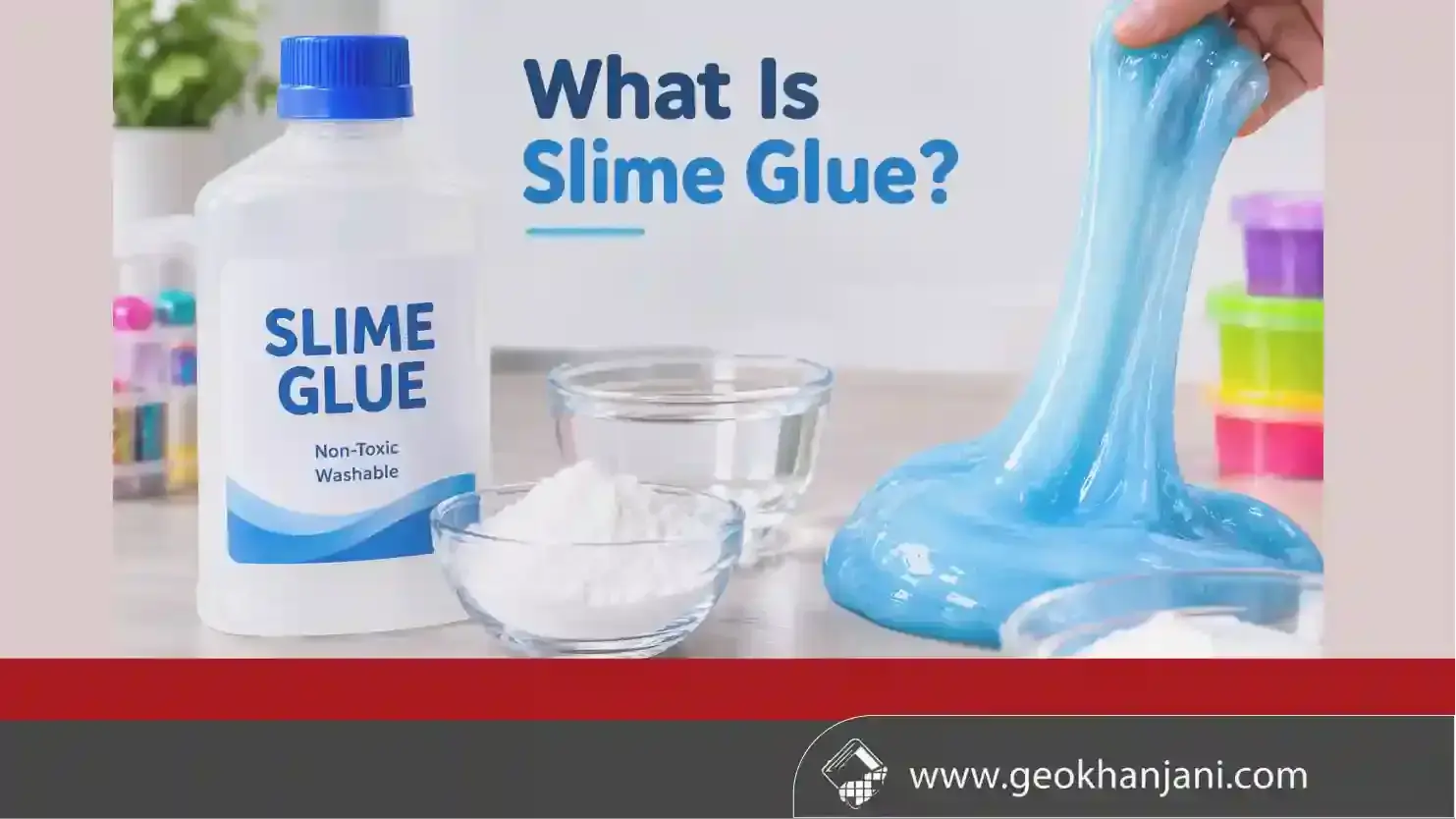 Slime glue
How Long Does Slime Glue Last?
The usable life of slime depends on its formulation, packaging and storage conditions. In general, properly stored slime materials can remain usable for a considerable period, but manufacturers should always follow the shelf-life information supplied for the specific product.
Once slime begins to lose its original texture, several changes may occur. It can become harder, lose elasticity, separate into components or become excessively soft.
For this reason, slime should be stored in a clean, closed container away from excessive heat, direct sunlight and contamination.
If a finished slime product has passed its recommended shelf life or shows signs of contamination, deterioration or an unusual odor, it is safer to dispose of it rather than attempting to restore it.
Why Does Slime Become Hard?
One of the most common problems is excessive firmness.
This may happen because of:
- Loss of moisture
- Excessive activator
- Prolonged exposure to air
- High temperatures
- Improper formulation
- Long-term storage
For mildly hardened slime, kneading can sometimes improve its texture. A small amount of a compatible moisturizing ingredient may also help, depending on the formulation.
However, adding too much liquid or moisturizer can make the slime excessively soft and unstable.
How to Soften Hardened Slime
If the slime has become harder than its original consistency, place it in a clean container and knead it gradually.
A small amount of a suitable moisturizing product can be incorporated while kneading. Add it little by little rather than pouring a large quantity into the slime at once.
This gradual approach makes it easier to control the final consistency
If the problem is caused by an excessive amount of activator, simply adding more activator is generally not the appropriate solution. The formulation should first be evaluated to determine why the slime became over-activated.
How to Fix Runny Slime
Slime can become too loose when its formulation contains excessive moisture or insufficient activating material.
The appropriate correction depends on the adhesive and formulation used to produce the slime.
For example, some formulations may respond to a very small amount of baking soda followed by thorough kneading. However, the exact amount should not be treated as a universal recipe because different adhesives react differently.
Additives should always be introduced gradually.
After adding a corrective ingredient, knead the slime thoroughly and evaluate its consistency before adding anything else.
Adding excessive powder or activator can quickly turn a soft slime into an overly firm and rubbery material.
How to Restore Slime Elasticity
Loss of stretchiness is another common problem.
When slime becomes less elastic, it may feel dry, break easily or fail to stretch smoothly. In some formulations, a small amount of lotion or another compatible softening ingredient can improve flexibility.
To do this:
1. Flatten the slime.
2. Place a small amount of the compatible softening ingredient in the center.
3. Fold the slime around the ingredient.
4. Knead it slowly.
5. Check the elasticity.
6. Repeat with a very small quantity if necessary.
Avoid adding large quantities at once because excessive softening agents can permanently change the texture.
How to Repair Damaged Slime
Before attempting to repair slime, identify the actual problem.
A simple troubleshooting approach is useful:
Slime is too hard
Possible causes include moisture loss or excessive activator.
Try gradual kneading and, where compatible with the formulation, introduce a small amount of a suitable softening ingredient.
Slime is too soft
Excess moisture or insufficient activation may be responsible.
A small amount of a compatible corrective ingredient can be added gradually, followed by thorough mixing.
Slime has lost its stretch
Moisture loss and formulation changes can reduce elasticity.
Kneading with a small amount of a suitable softening ingredient may restore some flexibility.
Slime has separated
Separation can occur because of formulation instability, inappropriate storage or ingredient incompatibility.
Mixing the material again may help in minor cases. If separation is accompanied by contamination, an unusual smell or significant deterioration, the product should not be used.
Can Glycerin Be Used for Slime?
Glycerin is sometimes used as a conditioning ingredient in slime-related formulations because of its ability to retain moisture.
If a slime product has become dry, a small quantity of glycerin may help improve its texture. It should be introduced gradually and mixed thoroughly.
The amount required depends on the original formulation, so there is no single dosage that is suitable for every type of slime.
When working with slime, keeping your hands clean and slightly moisturized can also make handling easier and reduce unwanted sticking.
Using Borax in Slime Repair
Borax has traditionally been used as an activating ingredient in some slime formulations. It interacts with suitable polymers in the adhesive and helps create the characteristic slime structure.
However, using too much activator can produce an excessively firm or rubbery texture.
For this reason, borax should never be added indiscriminately to damaged slime. The formulation, concentration and type of adhesive should be considered first.
When working with borax or other chemical activators, follow the relevant safety instructions and avoid direct contact with eyes and sensitive skin.
Can More Glue Fix Damaged Slime?
In some cases, adding compatible adhesive can help correct a formulation that has become excessively activated or has an incorrect ingredient balance.
However, this is not a universal repair method.
The additional adhesive should be compatible with the original formulation. It should also be incorporated gradually while the mixture is thoroughly kneaded.
Adding large quantities of glue without understanding the cause of the problem can make the texture even more difficult to control.
How to Fix Watery Slime
Watery or excessively loose slime requires a slightly different troubleshooting approach.
First, determine whether the problem is caused by excess water, insufficient activation or separation of the ingredients.
A common approach is to prepare a diluted activating solution and introduce it gradually.
For example, if a borax-based formulation is specifically designed for this type of activator, a small amount of diluted borax solution can be mixed into the slime while continuously kneading it.
Do not add a concentrated activator directly in large quantities.
The material should be evaluated after every small addition. Excessive activation can make watery slime become hard very quickly.
In some formulations, a compatible conditioning ingredient can subsequently be used to improve softness.
Why Does Watery Slime Go Bad?
Several factors can cause watery slime to deteriorate.
1. Moisture Loss or Imbalance
Changes in water content can significantly affect slime consistency. Evaporation can make the product dry, while excessive moisture can produce a runny texture.
2. Contamination
Dirty hands, unclean containers and exposure to contaminants can affect the quality of slime.
Always use clean equipment and wash your hands before handling the product.
3. Incorrect Ingredient Ratio
An inappropriate ratio between adhesive, water and activator can prevent the desired polymer structure from forming correctly.
This is particularly important for commercial slime production.
4. Unsuitable Ingredients
Not every type of adhesive or additive is suitable for slime production. Using incompatible materials can result in poor texture, separation or instability.
5. Improper Storage
High temperatures, direct sunlight and prolonged exposure to air can negatively affect the product.
Slime and slime-related materials should be kept in suitable sealed containers under the storage conditions recommended for the specific formulation.
How to Store Slime Properly
Correct storage can significantly extend the useful life of slime.
Consider the following practices:
- Use a clean, airtight container.
- Keep slime away from direct sunlight.
- Avoid excessive heat.
- Do not leave the product exposed to air for long periods.
- Keep the container and handling tools clean.
- Avoid mixing old and new batches without checking compatibility.
- Follow the recommended storage temperature.
- Check the product regularly for changes in odor, appearance and texture.
For commercial production, proper storage of the adhesive itself is equally important.
Choosing Slime Glue for Commercial Production
For slime manufacturers, the adhesive is more than just a basic ingredient. Its characteristics can affect the entire production process and the final consumer experience.
When selecting slime glue, manufacturers should consider:
- Adhesive quality
- Consistency between batches
- Compatibility with the intended formulation
- Required viscosity
- Packaging options
- Storage requirements
- Production volume
- Technical specifications
- Supplier reliability
A suitable adhesive can make formulation control easier and reduce material waste during production.
Slime Glue Supplier and Manufacturer
Depending on the application and order volume, different packaging solutions can be considered. The final price of slime glue may vary according to factors such as grade, quality, weight, packaging and order quantity.
For current pricing and product specifications, contact the sales team of Geokhanjani through the contact information provided on the website.
You can also visit the slime glue product page to learn more about the available product:
If you are looking for a suitable adhesive for commercial slime manufacturing, providing information about your required volume and production formulation can help the supplier recommend an appropriate product.
Final Considerations
The condition of slime is closely connected to the quality of its raw materials, formulation and storage environment. When slime changes texture, the first step should always be identifying the underlying cause rather than randomly adding ingredients.
For commercial manufacturers, selecting a consistent and suitable slime glue is particularly important because it can influence production efficiency, product quality and material consumption.
For information about slime glue products, available grades, packaging and pricing, contact Geokhanjani through the contact details available on the website.