3D drainage geonet is a three-dimensional drainage material designed to collect and transport excess water, reducing hydrostatic pressure and improving the performance of drainage systems in civil engineering and construction projects.
Its three-dimensional structure creates continuous drainage channels that let water move efficiently through the system. Compared with conventional flat drainage layers, a 3D drainage geonet can provide a defined flow path while taking up relatively little space within the construction assembly.
It's commonly used in green roofs, retaining walls, foundations, underground structures, road construction, landfills, drainage systems, and waterproofing applications.
What Is a 3D Drainage Geonet?
A 3D drainage geonet is a geosynthetic drainage layer manufactured with a three-dimensional network of interconnected ribs or channels.
The open structure gives water space to flow while separating the drainage path from surrounding soil or construction materials.
Depending on the project, the geonet may be used as a standalone drainage layer or built into a geocomposite drainage system with geotextile layers. The geotextile component, when included, helps keep soil particles from entering and blocking the drainage channels while still letting water pass into the drainage core.
How Does 3D Drainage Work?
The basic function of a three-dimensional drainage system is to provide a controlled path for water movement.
When water reaches the drainage layer, it enters the open structure of the geonet. The three-dimensional channels then guide the water toward a designated outlet, collection pipe, drainage channel, or other discharge point, which helps prevent water from accumulating behind structures or within construction layers.
In short: water enters the drainage layer, the 3D core collects it, internal channels transport it, and it reaches the designed outlet.
The actual drainage capacity depends on factors like the product structure, hydraulic gradient, compressive load, installation conditions, and project design.
Where Is 3D Drainage Geonet Used?
The versatility of 3D drainage geonets makes them useful across many applications.
On green roofs, excess water needs to be removed without letting the growing medium stay permanently saturated. A 3D drainage layer can collect that excess water and direct it toward roof outlets while helping protect the waterproofing membrane underneath.
Behind retaining walls, water accumulation can increase hydrostatic pressure. Installing a suitable drainage layer there helps collect and redirect groundwater, reducing the amount of water acting directly against the structure.
For foundations and basements, underground structures are frequently exposed to groundwater and soil moisture. A 3D drainage layer can be built into the waterproofing and drainage assembly to give water a controlled route away from the foundation or basement wall.
In roads and pavements, drainage layers matter because water accumulation can hurt the performance of the base and subgrade. A properly designed geosynthetic drainage layer helps transport water away from critical structural zones.
In landfill engineering, drainage layers may be used to collect and transport liquids such as leachate — high-performance drainage geonets and geocomposites can be built into liner and collection systems according to the project design.
And in tunnels, groundwater can infiltrate through surrounding rock and soil. A drainage layer installed behind a waterproofing membrane can collect this water and direct it toward the tunnel drainage system.
Main Benefits of 3D Drainage Geonet
The open three-dimensional structure gives water a dedicated space to collect in, and rather than letting water move randomly through soil or construction materials, the drainage layer provides a defined flow path.
By removing accumulated water, the system helps reduce hydrostatic pressure behind retaining walls and other underground structures. Geosynthetic drainage materials are also generally lightweight compared with traditional aggregate drainage layers, which simplifies transportation and installation, and a relatively thin drainage layer can provide a dedicated drainage path without needing a thick layer of conventional drainage aggregate.
These products fit naturally into multilayer waterproofing assemblies, working alongside geomembranes, geotextiles, protection layers, and drainage pipes. And when paired with an appropriate filter geotextile, the system can reduce the migration of fine soil particles into the drainage channels, lowering the risk of blockage.
3D Drainage Geonet vs. Traditional Gravel Drainage
Traditional drainage systems often use layers of gravel or other granular material to create a path for water. A 3D geosynthetic drainage layer performs a similar basic function but uses a manufactured three-dimensional structure instead of relying entirely on aggregate.
Some potential advantages include lower material volume, easier transportation, faster handling and installation, a consistent manufactured structure, more efficient use of limited construction space, and easy integration with geotextile filtration layers.
That said, the choice between a geosynthetic drainage layer and conventional aggregate should always be based on hydraulic requirements, structural loading, available space, soil conditions, and project specifications.
3D Drainage Geonet and Geotextile
In many drainage applications, the 3D drainage core is combined with one or more geotextile layers. The drainage core provides the water flow path, while the geotextile acts as a filtration layer.
This combination matters especially when the drainage system is installed next to soil or fine particles. Without adequate filtration, fine particles can work their way into the drainage channels and gradually reduce drainage capacity.
For that reason, geotextile selection should be based on the surrounding soil and filtration requirements, not simply on choosing the thickest fabric available.
Installation of 3D Drainage Geonet
The installation method depends on the application and product configuration.
The installation surface should be stable, clean, and free from sharp objects or debris that could damage the drainage material. The geonet should then be positioned according to the project drawings, keeping its drainage channels continuous.
Adjacent sections should be connected or overlapped according to the manufacturer's installation instructions, with particular attention to corners, transitions, pipe connections, and drainage outlets.
The drainage layer should also be protected from unnecessary damage during subsequent construction — heavy equipment or uncontrolled traffic over an exposed geonet can deform the drainage structure.
Finally, the drainage layer needs a functional discharge route. Installing a drainage material without a suitable outlet doesn't create an effective drainage system — the collected water should be directed toward an appropriate pipe, channel, sump, or other designed discharge point.
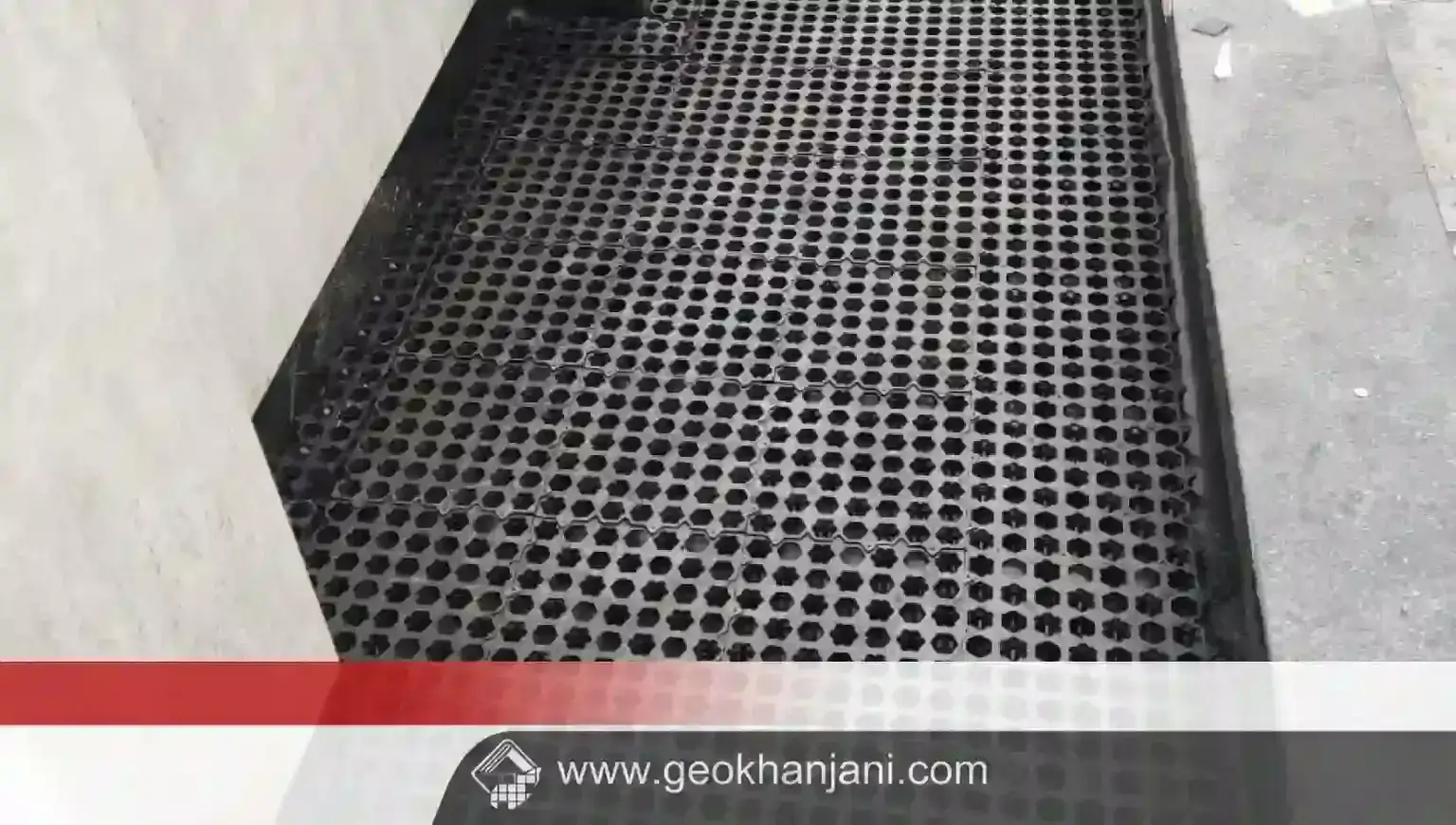 Installation of 3D Drainage Geonet
Important Factors When Choosing a 3D Drainage Geonet
Not every drainage geonet suits every project. Before buying, it's worth considering the required drainage capacity, the direction of water flow, the expected compressive load, the installation location, the soil type, whether fine particles are present, long-term filtration requirements, chemical and environmental exposure, the required thickness, the geotextile's filtration characteristics, and the connection and installation method.
For heavily loaded applications, drainage performance should be evaluated under the actual project load rather than relying only on the nominal flow capacity stated for unloaded conditions.
3D Drainage for Green Roofs
Green roof systems need effective drainage because excess water can damage plants, add structural load, and hurt the waterproofing assembly.
A 3D drainage layer can be installed above the waterproofing membrane and below the growing medium. It collects excess water and directs it toward roof drains while helping separate the growing medium from the waterproofing layer.
A complete green roof drainage system may also include a protection layer, filter geotextile, drainage core, root-resistant waterproofing, and inspection or drainage outlets.
3D Drainage for Retaining Walls
Retaining wall drainage is essential because water trapped behind the wall can increase lateral pressure.
A 3D drainage geonet installed behind the waterproofing or protection layer can collect groundwater and guide it toward a perforated drainage pipe or other outlet, creating a controlled drainage path and reducing water buildup directly against the wall.
Factors Affecting 3D Drainage Geonet Price
The price of a 3D drainage geonet depends on several factors: product thickness, drainage core structure, material type, drainage capacity, geotextile configuration, product dimensions, manufacturer, order quantity, and project requirements.
A drainage product shouldn't be chosen solely based on price per square meter — a cheaper product may not deliver the required drainage performance under the actual load and installation conditions.
Buying 3D Drainage Geonet
When buying a 3D drainage geonet, it helps to give the supplier basic project information: the application type, approximate project area, installation location, expected water conditions, soil characteristics, required drainage direction, expected loading, and whether a geotextile filter is needed.
Providing these details makes it much easier to land on a drainage product that actually matches the project's requirements.
Why Proper Drainage Design Matters
A drainage geonet is only one component of a complete drainage system. The overall design should consider where water comes from, how it enters the drainage layer, how it moves through the system, and where it's ultimately discharged.
Even a high-quality drainage product can't make up for an incorrectly designed outlet or inadequate filtration. That's why drainage capacity, filtration, protection, slope, connections, and discharge points all need to be considered together
GeoKhanjani provides geosynthetic drainage solutions for applications such as green roofs, retaining walls, foundations, underground structures, tunnels, and civil engineering projects.
You can review the product specifications, work out the required quantity, and contact the GeoKhanjani team for product selection and pricing based on your project's requirements.
Order your 3D drainage solution easily from GeoKhanjani and choose a drainage product suited to your project's technical requirements and budget.