Geomat: The Practical Guide to Erosion Control and Slope Protection
If you're dealing with exposed slopes, embankments, channels, or any soil surface that takes a beating from rain and runoff, you already know how quickly bare earth can wash away. Geomat was built to solve exactly that problem. It's a three dimensional geosynthetic material that sits over the soil, shields it from rainfall and surface water, and at the same time gives vegetation room to root and grow right through it.
Unlike flat geotextiles, geomat has a real three dimensional structure with a relatively high void volume. That open, layered design lets soil, roots, and water interact inside the mat itself, which is exactly why it works so well on green slopes and environmentally sensitive erosion control projects. Depending on what the project calls for, geomat is manufactured from polyethylene or polypropylene and comes in a range of thicknesses, weights, and structural configurations.
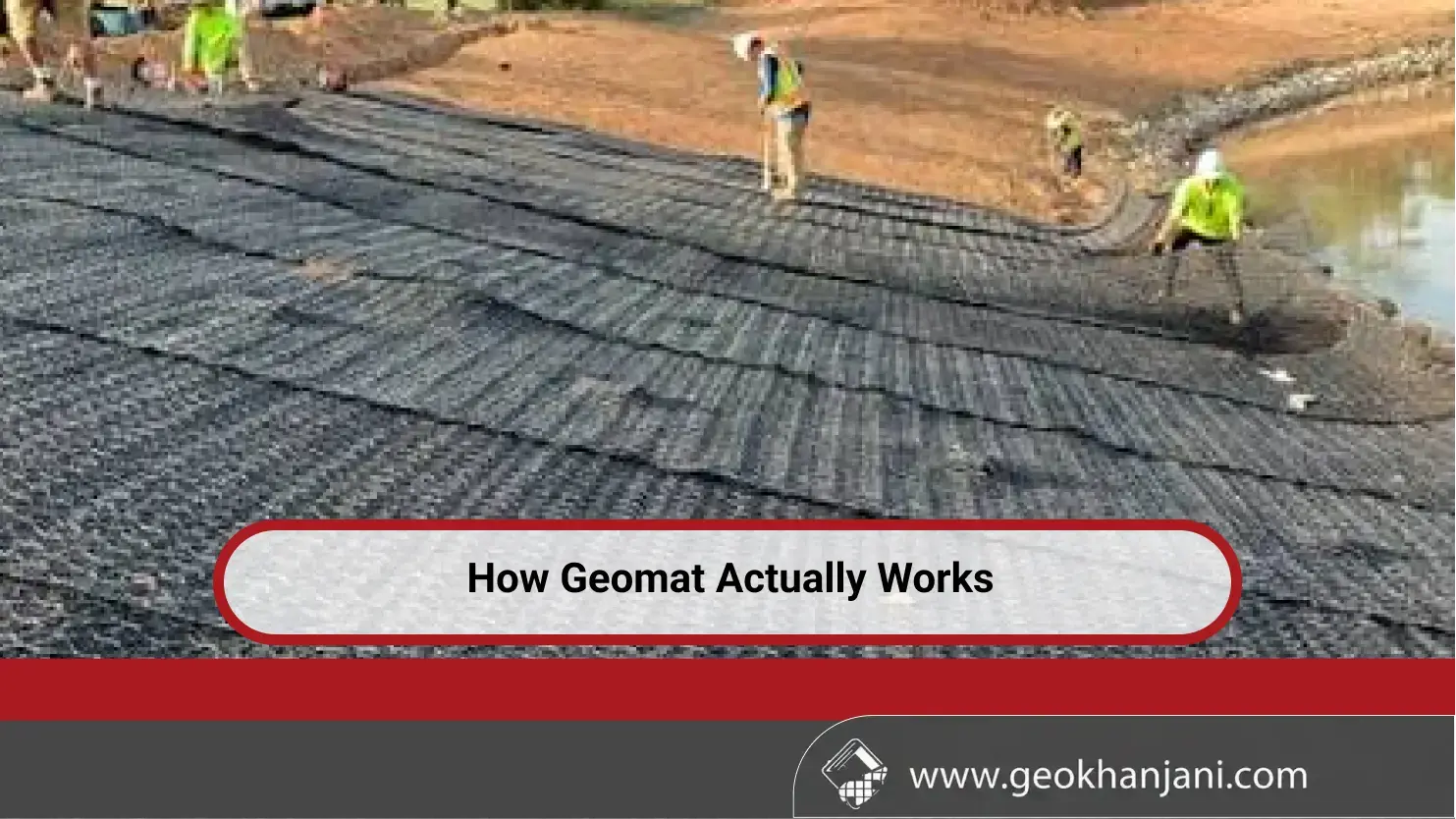
How Geomat Actually Works
The three dimensional structure is where all the performance comes from. Once it's installed over prepared soil and properly anchored, soil particles get trapped inside the mat while vegetation gradually grows through and around it. In practice, that means the mat slows down the speed and erosive force of surface runoff, holds soil particles in place on the slope, cushions the ground against direct rainfall impact, creates favorable conditions for vegetation to take hold, keeps the surface more stable while plants are establishing, and cuts down the risk of rill and sheet erosion. Once vegetation is fully established, the roots and the geomat effectively become one combined erosion control system.
Where Geomat Gets Used
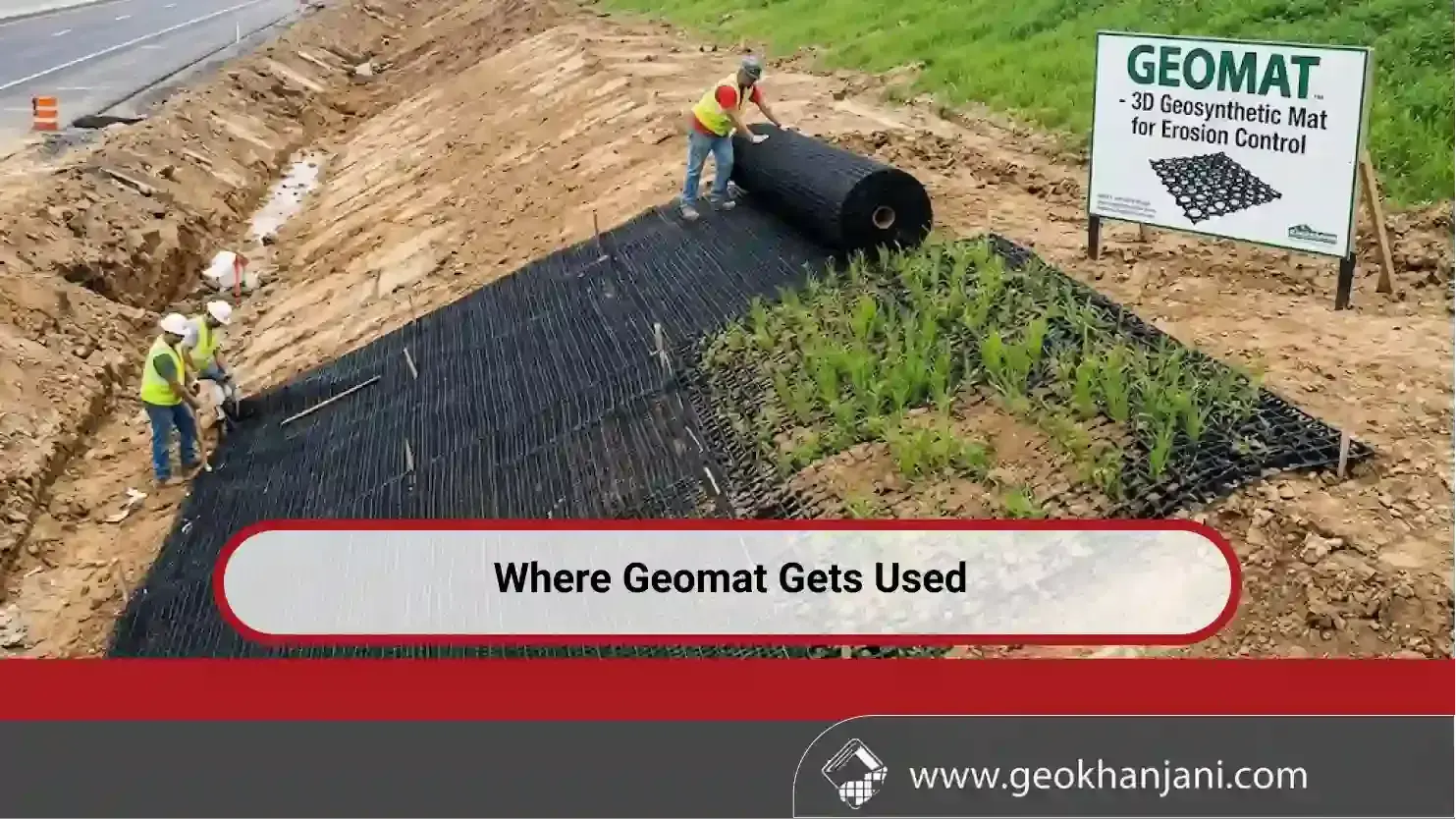
Slope erosion control
This is the most common use case: protecting soil slopes from rain and runoff damage. That covers road and railway embankments, excavated slopes, landscaped slopes, dam and reservoir embankments, construction site slopes, and riverbanks or drainage channels. The 3D structure keeps the soil surface stable while vegetation develops.
Vegetated slope protection
For projects where keeping a natural, green look matters, geomat is a strong fit. Vegetation grows through it after installation, and as roots establish, they add extra reinforcement to the upper soil layer. This is often the preferred approach over fully rigid erosion control systems when a project needs both engineering performance and environmental integration.
Channel and drainage protection
Certain geomat systems can be used in drainage channels and water conveyance areas, but choosing the right one depends on flow velocity, shear stress, channel slope, soil characteristics, expected rainfall, vegetation type, and hydraulic loading. For high flow or high shear situations, standard geomat usually isn't enough on its own and needs extra protection or a different geosynthetic system alongside it.
Road construction
Road building almost always creates exposed soil slopes that are vulnerable to rain and runoff. Geomat protects those areas while vegetation gets established, making it a useful piece of a larger erosion control plan for road cuts, embankments, and drainage areas.
Riverbank and watercourse protection
Geomat can help control surface erosion along certain riverbanks, canals, and watercourses. How well it works really depends on the hydraulic conditions, and in higher flow situations it's usually paired with vegetation, anchoring systems, geotextiles, or other erosion control materials.
 Where Geomat Gets Used
Why Choose Geomat
Strong surface erosion control
The 3D structure absorbs the direct impact of rainfall and slows surface runoff, which means less soil lost from exposed areas.
Works with vegetation, not against it
This is one of geomat's biggest advantages. Soil and seed get held inside the structure, giving roots a place to develop as they grow through the mat.
Lightweight and easy to work with
Compared to a lot of conventional erosion control systems, geomat is light, easy to transport, cut to size, and install.
Flexible enough for irregular ground
Geomat conforms to uneven soil surfaces, which makes it a practical choice for slopes and terrain where rigid systems would be a headache to install.
Built for the long haul
Installed and selected correctly, geomat stays integrated with the soil and vegetation system, providing lasting surface protection.
Good for green, natural looking projects
Vegetated geomat systems keep a natural appearance, which makes them a great fit for landscape and environmental projects where looks matter as much as performance.
Geomat vs Geotextile
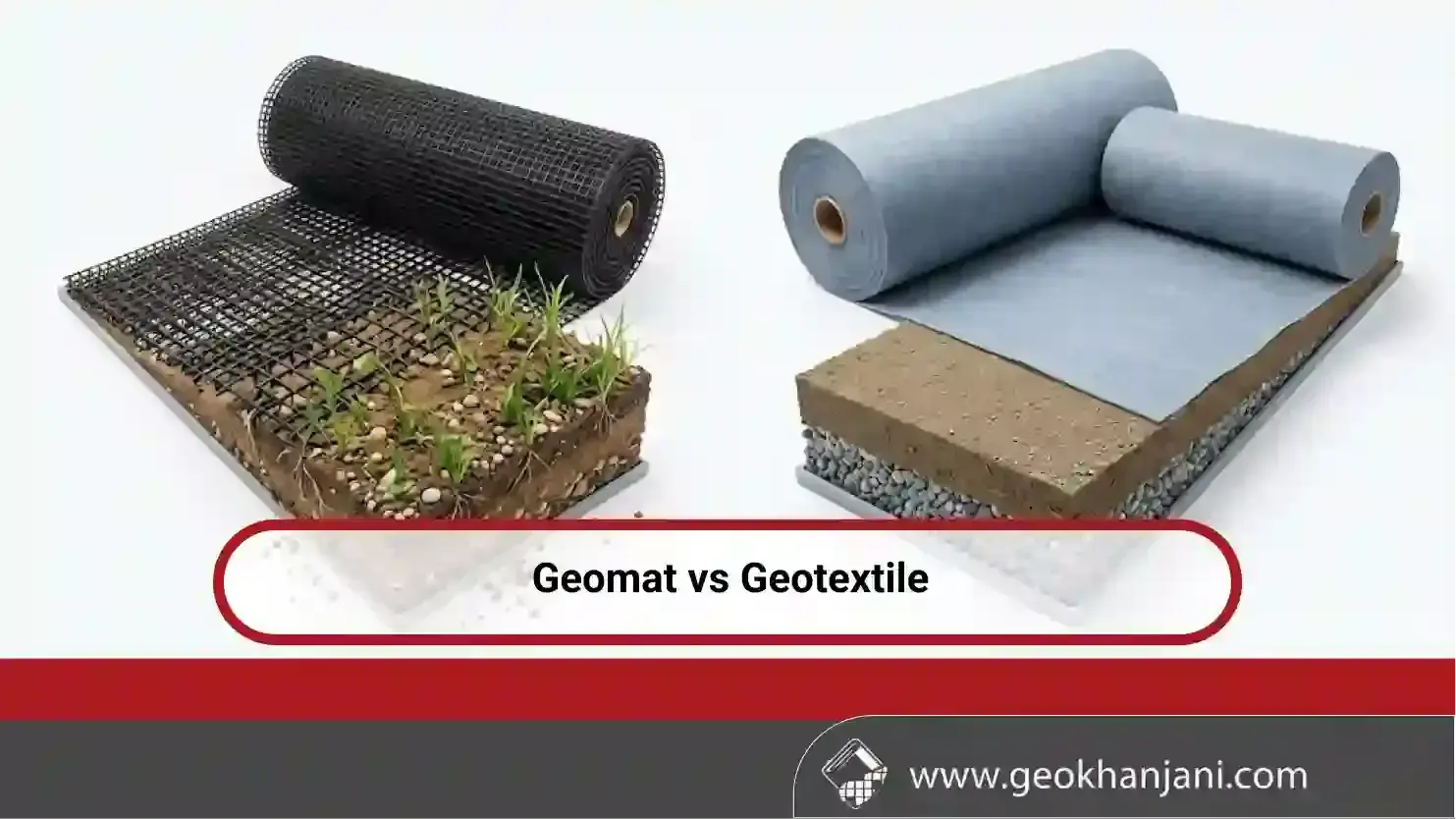
Both are geosynthetics, but they're built for different jobs. Geomat has a three dimensional structure and its main job is surface erosion control. It's excellent for vegetated systems and holds a lot of soil within its own structure, and it's typically used on slopes, embankments, and channels. Geotextile, on the other hand, is generally flat and planar, and it's mainly used for separation, filtration, drainage, and reinforcement. How well it supports vegetation depends on the specific product, and it's more commonly used in roads, drainage, and soil separation work. On some projects, the two materials get used together to build a more complete geotechnical system.
 Geomat vs Geotextile
How Geomat Gets Installed
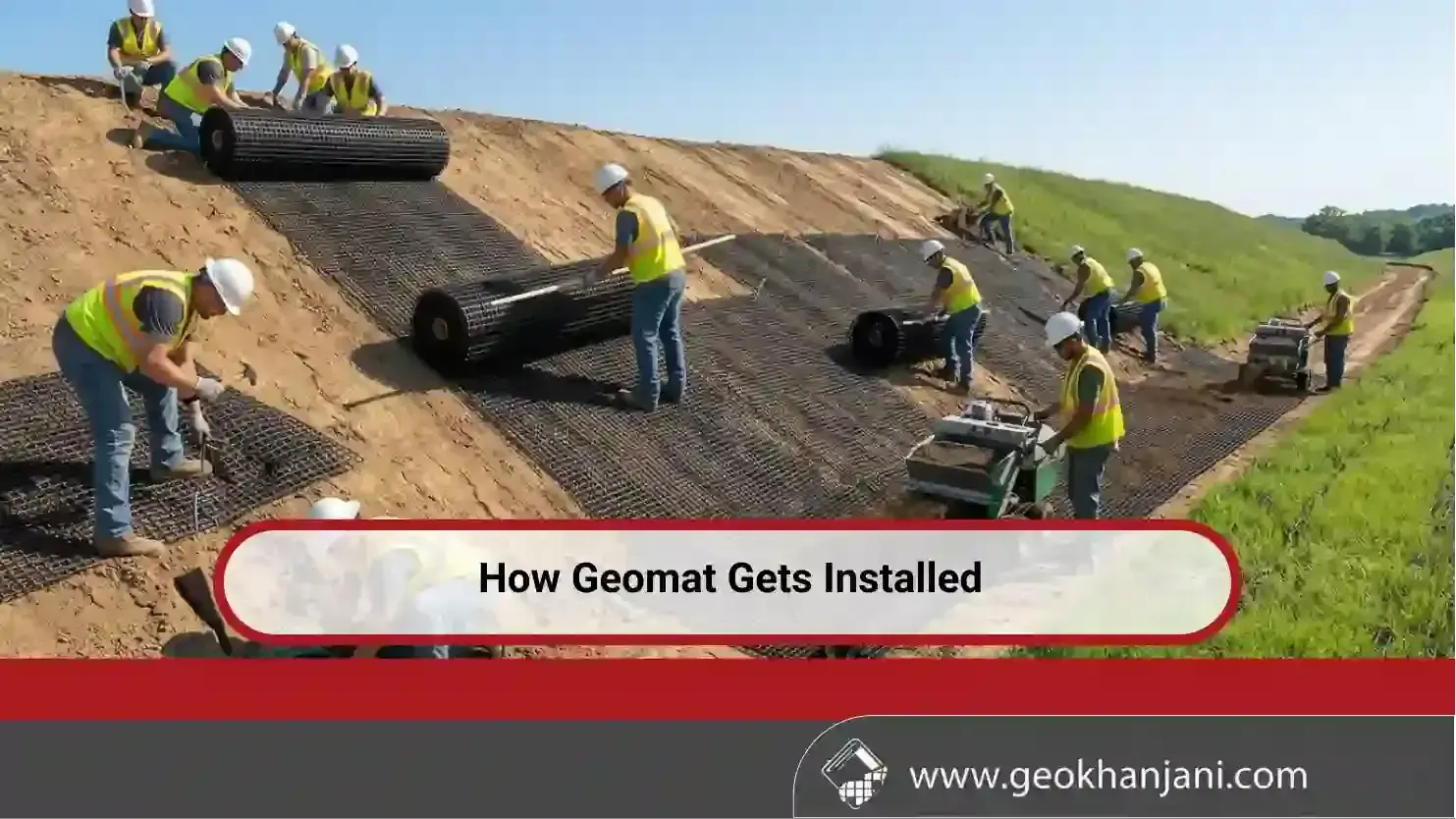
Getting the installation right is what determines whether you get the performance you're paying for.
Soil preparation
Clear the surface of debris, large stones, roots, and any unstable material. Fix major irregularities before the geomat goes down.
Surface grading
Shape the slope according to the engineering design. Proper grading prevents runoff from concentrating in one spot and improves how well the geomat sits against the soil.
Anchoring
Secure the geomat firmly using appropriate anchors, stakes, or pins. How far apart the anchors go depends on slope angle, soil conditions, rainfall intensity, hydraulic loading, wind exposure, and the specific project design.
Placing the geomat
Roll it out over the prepared surface and align it carefully. Adjacent sections need to overlap according to the installation plan.
Seeding or establishing vegetation
For vegetated systems, seeds, topsoil, or a suitable growing medium can be worked into the system based on what the project needs.
Final inspection
Check the finished installation for loose sections, incorrect overlaps, insufficient anchoring, exposed soil, damaged areas, and poor surface drainage.
 How Geomat Gets Installed
What to Consider Before You Buy
Picking geomat based on price alone is a good way to end up with a system that underperforms. The material needs to match your actual site conditions. Polymer type affects durability, mechanical performance, and how well it holds up to the elements. Thickness and weight need to match the application and the engineering design. Tensile strength should be compatible with the installation and service conditions you're expecting. If the geomat will be exposed to sunlight, UV resistance matters a lot. Slope angle is another factor. Steeper slopes generally call for more careful anchoring and sometimes extra erosion control measures. Soil type also plays a role, since clay, sand, silt, and mixed soils all behave differently under rain and runoff. And if you're looking at geomat for a drainage channel or watercourse, flow velocity and shear stress need to be checked before you settle on a product.
Pairing Geomat With Other Geosynthetics
Geomat doesn't always have to work alone. Depending on the project, it can be combined with geotextile for separation and filtration, geogrid for soil reinforcement, geocell for three dimensional soil confinement, geonet or drainage composites for managing water, and geomembrane for waterproofing and fluid containment. For example, a project might need a geomembrane to handle waterproofing while geomat protects the surface above it from mechanical damage or erosion. The right combination comes down to what the engineering actually requires.
Geomat for Agriculture and Landscaping
Geomat is also useful in agricultural and landscaping projects where erosion is a concern, including agricultural slopes, irrigation channels, green embankments, garden slopes, landscape projects, soil conservation areas, and drainage routes. Its ability to support vegetation makes it a particularly good choice wherever the finished surface is meant to end up green rather than covered in concrete or other rigid material.
Quality Control Worth Checking
Before buying, it's worth reviewing the technical documentation rather than going by product name alone. Look for polymer type, unit weight, thickness, tensile strength, elongation, UV resistance, roll dimensions, manufacturing specifications, applicable test standards, and intended application. For larger civil engineering projects, it's a good idea to request a technical datasheet and quality documentation directly from the supplier.
Why Proper Design Matters
Geomat is an effective erosion control product, but it's not a one size fits all solution for every slope or hydraulic condition. Poor site drainage, inadequate anchoring, excessive flow velocity, or improper soil prep can all drag down system performance. An effective geomat system needs to account for the full picture: soil, slope geometry, rainfall, runoff, anchoring, vegetation, and the geomat specification itself, all working together. That engineering based approach gets far better results than choosing a product based on thickness or price alone.
Buying Geomat
When you're ready to purchase geomat for a construction, agricultural, or environmental project, it helps to give your supplier some basic project details up front: location, slope dimensions and angle, soil type, expected water flow, coverage area needed, intended vegetation, and installation conditions. With that information, the supplier can recommend the right specification and quantity for your project.
GeoKhanjani supplies geosynthetic products for civil engineering, waterproofing, drainage, and erosion control applications. Reach out to our sales team for technical consultation before you buy, so we can make sure the geomat you choose actually fits your project conditions.
The Bottom Line
Geomat is a proven geosynthetic solution for erosion control, soil surface protection, and vegetated slope stabilization. Its three dimensional structure holds soil in place, cuts down surface erosion, and creates the right conditions for vegetation to establish itself.
You get the best results when geomat is matched to the site's slope geometry, soil properties, rainfall, runoff, and hydraulic conditions. For more demanding projects, it can also be paired with other geosynthetics like geotextiles, geogrids, geocells, and geomembranes.
For professional projects, getting the specification, installation method, and anchoring system right matters just as much as the quality of the geomat itself.